

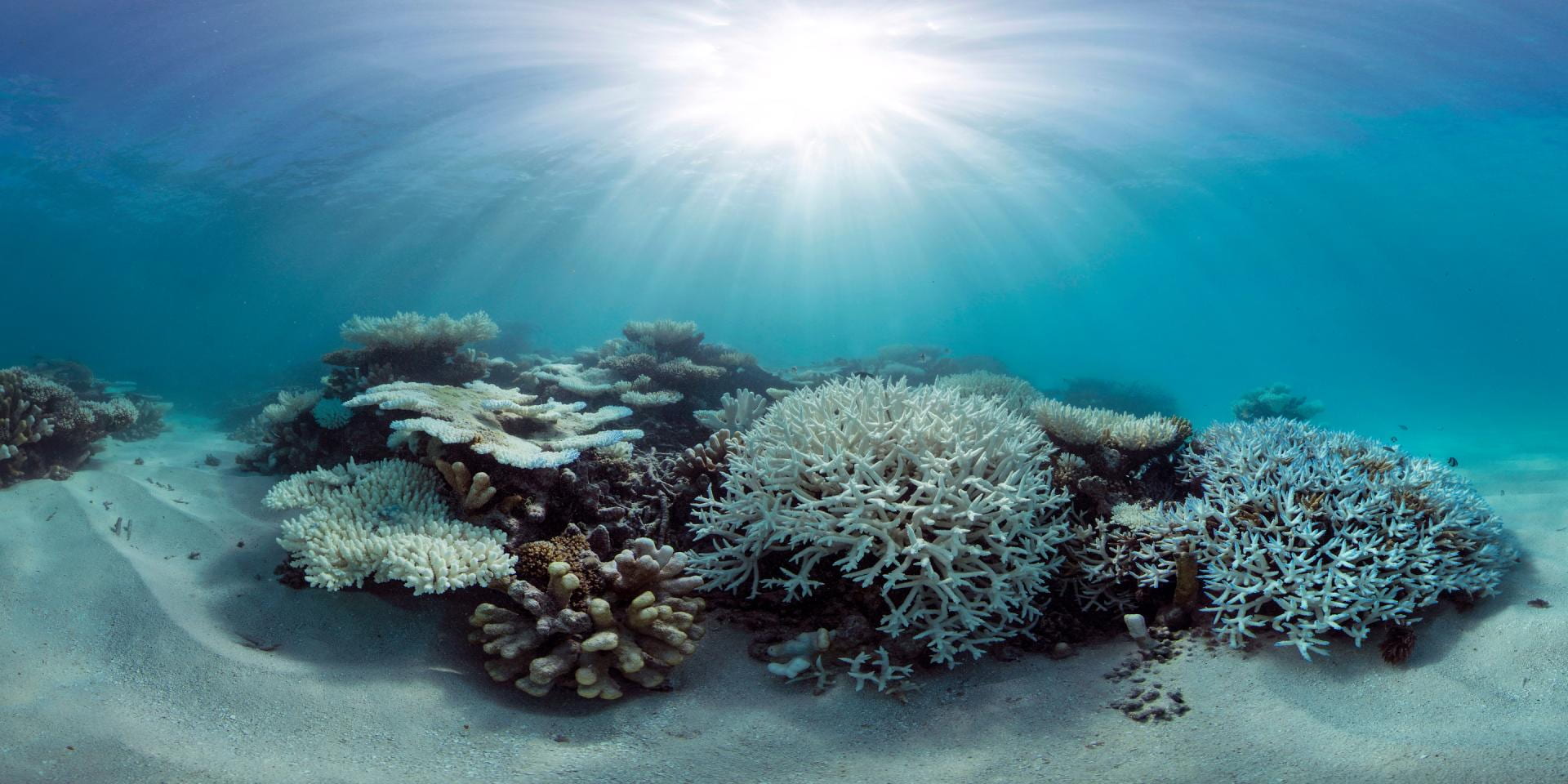
Scientists around the world are raising concerns over a sharp increase in coral reef bleaching, driven by rising ocean temperatures. Recent observations indicate that prolonged heat stress in marine environments is causing corals to expel the symbiotic algae that give them color and provide essential nutrients. Without these algae, corals turn white—a phenomenon known as bleaching—and become highly vulnerable to disease and death.
Marine researchers warn that the frequency and intensity of bleaching events have increased significantly in recent years, leaving reefs with little time to recover. Regions across the Indo-Pacific, including parts of the Indian Ocean, are among the hardest hit, with large stretches of reef showing signs of stress.
Coral reefs support nearly 25% of all marine species despite covering less than 1% of the ocean floor, making their decline a major ecological concern. Beyond biodiversity loss, millions of people who depend on reefs for food, coastal protection, and livelihoods could be affected.
Experts emphasize that reducing greenhouse gas emissions is critical to slowing ocean warming. At the same time, local conservation efforts, such as reducing pollution and overfishing, are essential to improve reef resilience. Without urgent action, scientists warn that many of the world’s coral reefs could face irreversible damage in the coming decades. News as reported
