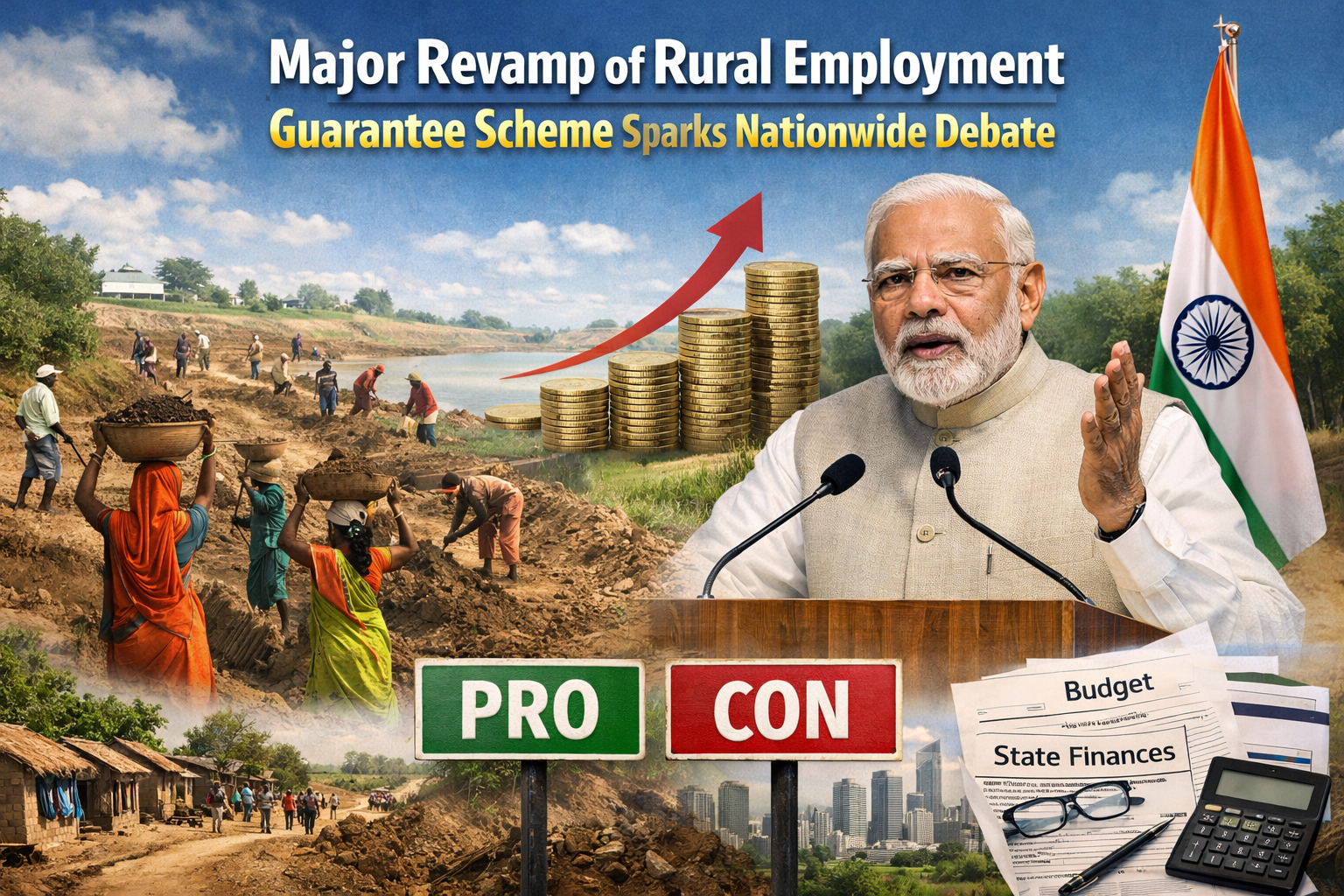
The Prime Minister’s government has announced a major revamp of the Mahatma Gandhi National Rural Employment Guarantee Act (MGNREGA), proposing an expansion in the number of guaranteed workdays for rural households. The move has triggered intense debate across states, economists, and political parties, with supporters hailing it as a lifeline for rural economies and critics raising concerns over fiscal sustainability and implementation challenges.
Under the proposed changes, eligible rural households could receive significantly more days of wage employment annually, aimed at addressing rising rural distress, seasonal unemployment, and the impact of inflation on low-income families. The government argues that expanding MGNREGA will strengthen rural purchasing power, boost local demand, and support infrastructure creation such as water conservation projects, rural roads, and soil management initiatives.
Several state governments, particularly those with large rural populations, have welcomed the announcement, stating that it will help stabilize incomes and reduce migration to urban areas. However, some states have cautioned that without timely fund releases and higher wage revisions, the expanded scheme could strain administrative capacity and delay payments to workers.
Opposition parties have offered mixed reactions, with some calling the revamp long overdue, while others accuse the Centre of shifting the financial burden onto states already facing budgetary pressure. Economists have also weighed in, noting that while increased employment guarantees can act as a counter-cyclical tool during economic slowdowns, careful monitoring is essential to prevent inefficiencies and ensure productive asset creation.
As discussions continue, the revamped MGNREGA is set to remain a key policy flashpoint, reflecting broader debates on rural welfare, federal finances, and inclusive economic growth in India news as reported.