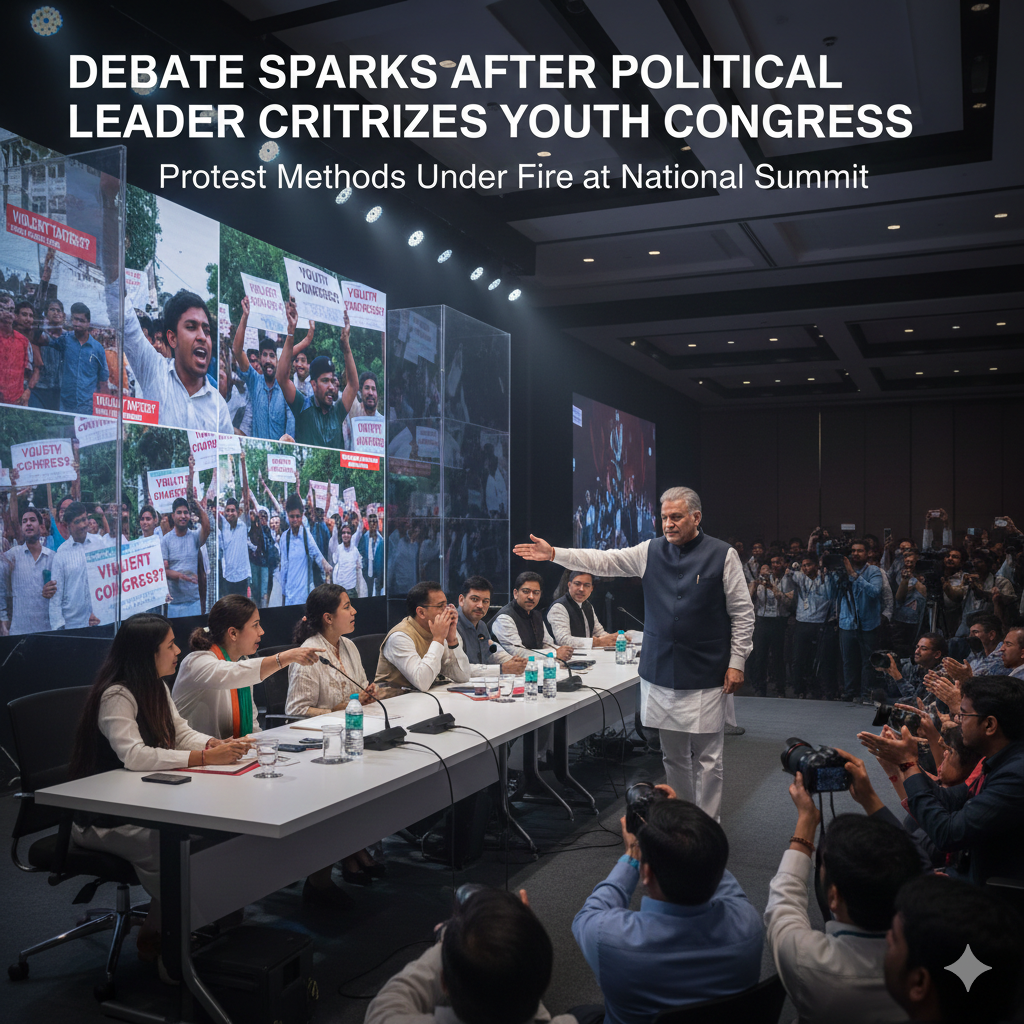
A heated political debate has erupted in India after prominent leaders sharply criticized the protest methods used by members of the Indian Youth Congress at the recent India AI Impact Summit held at Bharat Mandapam in New Delhi. The controversy reignited national discourse on protest conduct, democratic rights and the appropriateness of dissent on global stages.
The protest, which saw Youth Congress activists staging a shirtless demonstration inside the summit venue to voice grievances against the central government and alleged mismanagement of the event, immediately drew widespread criticism from leaders across the political spectrum—including allies of the Opposition.
Senior leader Akhilesh Yadav, head of the Akhilesh Yadav and a key opposition figure, condemned the methods used, stating that staging such an act in front of foreign delegates at an international summit was “not appropriate” and could bring disrepute to the nation. His comments highlighted concerns that the form of protest overshadowed the substantive issues being raised.
Meanwhile, leaders from the ruling Bharatiya Janata Party and its allies intensified criticism, accusing the demonstration of damaging India’s global image and calling it “shameful” and “inappropriate” for a diplomatic forum. Some described the act as undermining the country’s efforts to showcase technological progress and international cooperation.
Supporters of the protest defended the Youth Congress’s actions as a fundamental democratic right to dissent and draw attention to issues they felt were being ignored. Nonetheless, the debate sheds light on a broader question: how should political protest be expressed in highly visible national and international settings news as reported.