

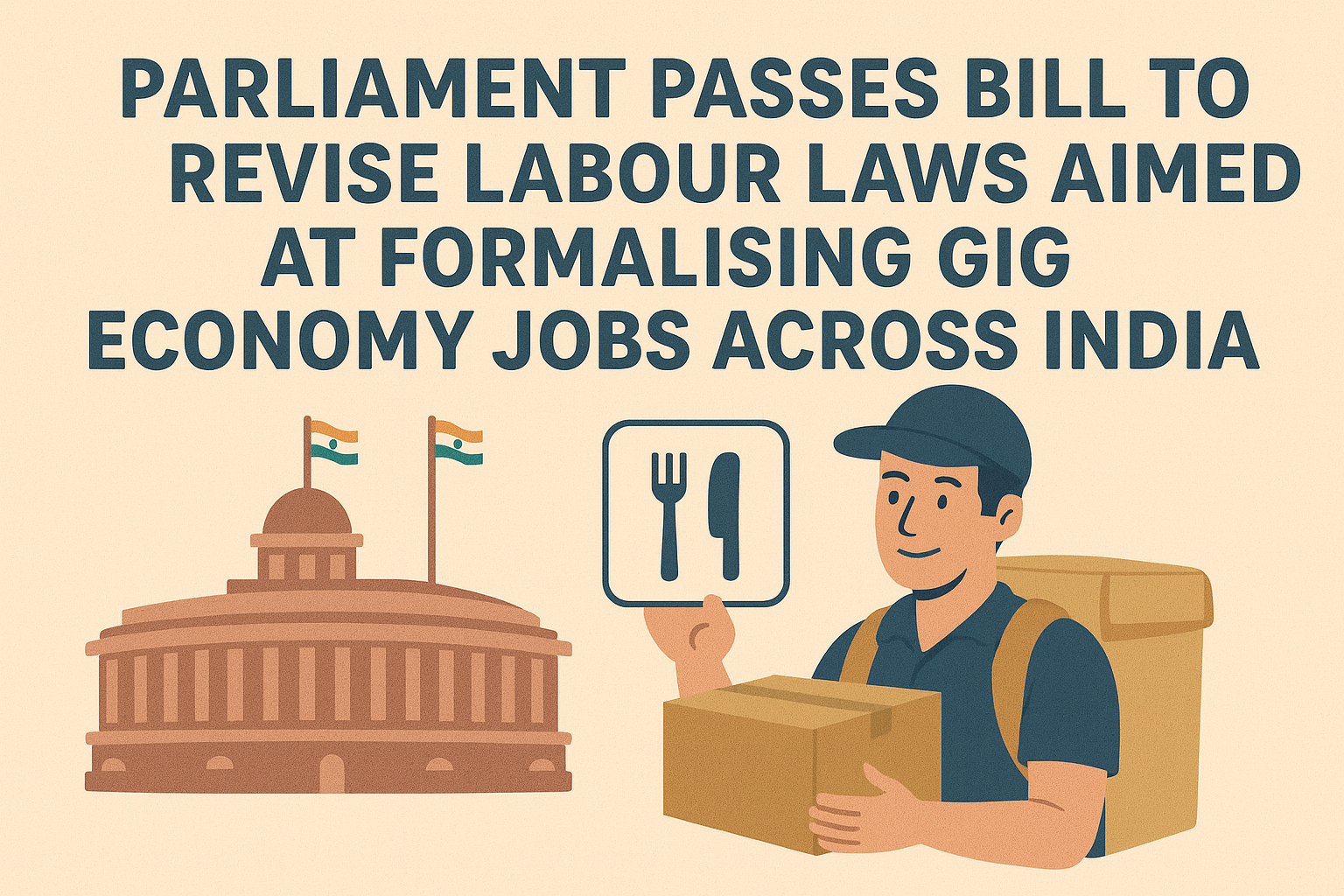
Parliament has approved a major labour-law reform bill aimed at bringing India’s rapidly growing gig and platform-economy workforce under a more structured and protected framework. The bill marks a significant policy shift, acknowledging millions of workers employed by app-based services such as ride-hailing, food delivery, e-commerce logistics, and freelance digital platforms.
The new legislation mandates gig employers to register all platform-based workers under a national database, ensuring better identification and tracking of employment patterns. It introduces provisions for minimum social-security coverage, including health insurance, accident compensation, and retirement benefits through a contributory welfare fund jointly supported by the government, platforms, and workers.
A key highlight of the bill is its focus on formalising the gig sector, which has long operated in a regulatory grey area. The reforms seek to bridge the gap between flexibility and job security, offering gig workers more predictable protections without stripping away the freedom associated with freelance and on-demand work.
Industry experts believe that the move will boost worker morale, reduce exploitation, and improve service reliability across the app-driven economy. However, some platform companies have raised concerns over compliance costs and operational challenges, urging the government to offer transitional support.
With India emerging as one of the world’s largest gig-work markets, the passage of this bill is expected to set a precedent for labour governance in the digital era, ensuring that innovation and worker welfare move forward together.


- upgraderz.aws@gmail.com
- upgraderz.aws@gmail.com
- upgraderz.aws@gmail.com
- upgraderz.aws@gmail.com