

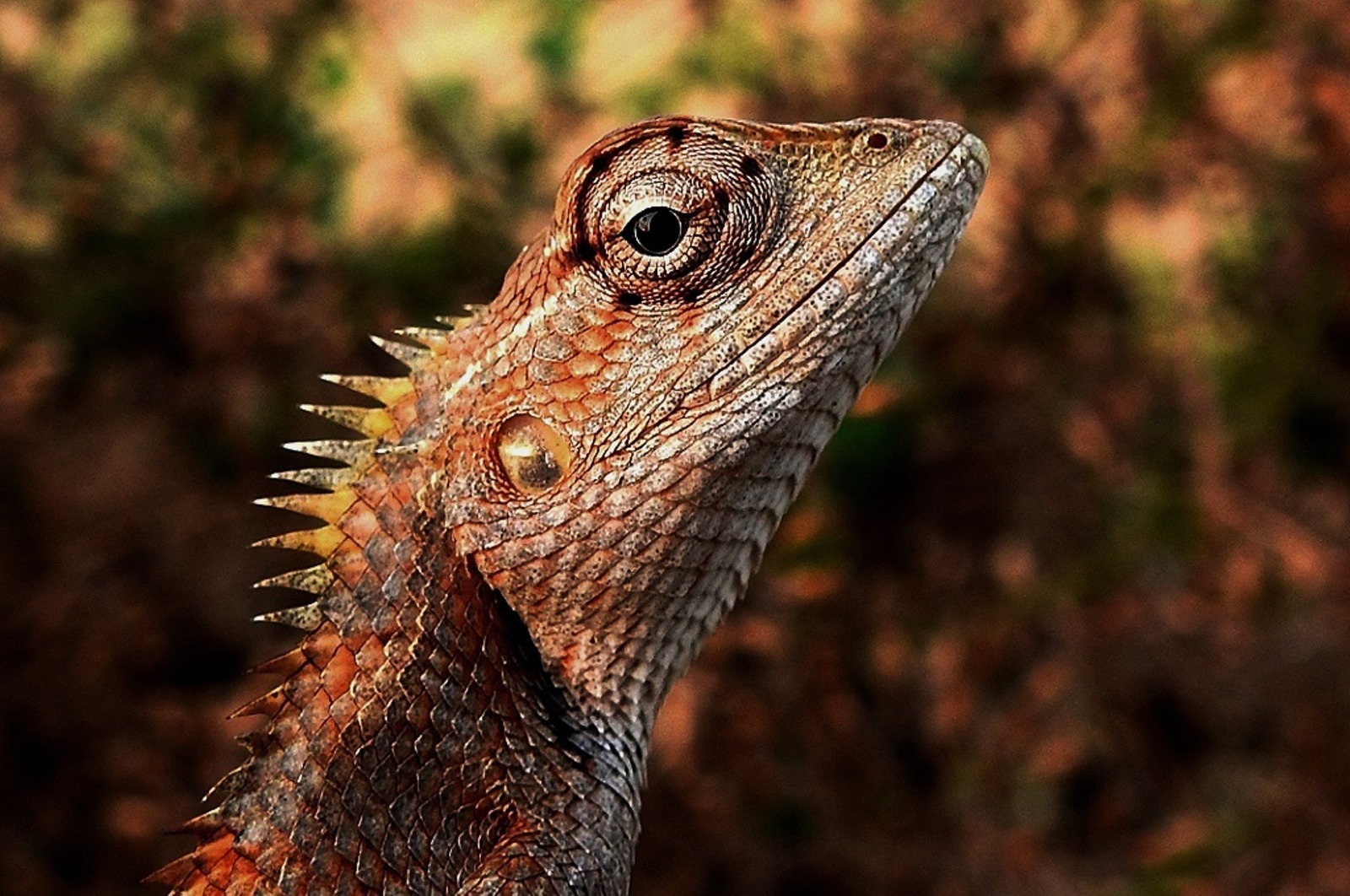
The Oriental garden lizard (Calotes versicolor), a familiar reptile across South Asia, is drawing renewed attention for its striking color-changing abilities during the breeding season. Belonging to the Agamidae family, which includes over 500 species, this adaptable lizard is commonly found in gardens, farmlands, and urban green spaces.
Male Calotes versicolor exhibit a remarkable transformation between May and October, turning their heads, tails, or even entire bodies vivid shades of red, black, or a combination of both. This dramatic display serves a dual purpose—intimidating rival males and attracting potential mates. The behavior has fascinated both researchers and nature enthusiasts, offering insight into reptilian communication and survival strategies.
First documented in 1802 by French zoologist François Marie Daudin, the species is also linked to a poignant chapter in scientific history. Daudin, who overcame childhood paralysis, dedicated his short life to natural history, publishing extensively before succumbing to tuberculosis at just 27. His work, supported by his wife Adélaïde, who also died young, contributed significantly to early taxonomy.
Today, the Oriental garden lizard remains an important part of local ecosystems, helping control insect populations while continuing to captivate observers with its vivid seasonal transformations.
CONTRIBUTION BY VINCENT MASH —FORMER
EDITOR OF PHOTOWIDE MAGAZINE AND ASSOCIATE EDITOR OF PHOTO TRACK MAGAZINE
