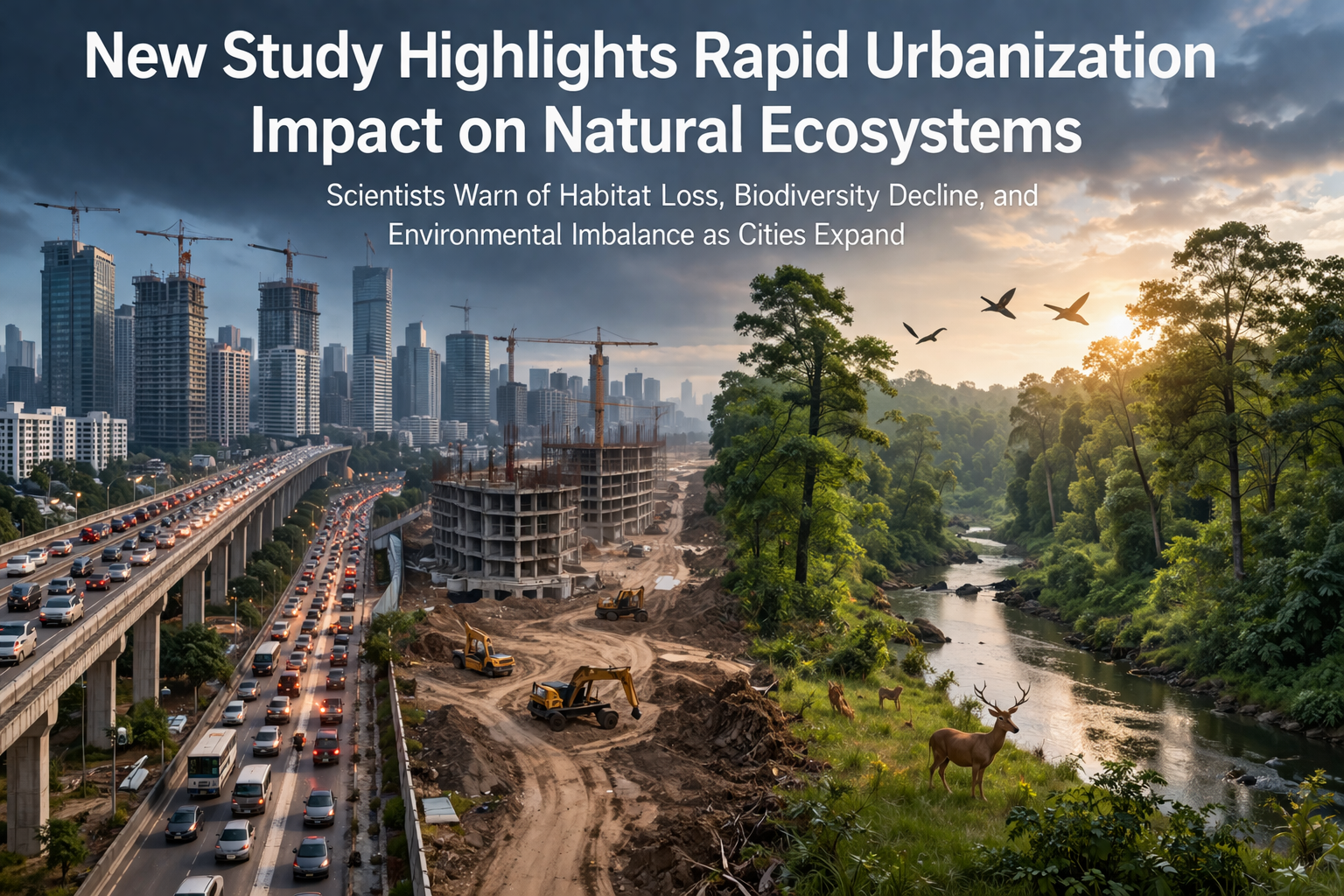
A new international study has highlighted the growing impact of rapid urbanization on natural ecosystems, warning that expanding cities are placing increasing pressure on biodiversity and environmental stability worldwide.
Researchers say urban areas are expanding at an unprecedented rate as global populations continue to shift toward cities. According to findings supported by the United Nations Environment Programme, the rapid growth of infrastructure, housing, and transportation networks is leading to the loss of forests, wetlands, and other vital natural habitats.
Environmental experts note that urban expansion often results in habitat fragmentation, making it difficult for wildlife species to survive and reproduce. In many regions, natural landscapes are being replaced by buildings and roads, significantly altering ecological balance.
The study also pointed out that rapid urban development contributes to higher pollution levels and increased temperatures in cities, a phenomenon commonly referred to as the urban heat island effect.
Scientists are urging governments and urban planners to adopt more sustainable development strategies. Protecting green spaces, preserving nearby ecosystems, and implementing eco-friendly urban planning measures could help reduce the environmental impact of urban growth.
Experts emphasize that balancing economic development with environmental conservation will be essential as cities continue to expand in the coming decades.News as Reported.