

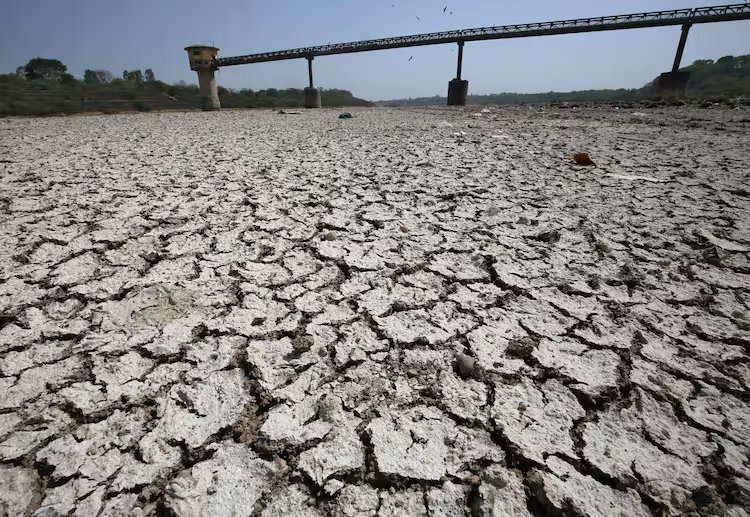
A new scientific study has identified emerging “climate states” across India, revealing significant shifts in drought intensity and moisture patterns that call for region-specific adaptation strategies. Researchers found that different parts of the country are experiencing contrasting hydro-climatic trends, with some regions facing prolonged dry spells while others are witnessing rising humidity and extreme rainfall events.
The study highlights that central and northwestern regions are becoming increasingly prone to recurrent droughts, affecting agriculture, groundwater recharge, and rural livelihoods. Meanwhile, parts of southern and northeastern India are seeing higher moisture variability, leading to intense downpours, flooding, and crop damage. These emerging climate states are linked to changing monsoon dynamics, warming temperatures, and large-scale atmospheric shifts.
Scientists warn that a uniform national adaptation strategy may not be effective in addressing such diverse impacts. Instead, localized climate action plans tailored to specific regional risks are essential. This includes drought-resilient crop varieties, efficient irrigation systems, urban flood management infrastructure, and ecosystem restoration efforts.
Experts emphasize that improved climate data monitoring and integration into district-level planning will be crucial. The findings underscore the urgent need for flexible, science-based policies to safeguard food security, water resources, and vulnerable communities amid accelerating climate change. News as reported

- upgraderz.aws@gmail.com
- upgraderz.aws@gmail.com
- upgraderz.aws@gmail.com
- upgraderz.aws@gmail.com