

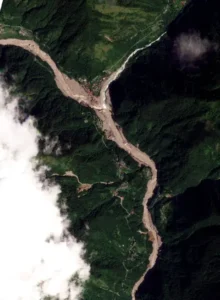
New scientific research is drawing attention to the complex causes behind increasingly severe floods in the Himalayan region, pointing to a combination of climate change and harmful land-use practices. The study, conducted by a team of geologists and climate scientists, analyzed recent flood events across Nepal, India, and Bhutan. It found that rapid warming in high-altitude areas is accelerating glacier melt, intensifying rainfall extremes, and destabilizing steep mountain slopes.
However, researchers emphasize that climate change alone does not explain the scale of destruction. Expanding road networks, deforestation, riverbed mining, and unregulated construction in flood-prone zones have significantly magnified the impacts. By altering natural drainage patterns and weakening soil stability, human activities have made many communities far more vulnerable to landslides and sudden glacial lake outburst floods.
The study warns that without stricter land-use planning and better monitoring of glacial lakes, future disasters could become even more frequent. Scientists stress the need for early-warning systems, restoration of degraded slopes, and relocation of infrastructure away from high-risk zones.
Local officials and environmental groups say the findings should serve as a wake-up call for Himalayan governments to integrate climate science into development decisions, prioritizing resilience over short-term economic gains.
