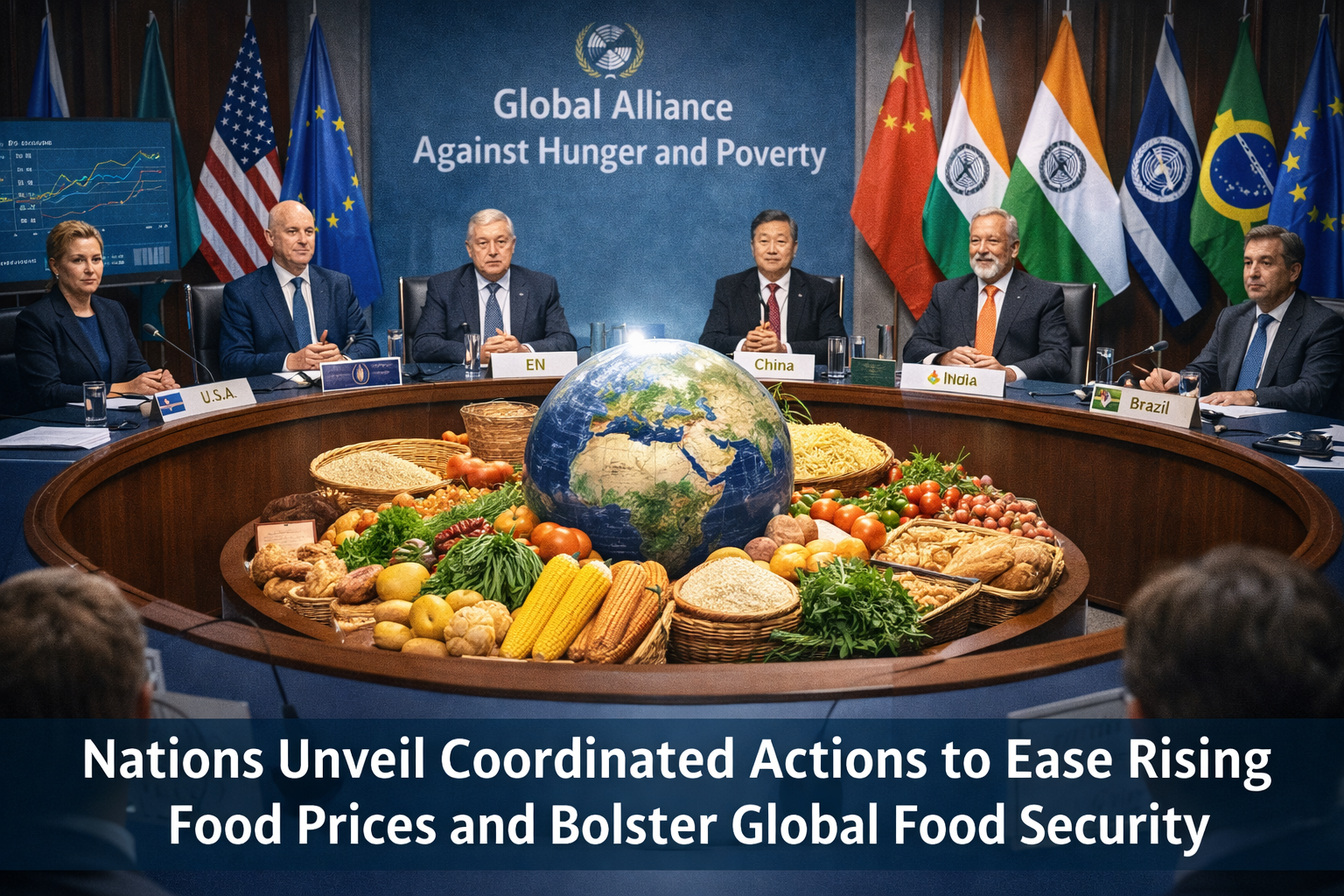
In response to persistent global food price pressures, several countries and international bodies have announced coordinated measures aimed at stabilizing markets, protecting vulnerable populations and preventing further inflation. Food prices, while showing some easing in recent months, remain high compared with pre-pandemic levels, prompting policy action from multiple governments and global organizations. According to the latest FAO Food Price Index, certain staple food prices such as cereals and vegetable oils have seen modest declines, but overall cost burdens remain a concern for consumers and low-income countries.
Leading the charge, the United States issued an executive order in December 2025 to combat anti-competitive behavior and price-fixing in food supply chains—establishing dedicated task forces within federal agencies to investigate and enforce fair competition, aiming to reduce costs for consumers. Meanwhile, broader multilateral efforts are underway through initiatives like the Global Alliance Against Hunger and Poverty, a treaty signed by more than 100 countries and international partners to strengthen international cooperation on food affordability and nutrition security.
These domestic and global strategies complement ongoing international commitments highlighted in UN and World Bank reports that stress the importance of joint action among governments, financial institutions and development partners to address persistent food inflation and food insecurity. Such coordinated policies include price stabilization programs, targeted subsidies, trade facilitation and food production support that collectively aim to cushion citizens against volatile food markets while reinforcing long-term resilience in food systems.