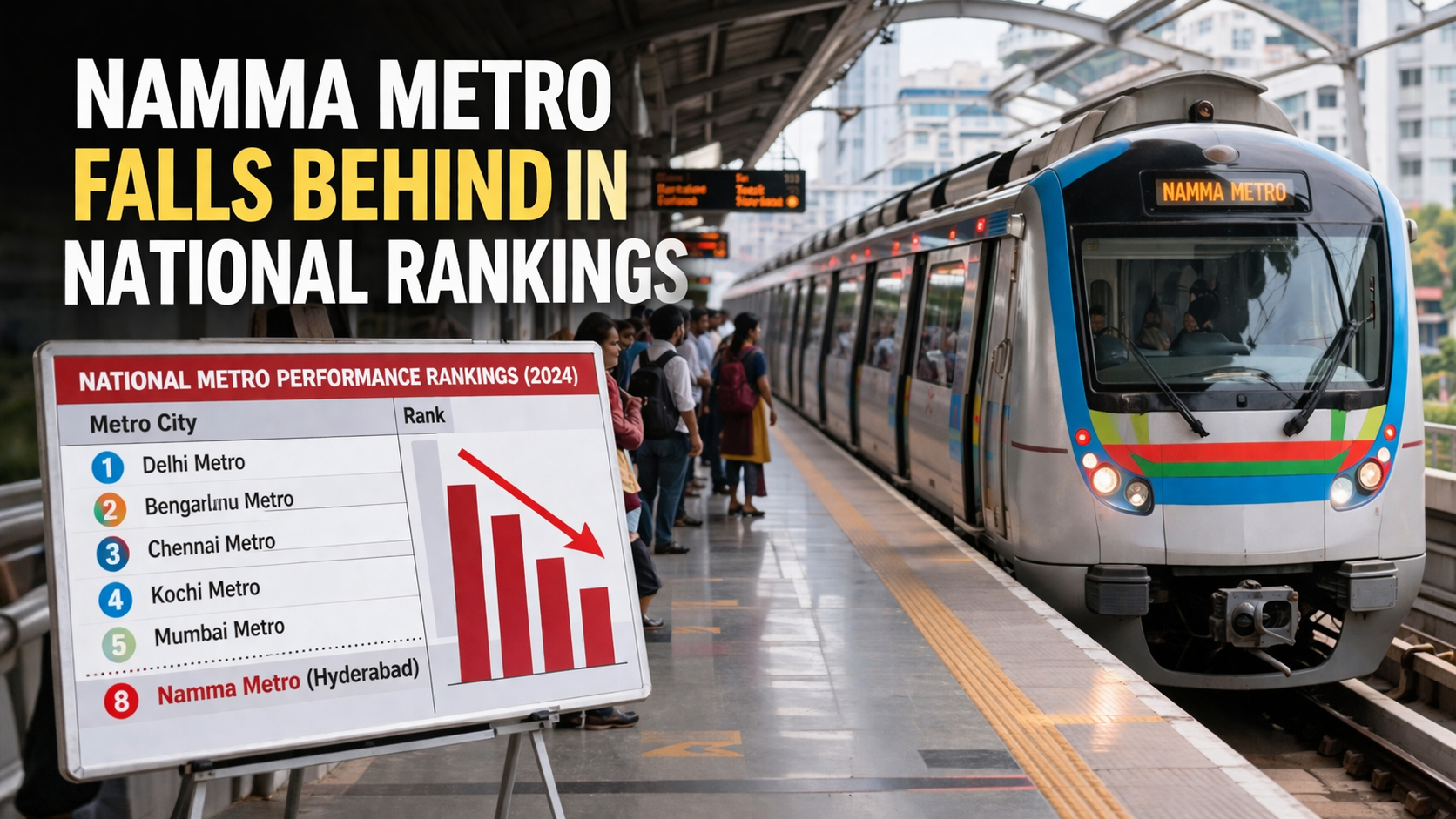
Bengaluru’s metro system, known as Namma Metro, has slipped to third place among India’s largest metro networks. Recent developments show that Mumbai has overtaken Bengaluru after expanding its metro network beyond 100 km, while Bengaluru currently operates around 96 km with 83 stations.
This shift has raised concerns among urban planners and residents, especially given Bengaluru’s growing population and increasing traffic congestion. Over the past 15 years, the metro network has expanded steadily but relatively slowly, averaging only about 6 km per year. Delays in major projects—particularly the Yellow Line—have been a major factor in limiting faster expansion.
One of the biggest challenges has been shortage of metro coaches and construction delays, which have slowed down key routes that could ease congestion in high-traffic areas. Meanwhile, the number of private vehicles in the city has crossed 1.25 crore, worsening road conditions and increasing commute times.
Authorities are now planning to accelerate development. A 7-km section of the Pink Line is expected to open by mid-2026, and further expansions, including the airport connectivity line, are planned for completion by 2027. Once completed, the metro network is expected to reach nearly 175 km.
Experts say that faster execution of metro projects is crucial for Bengaluru’s future. Without efficient public transport expansion, the city may face even worse traffic problems. The situation highlights the urgent need for improved infrastructure planning and timely project delivery to meet the demands of one of India’s fastest-growing cities.
News as reported