

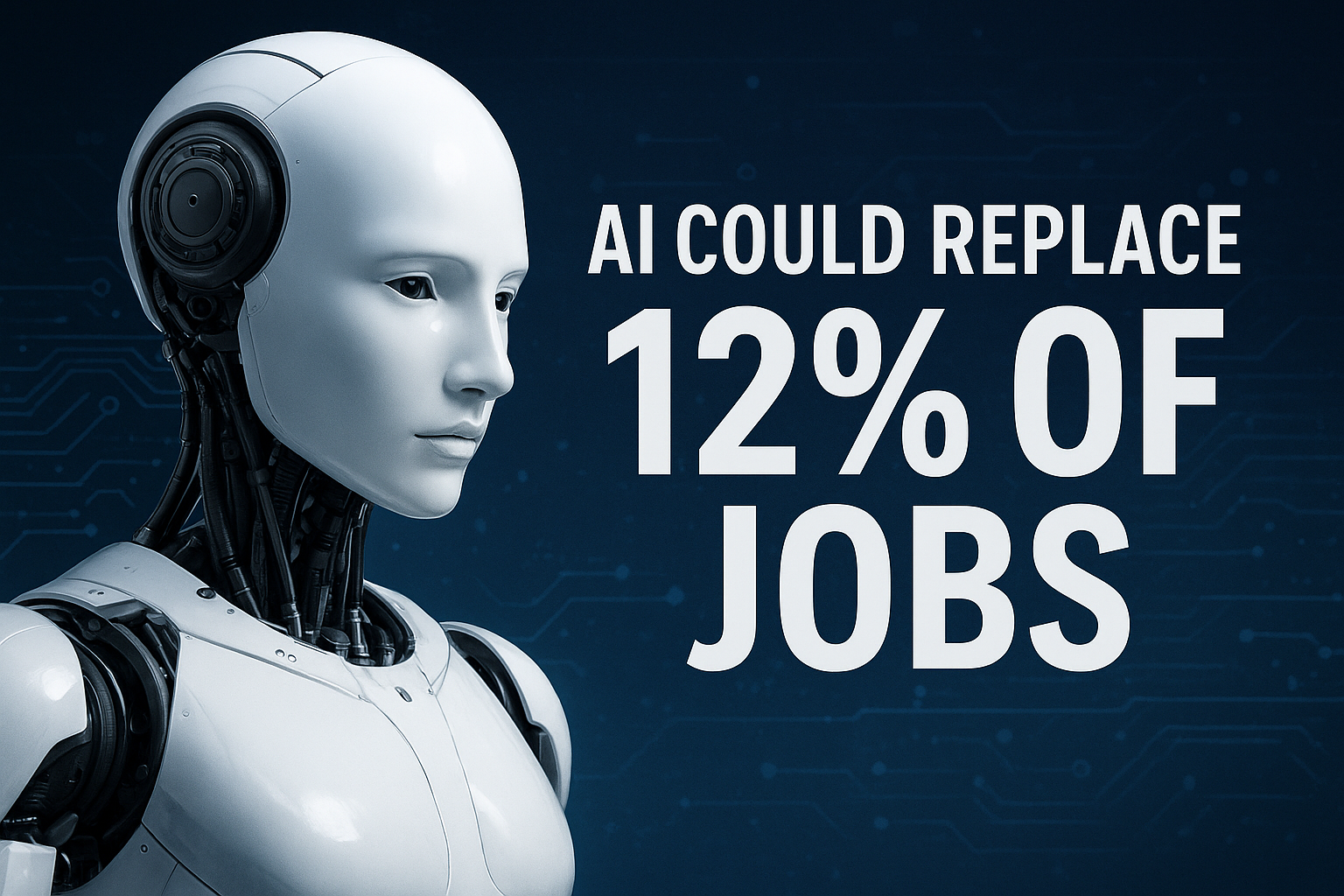
A new study by MIT estimates that current artificial intelligence (AI) technologies have the potential to replace about 12 percent of jobs in the United States — putting more than US$1.2 trillion in annual wages at risk.
Researchers used a labour-simulation tool called the Iceberg Index — developed in collaboration with Oak Ridge National Laboratory (ORNL) — to map how AI’s capabilities overlap with the tasks required across nearly 1,000 occupations.
According to the study, sectors most vulnerable to disruption include finance, healthcare, and professional/routine services. Roles involving repetitive tasks — data entry, scheduling, basic paperwork, back-office administration and similar functions — are especially at risk.
The authors of the report caution that this does not necessarily mean an immediate wave of mass layoffs. Rather, they argue that AI is already beginning to reshape job functions — automating routine tasks while pushing human workers toward tasks requiring judgment, creativity, interpersonal skills or oversight.
Still, the scale of potential disruption has raised alarm among policymakers and industry leaders. Many analysts argue this is a wake-up call for governments and employers to invest in reskilling and upskilling initiatives, so workers can transition to roles less vulnerable to automation.
As AI continues to advance, the study suggests a fundamental transformation in how work is done — one where human-machine collaboration, rather than outright replacement, may define the future of employment.
