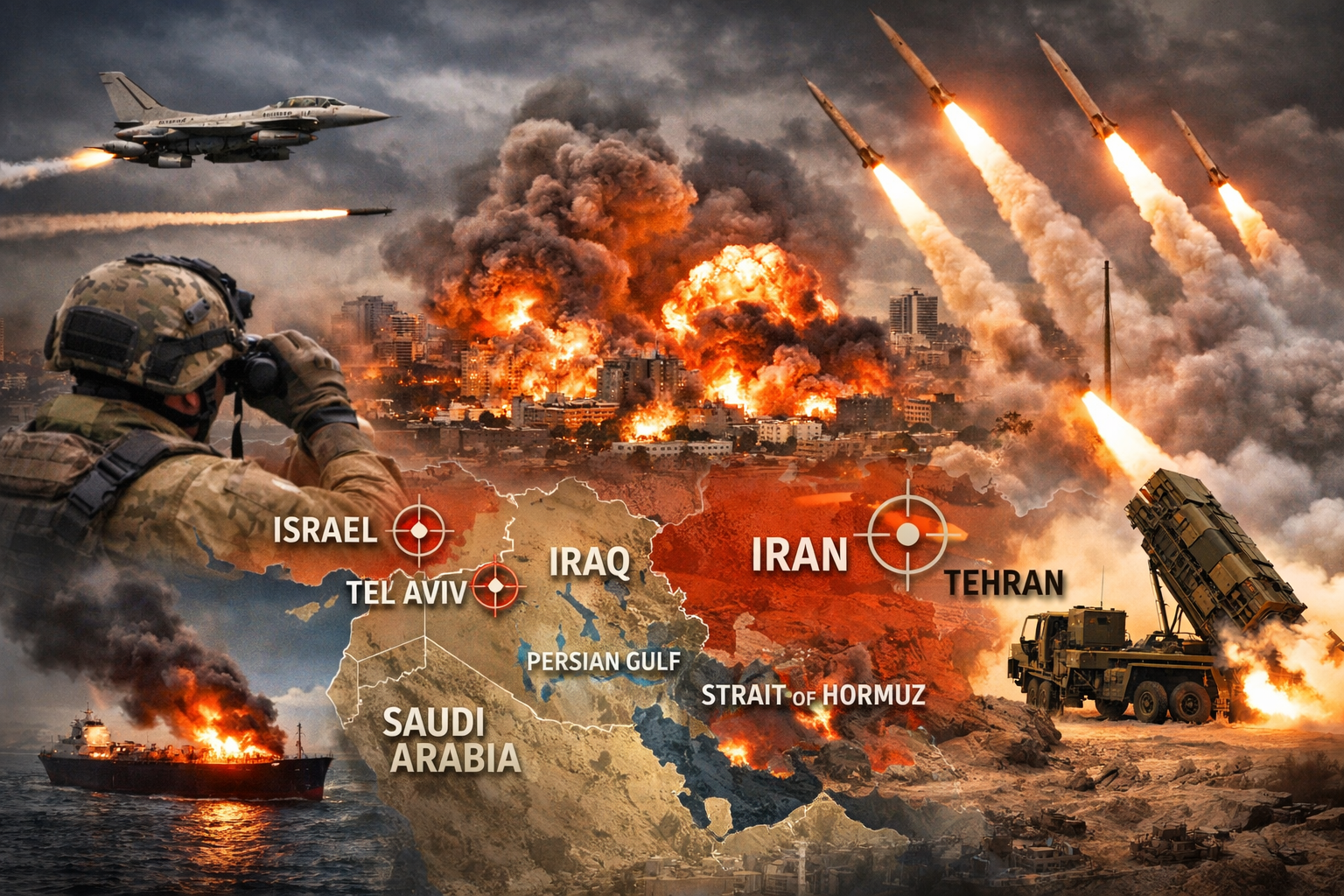
Tensions across the Middle East have intensified significantly after a series of military strikes, retaliatory missile attacks, and escalating threats among regional powers, raising global concerns about the possibility of a wider regional war.
The crisis escalated after the United States and Israel launched coordinated airstrikes on several Iranian military and strategic targets, marking one of the most significant confrontations in the region in recent years. The strikes reportedly targeted missile facilities, military bases, and key infrastructure linked to Iran’s defense capabilities.
In response, Iran launched waves of ballistic missiles and drones toward Israeli cities, U.S. military bases, and allied facilities across the Gulf region. Several Gulf states activated air defense systems while authorities issued safety warnings to residents amid fears of further attacks.
Military tensions have also spread beyond the immediate battlefield. Explosions, drone strikes, and attacks on shipping routes in the Persian Gulf have raised alarms about global energy security and international trade. Analysts warn that disruptions to oil transport routes—especially around the Strait of Hormuz—could affect fuel supplies and global markets.
Regional governments and international organizations are urging restraint as the conflict continues to widen. Several countries have heightened military readiness, while diplomatic efforts are underway at the United Nations to prevent further escalation. However, retaliatory threats from multiple sides suggest the conflict could spread further if tensions continue to rise.
Experts warn that if additional regional actors become directly involved, the crisis could evolve into a broader Middle East war with significant humanitarian, economic, and geopolitical consequences worldwide.News as Reported.