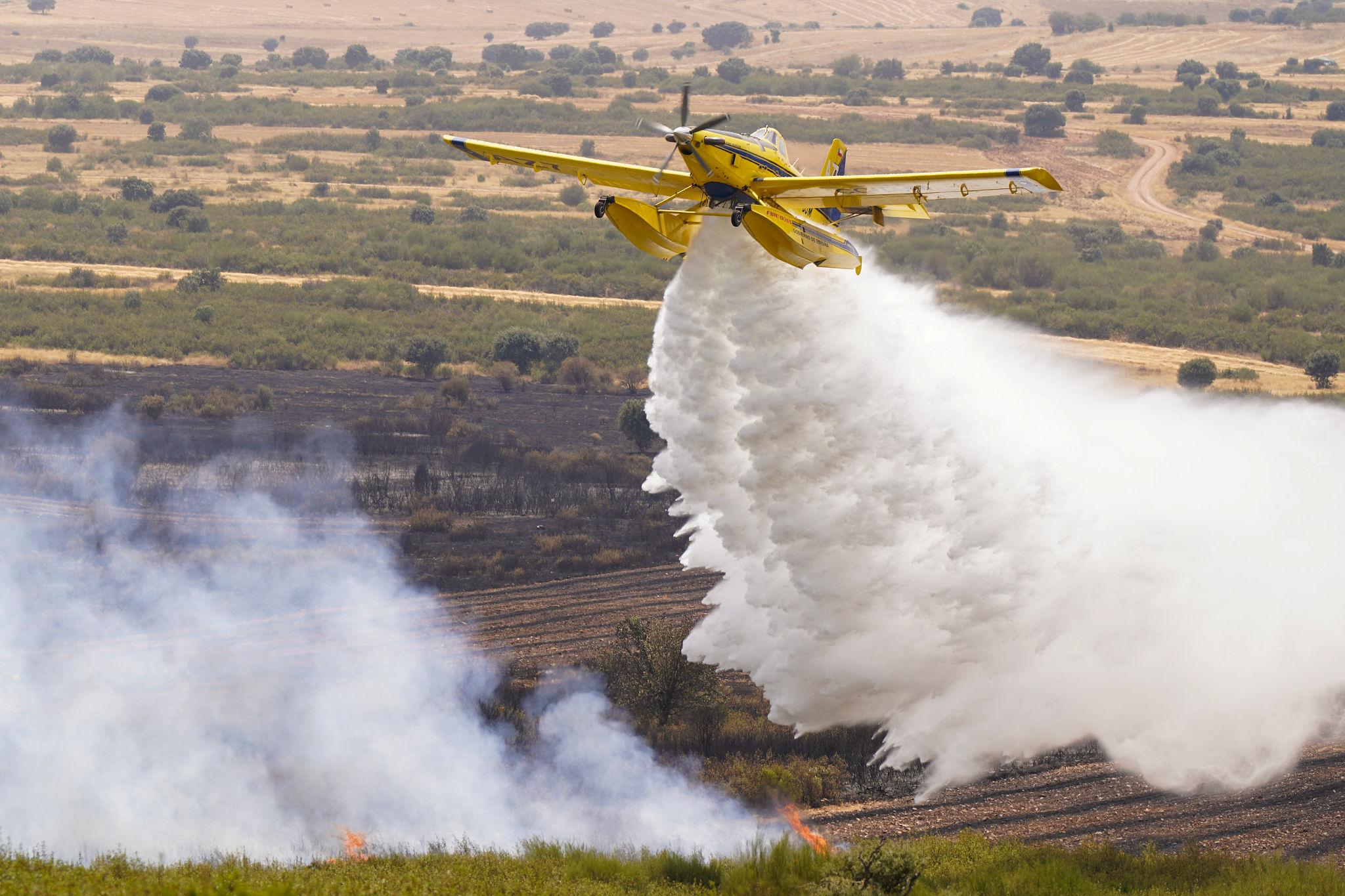
Spain is battling one of its most destructive wildfires in recent years after a massive blaze in the central province of Guadalajara scorched more than 32,000 hectares of forests, grasslands, and agricultural land. The fire, fueled by extreme heat, dry vegetation, and strong winds, has forced the evacuation of residents from 34 municipalities, while authorities imposed movement restrictions in several other communities to ensure public safety. More than 200 firefighters, assisted by water-dropping aircraft, helicopters, and ground crews, have been working continuously to contain the flames despite difficult weather conditions. (AP News)
Although firefighters have managed to stabilize parts of the blaze, officials warn that the danger remains high as another intense heatwave is expected to push temperatures above 42°C in parts of Spain. The wildfire has damaged natural habitats, threatened wildlife, and blanketed nearby towns with dense smoke, raising concerns about air quality and public health. Spain’s Prime Minister, Pedro Sánchez, visited the affected region and stressed the need for stronger climate action, noting that rising temperatures and prolonged droughts are increasing the frequency and intensity of wildfires across southern Europe. (AP News)
The disaster is part of a wider climate emergency affecting the Mediterranean, where countries including France, Greece, and Italy are also battling severe heatwaves and wildfire outbreaks. Scientists continue to warn that human-driven climate change is making such extreme weather events more frequent and destructive, highlighting the urgent need for improved forest management, climate resilience, and global efforts to reduce greenhouse gas emissions.
News as reported