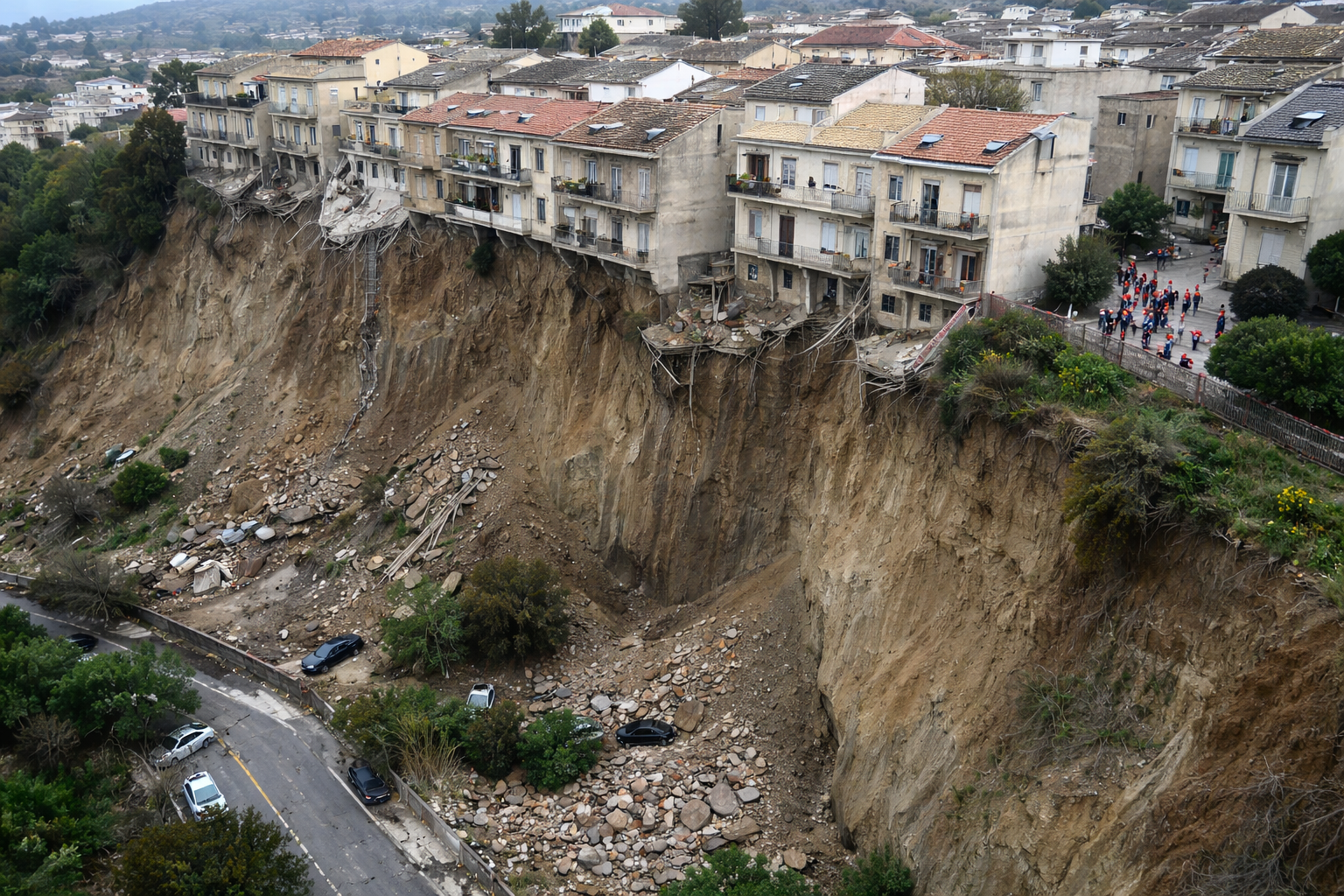
A massive landslide triggered by days of heavy rain from Cyclone Harry in Niscemi, a hilltop town in southern Sicily, has left dozens of homes precariously perched on the edge of a collapsing slope and forced the evacuation of more than 1,500 residents, officials said. The disaster, which began over the weekend and continued through January 27–28, carved a new cliff face as soil and earth gave way beneath buildings and roads.
Italian civil protection authorities established a 150-metre “no-go zone” around the unstable area after drone and aerial images showed cars and structures that had slipped 20 metres down the newly formed precipice while other houses remain dangerously close to the edge. Civil protection chief Fabio Ciciliano warned that parts of the town were now uninhabitable and that many residents would need permanent relocation as ground movement persists.
Prime Minister Giorgia Meloni visited the site by helicopter, pledging government support for displaced families, including housing and infrastructure repairs. The Italian government declared a state of emergency for Sicily and neighbouring regions, allocating initial emergency funds while damage from storms across the south is estimated in the billions of euros.
Geologists say the water-soaked sand and clay soils made the hillside especially susceptible to collapse. Residents and officials continue monitoring the unstable ground as emergency crews work to secure the area and assess long-term risks. News as reported