

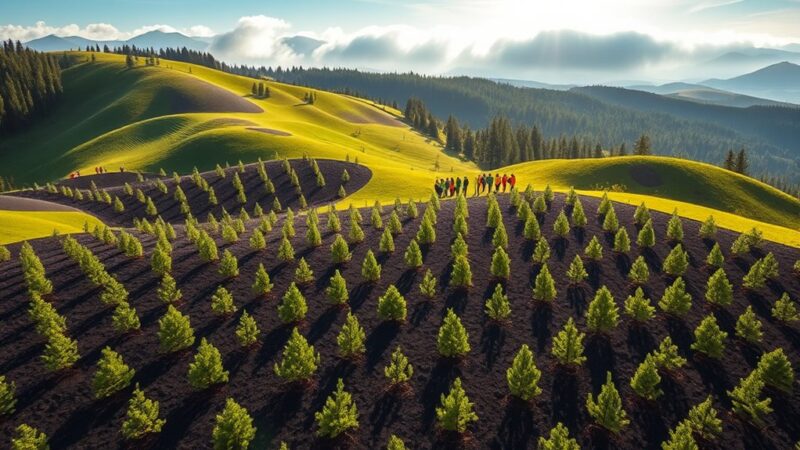
Large-scale reforestation efforts are being launched across multiple regions to revive degraded forest landscapes and combat the growing impacts of climate change. Governments, environmental organizations, and local communities are joining forces to plant millions of trees and restore natural habitats that have been lost due to deforestation, urban expansion, and unsustainable land use.
These initiatives focus not only on increasing tree cover but also on restoring biodiversity by reintroducing native species and improving soil health. Experts emphasize that well-planned reforestation can enhance carbon sequestration, helping absorb excess carbon dioxide from the atmosphere and mitigate global warming.
In addition to environmental benefits, such projects are creating livelihood opportunities for local communities through eco-restoration work, sustainable forestry, and conservation programs. Many initiatives also integrate modern technology, including satellite monitoring and data-driven planning, to ensure long-term success and transparency.
However, scientists caution that reforestation alone cannot solve the climate crisis. Protecting existing forests remains equally critical, as mature ecosystems store significantly more carbon and support complex biodiversity.
With global momentum building, these reforestation drives represent a crucial step toward ecological recovery, offering hope for restoring balance to fragile ecosystems while addressing the urgent challenges of climate change. News as reported

- upgraderz.aws@gmail.com
- upgraderz.aws@gmail.com
- upgraderz.aws@gmail.com
- upgraderz.aws@gmail.com