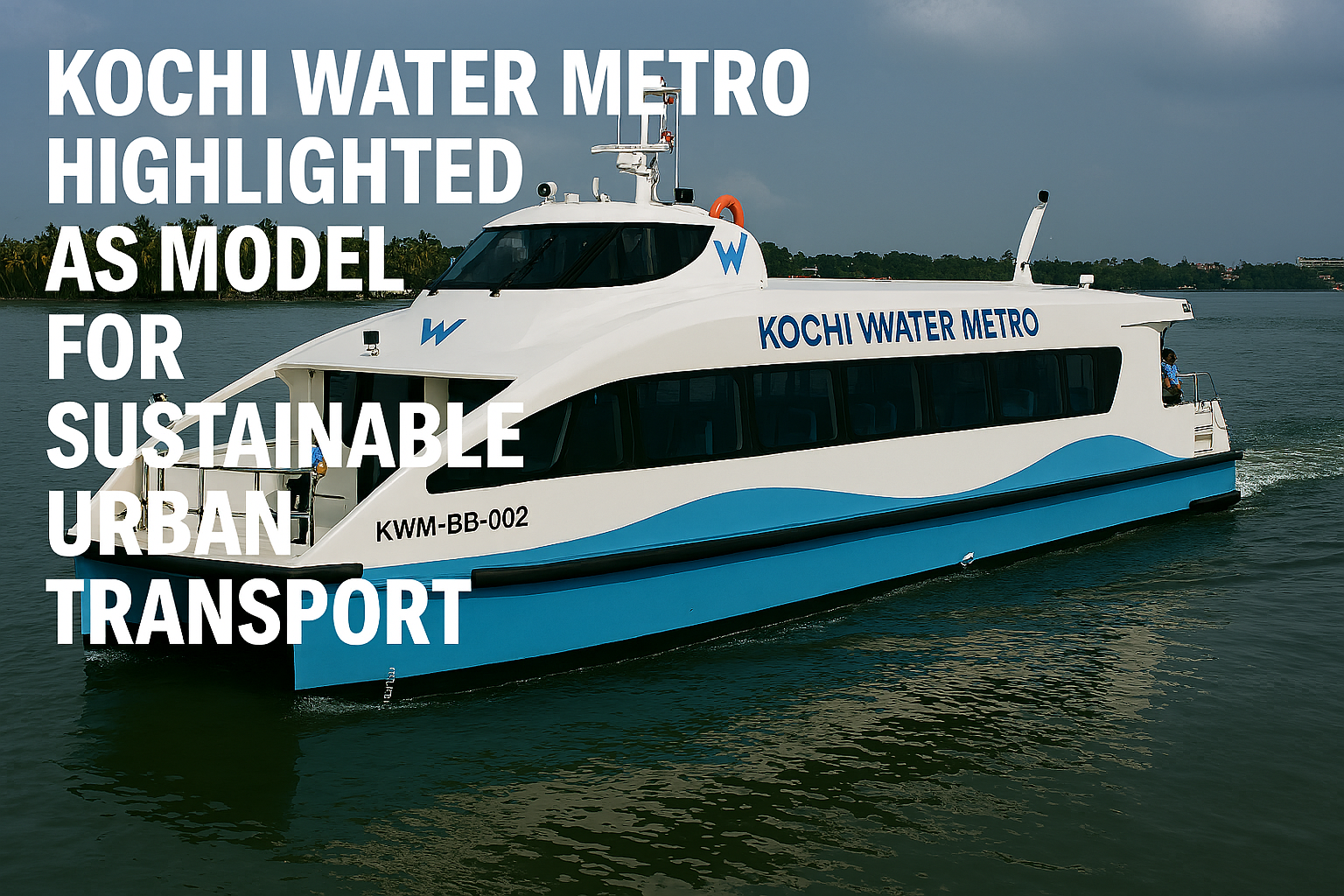
Kochi’s Water Metro has emerged as a benchmark for sustainable urban transportation, earning recognition for its innovative use of inland waterways to ease mobility challenges. The project integrates modern electric ferries with existing public transport systems, offering commuters an eco-friendly alternative to road travel.
Designed to connect islands and mainland areas across the Kochi metropolitan region, the Water Metro has significantly reduced travel time for daily commuters. Passengers benefit from predictable schedules, improved safety standards, and seamless ticketing options linked with other transport modes.
Urban transport experts note that the project addresses multiple challenges simultaneously, including traffic congestion, carbon emissions, and accessibility for remote communities. The use of electric boats aligns with climate goals by lowering pollution and operational costs.
The success of the Water Metro has also boosted local tourism and economic activity, with improved connectivity encouraging movement between islands. Small businesses and residents report better access to markets, healthcare, and educational institutions.
Authorities believe the model can be adapted by other Indian cities with rivers, lakes, or coastal waterways. Planning agencies from various states have reportedly shown interest in studying Kochi’s approach to integrating water transport into urban mobility plans.
While the project continues to expand, officials emphasize the need for consistent maintenance, passenger awareness, and last-mile connectivity. As cities search for sustainable transport solutions, Kochi’s Water Metro stands out as a practical example of innovation rooted in local geography.
News as reported