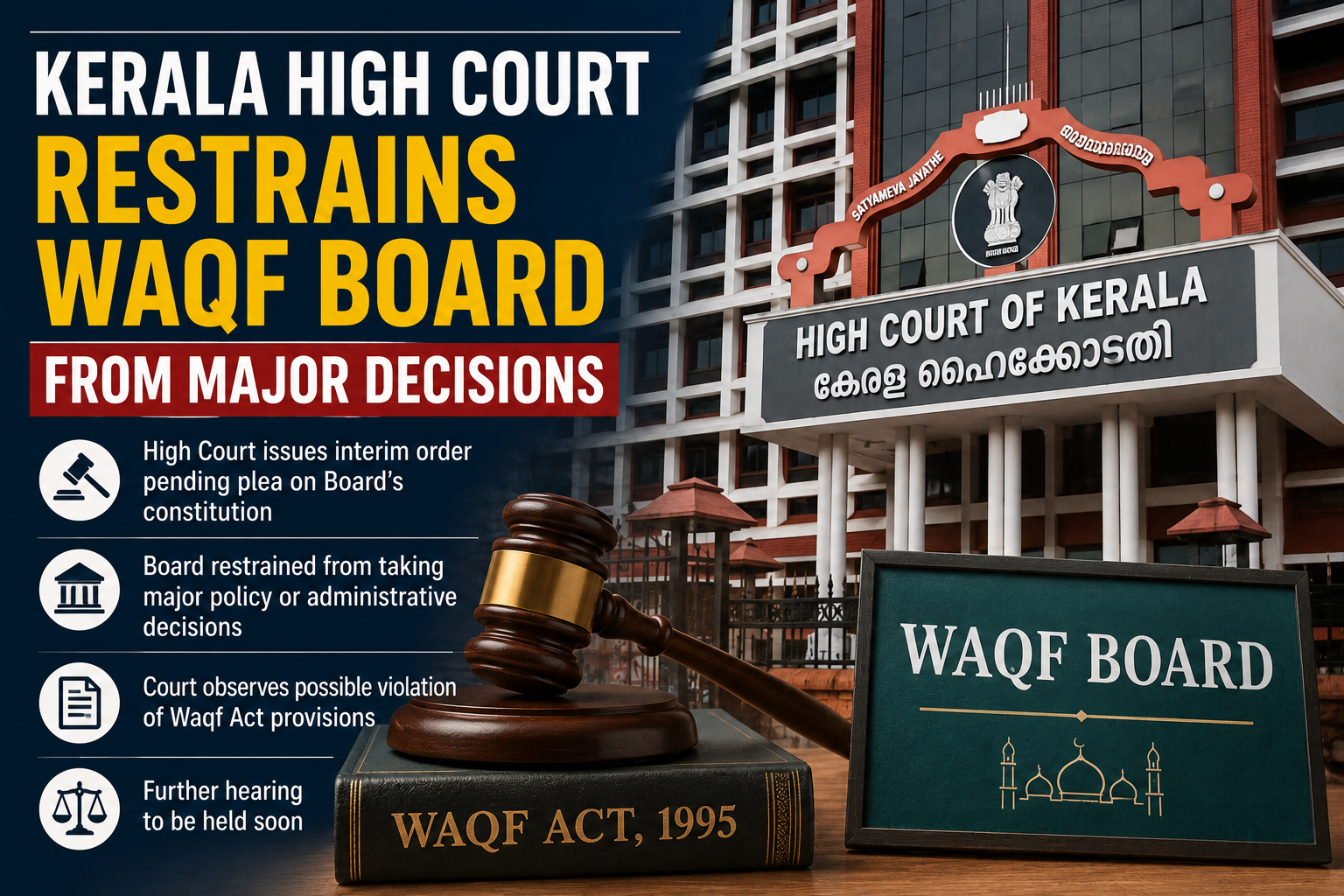
Kochi, July 16: The Kerala High Court has issued an interim order restraining the Kerala State Waqf Board from taking any major policy or administrative decisions until questions regarding the Board’s constitution are resolved. The order came while the court was hearing multiple Public Interest Litigations (PILs) challenging the legal validity of the Board’s present composition.
A Division Bench headed by Chief Justice Soumen Sen and Justice Syam Kumar V.M. observed that the Board’s present composition appears, at first glance, to be inconsistent with the provisions of the Unified Waqf Management, Empowerment, Efficiency and Development Act, 1995. Petitioners argued that the Board does not include the required two non-Muslim members and also lacks representation from the Shia community, as mandated under the law.
Pending a final decision, the High Court directed that the Waqf Board shall not take any major policy decisions, incur capital expenditure, or make significant administrative decisions without prior permission from the court. The Bench also instructed the Kerala government to ensure that its ex-officio representative is appointed in accordance with the statutory provisions. Additionally, the Board has been directed to function under the supervision of the Joint Secretary of the State Government handling Waqf matters until the issue is resolved.
The petitions before the High Court were filed by various individuals and organisations, including those questioning whether the present Board had been constituted in compliance with the amended legal provisions governing Waqf Boards. The petitioners contended that any major decisions taken by an allegedly improperly constituted Board could have long-term legal and administrative consequences.
The court clarified that its order is interim in nature and does not determine the final legality of the Board’s constitution. A detailed hearing on the pending petitions is expected in the coming days, after which the court will examine the submissions made by the State Government, the Waqf Board, and the petitioners before issuing further directions.
The interim order has attracted considerable public and legal attention, particularly because the Kerala State Waqf Board is responsible for the administration and management of Waqf properties across the state. Legal experts believe the High Court’s eventual ruling could have important implications for the governance of statutory religious bodies and the interpretation of the provisions governing their constitution and functioning.
News as reported