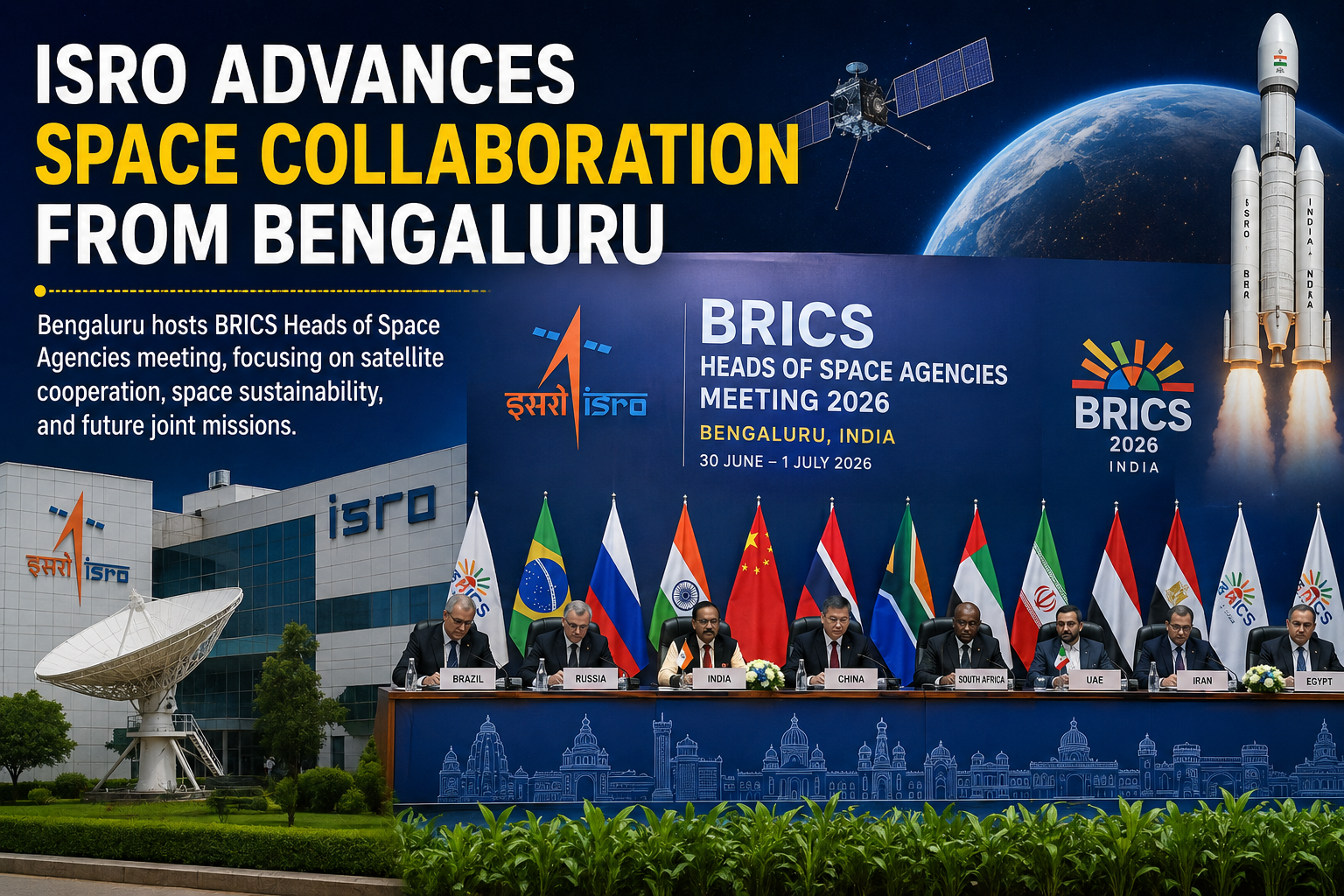
Bengaluru further strengthened its reputation as India’s space capital by hosting the 2026 BRICS Heads of Space Agencies (HOSA) Meeting, bringing together senior representatives from the space agencies of all 11 BRICS member nations. Organized by the Indian Space Research Organisation (ISRO) under India’s BRICS Chairship, the two-day summit focused on expanding international cooperation in space technology, satellite applications, and sustainable space exploration.
The meeting provided a platform for discussions on strengthening the BRICS Remote Sensing Satellite Constellation, enhancing data sharing, and expanding collaboration in disaster management, climate monitoring, agriculture, and environmental protection. Delegates also explored ways to leverage satellite technology to address global challenges while promoting the peaceful use of outer space.
A major theme of the conference was space sustainability. Participating countries exchanged views on reducing space debris, improving orbital safety, and developing long-term governance frameworks to ensure responsible use of outer space. Officials also discussed the proposed BRICS Space Council, which aims to deepen institutional cooperation and coordinate future space initiatives among member countries.
The event highlighted India’s growing leadership in the global space sector and showcased Bengaluru’s importance as the headquarters of ISRO and several leading aerospace organizations. Representatives from government agencies, research institutions, and the private space industry participated in discussions on innovation, commercial opportunities, and emerging technologies that can accelerate space exploration and economic development.
The successful conclusion of the meeting reinforces Bengaluru’s status as a global hub for space research and international collaboration. As India continues to expand its space programme and strengthen partnerships with other nations, initiatives like the BRICS HOSA meeting are expected to promote technological innovation, scientific cooperation, and sustainable development while contributing to a more connected and resilient global space ecosystem.
News as reported