

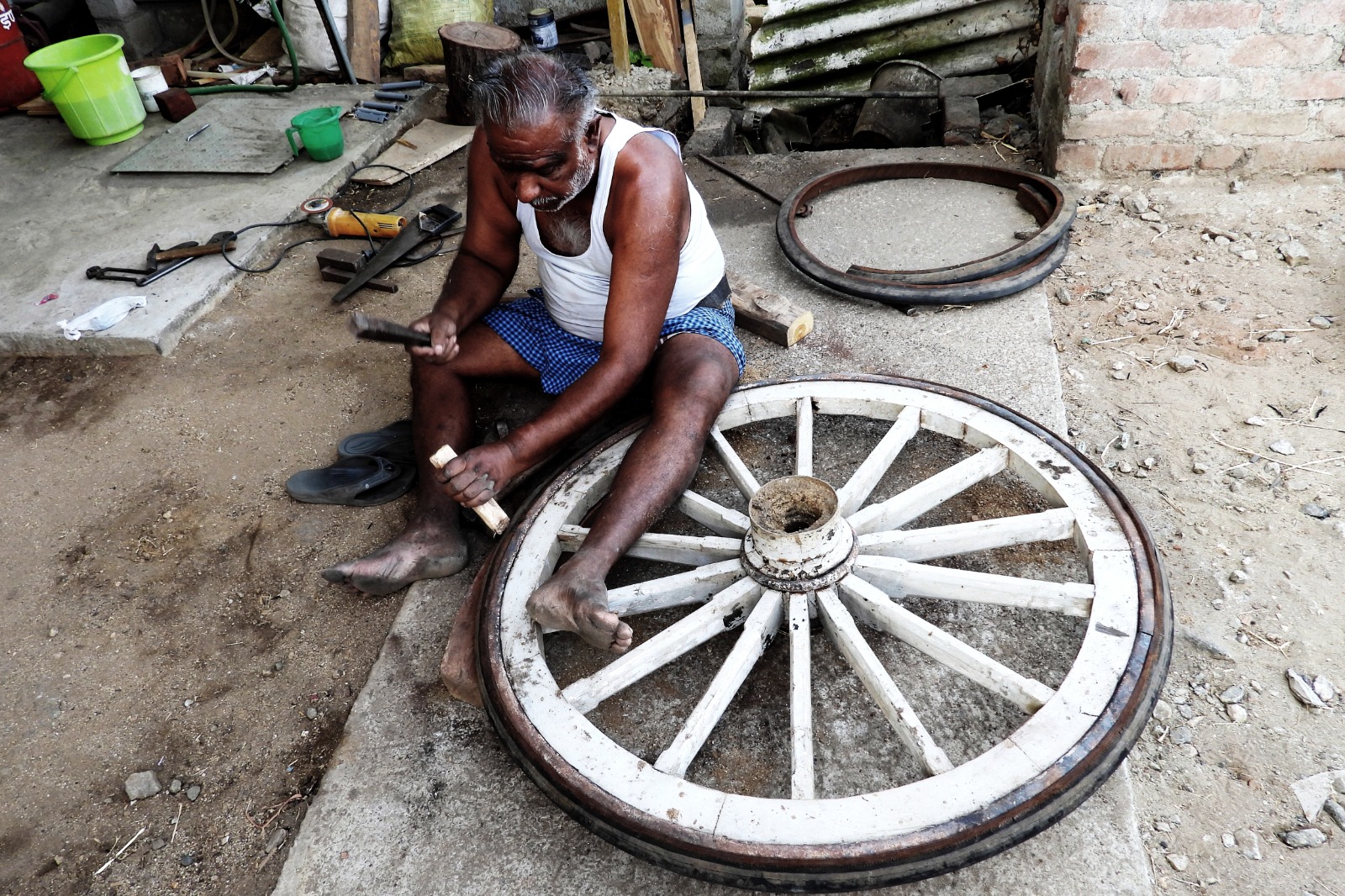
In a striking reminder of how simple innovations transformed human life, the humble wheel continues to demonstrate its enduring value in rural transport. By drastically reducing friction, wheels make it far easier to move heavy loads. For instance, dragging a 100 kg object over 10 meters may require about 4905 joules of energy, but with four wheels, the same task can be accomplished with just 123 joules—only a fraction of the effort. Even on uneven terrain, increasing the wheel’s radius helps reduce the energy needed, highlighting the practical wisdom behind traditional design.
The evolution of the wheel dates back thousands of years, with a major advancement occurring in the first millennium BCE when iron rims were introduced. Craftsmen would heat the iron rim until it expanded, then fit it around a wooden wheel. As the metal cooled, it contracted tightly, reinforcing the structure and increasing durability.
This age-old technique is still in practice today. A photograph taken near the Kerala–Tamil Nadu border captures artisans giving final touches to a wooden wheel used for ox-driven carts. In an era dominated by modern vehicles, such scenes reflect the persistence of traditional knowledge and sustainable practices that continue to serve rural communities effectively.
– Vincent Vanur
