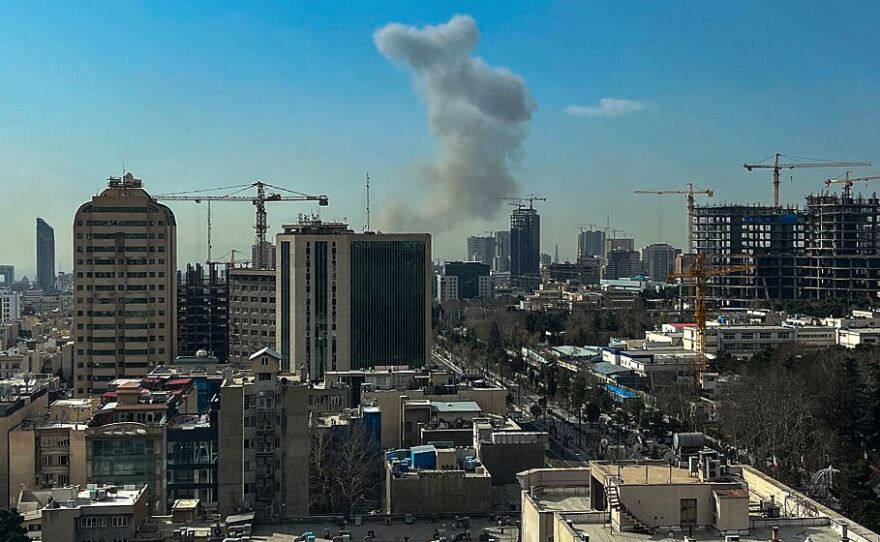
After the assassination of Iran’s Supreme Leader Ayatollah Ali Khamenei in coordinated U.S. and Israeli strikes, Tehran has swiftly established an interim leadership council to steer the country through its most serious crisis since the 1979 Islamic Revolution. The constitutional temporary leadership council — which includes President Masoud Pezeshkian, Judiciary Chief Gholam-Hossein Mohseni-Eje’i and cleric Ayatollah Alireza Arafi — has officially assumed the supreme authority duties, as Iran navigates both external military pressure and internal political uncertainty.
The deaths of numerous top military and political figures in the strikes have left the Islamic Republic under intense strain, and the new leadership is operating in what analysts describe as “survival mode,” focusing on maintaining institutional continuity and responding to ongoing attacks while a permanent successor to Khamenei is chosen. Iran’s powerful Islamic Revolutionary Guard Corps (IRGC) remains central to state stability, even as the succession process — normally handled by the Assembly of Experts — faces disruption due to wartime conditions.
President Pezeshkian and interim officials have publicly signalled a continuation of existing policies and pledged a robust military response, underscoring Tehran’s intent to project strength despite profound uncertainty. The coming days — and the eventual appointment of a new supreme leader — are likely to be critical for Iran’s political future and regional dynamics. News as reported