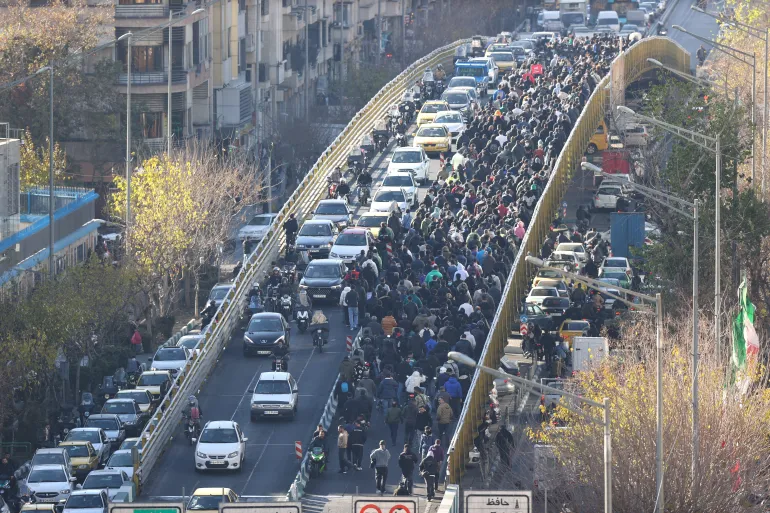
Protests across Iran have surged into one of the country’s most serious waves of unrest in years, as demonstrators driven by economic hardship, soaring inflation, and political discontent take to the streets in cities from Tehran to Mashhad. The movement, which began on Dec. 28, 2025, has spread nationwide despite a government-imposed internet blackout aimed at curbing communication and organisation.
Rights groups and activist networks report that dozens of protesters have been killed — with figures from human rights organisations citing at least 45 fatalities and thousands of arrests since the unrest began. Security forces have used live ammunition, metal pellets and tear gas in repeated confrontations with demonstrators, with some deaths including children among the casualties.
Iran’s leadership has responded with increasingly stern warnings and punitive threats against protesters, including signals that participants could face severe legal penalties. Officials have labelled many demonstrators as “rioters” or agents of foreign influence, and judiciary figures have vowed no leniency for those involved in unrest, with reports that charges carrying the death penalty could be pursued against some individuals.
International voices, including Western governments and human rights organisations, have condemned the use of lethal force and urged restraint, even as protests continue unabated under harsh conditions. The situation remains volatile as Iranian citizens press for economic relief and broader political change amid tightening repression, news as reported.