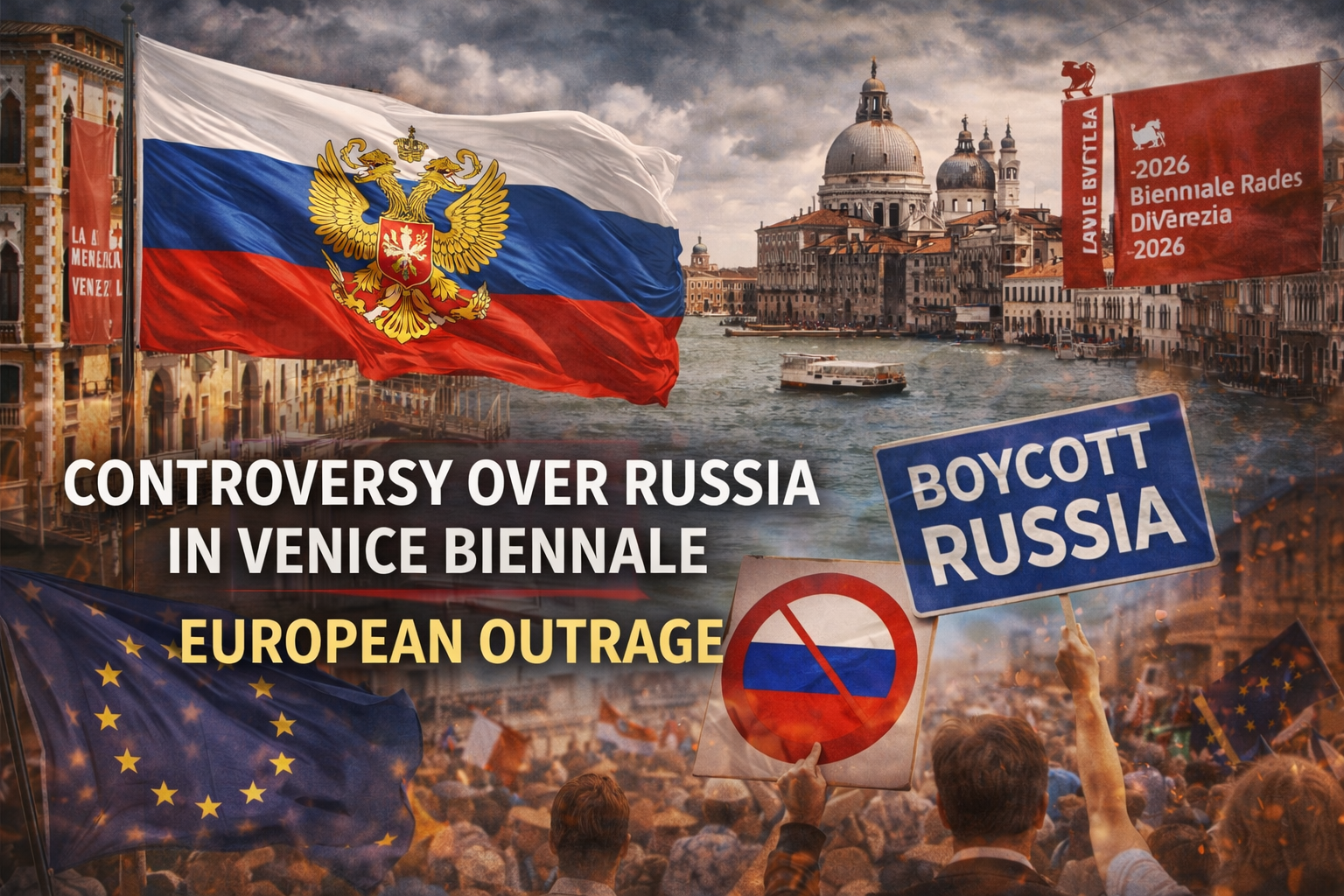
A growing international controversy has emerged after organizers of the Venice Biennale confirmed that Russia will be allowed to participate in the 2026 edition of the prestigious global art event. The decision has sparked criticism from several European governments, artists, and cultural institutions, who argue that Russia’s inclusion sends the wrong message amid ongoing geopolitical tensions.
The Venice Biennale, held in the historic city of Venice, is one of the world’s most influential contemporary art exhibitions, attracting artists, curators, and cultural leaders from dozens of countries. Each participating nation typically presents exhibitions through national pavilions showcasing artistic and cultural work.
However, the decision to allow Russia to return to the event has drawn strong reactions from several European countries and cultural organizations. Critics argue that allowing Russian state representation at a major cultural event risks normalizing political actions that many governments continue to oppose.
Some European officials and cultural institutions have called for a boycott of the Russian pavilion, while others have urged organizers to reconsider the decision. Several artists from across Europe have also expressed concern, stating that the art world should remain sensitive to broader political and humanitarian issues.
Supporters of Russia’s participation, however, argue that cultural platforms like the Venice Biennale should remain independent from political conflicts. They say that art exhibitions are meant to promote dialogue, creativity, and cultural exchange rather than geopolitical confrontation.
Organizers of the Biennale have responded by emphasizing the event’s longstanding principle of artistic openness. They stated that participation decisions are intended to support global artistic representation and maintain the exhibition’s role as a space for cultural conversation.
The debate reflects broader tensions about the role of international cultural institutions during times of political conflict. As preparations for the 2026 event continue, the controversy is expected to remain a key topic within the global art community.News as Reported.