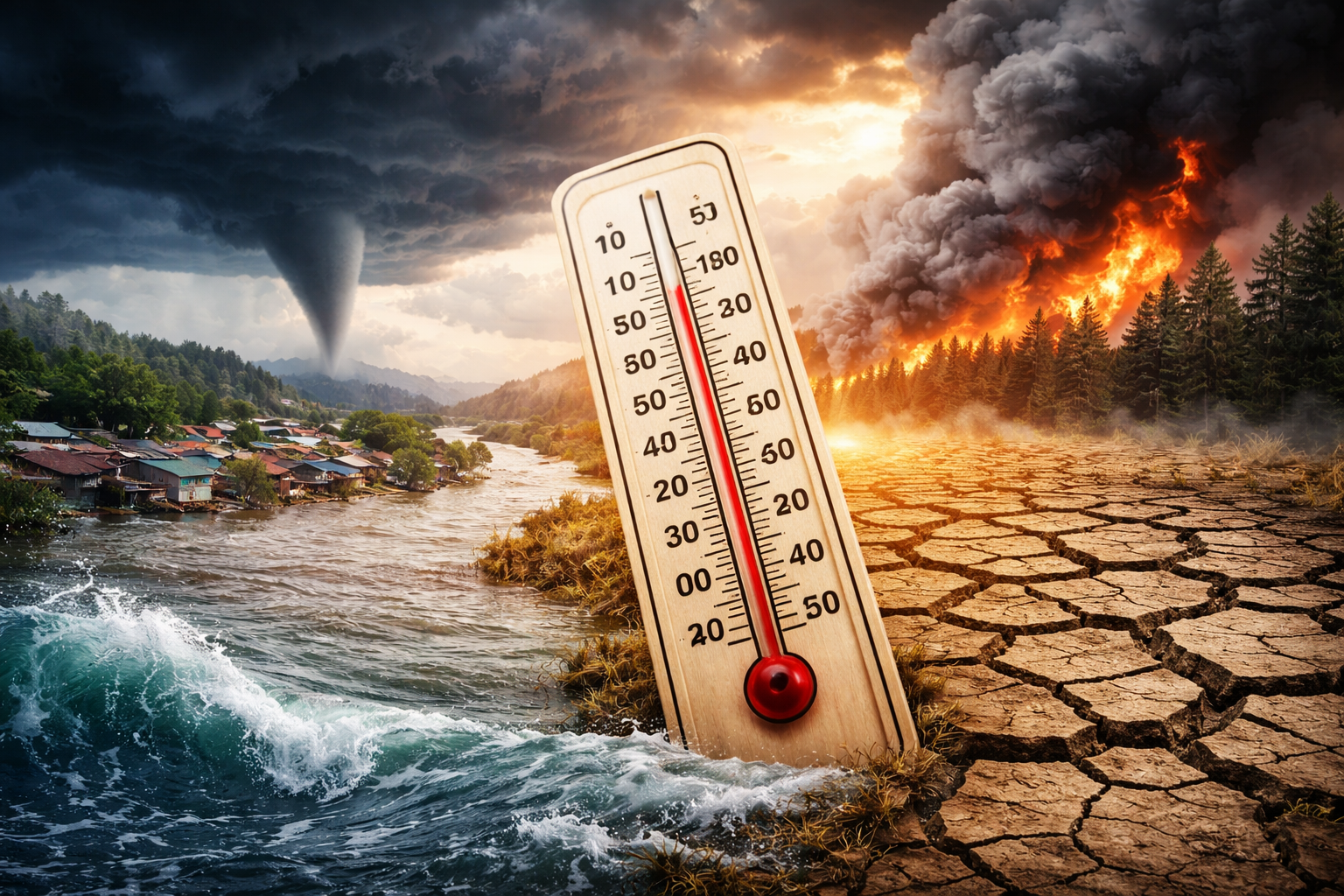
International climate and environmental agencies have issued fresh warnings as rising global temperatures and increasingly severe weather patterns continue to impact multiple regions around the world. Scientists say the frequency and intensity of extreme weather events are increasing due to long-term climate change trends.
Organizations such as the United Nations and the World Meteorological Organization have urged governments to strengthen climate preparedness measures after several countries reported heatwaves, floods, droughts, and powerful storms within the same season.
According to climate experts working with the Intergovernmental Panel on Climate Change, global temperatures have continued to rise as greenhouse gas emissions remain high. This warming trend is contributing to melting glaciers, rising sea levels, and shifting rainfall patterns that affect agriculture, water supply, and ecosystems.
Recent months have seen record-breaking temperatures in parts of Europe and Asia, while severe flooding has impacted communities in Southeast Asia and prolonged drought conditions have affected regions of Africa. Meteorologists warn that these events could become more frequent if global warming continues at the current pace.
Climate agencies are calling on governments to accelerate renewable energy adoption, reduce carbon emissions, and invest in climate-resilient infrastructure. They also emphasize the need for stronger disaster preparedness systems to protect vulnerable communities from future extreme weather events.
Experts say global cooperation will be crucial in addressing the climate crisis, as environmental changes in one region can have widespread impacts on economies, food systems, and human health worldwide.News as Reported.