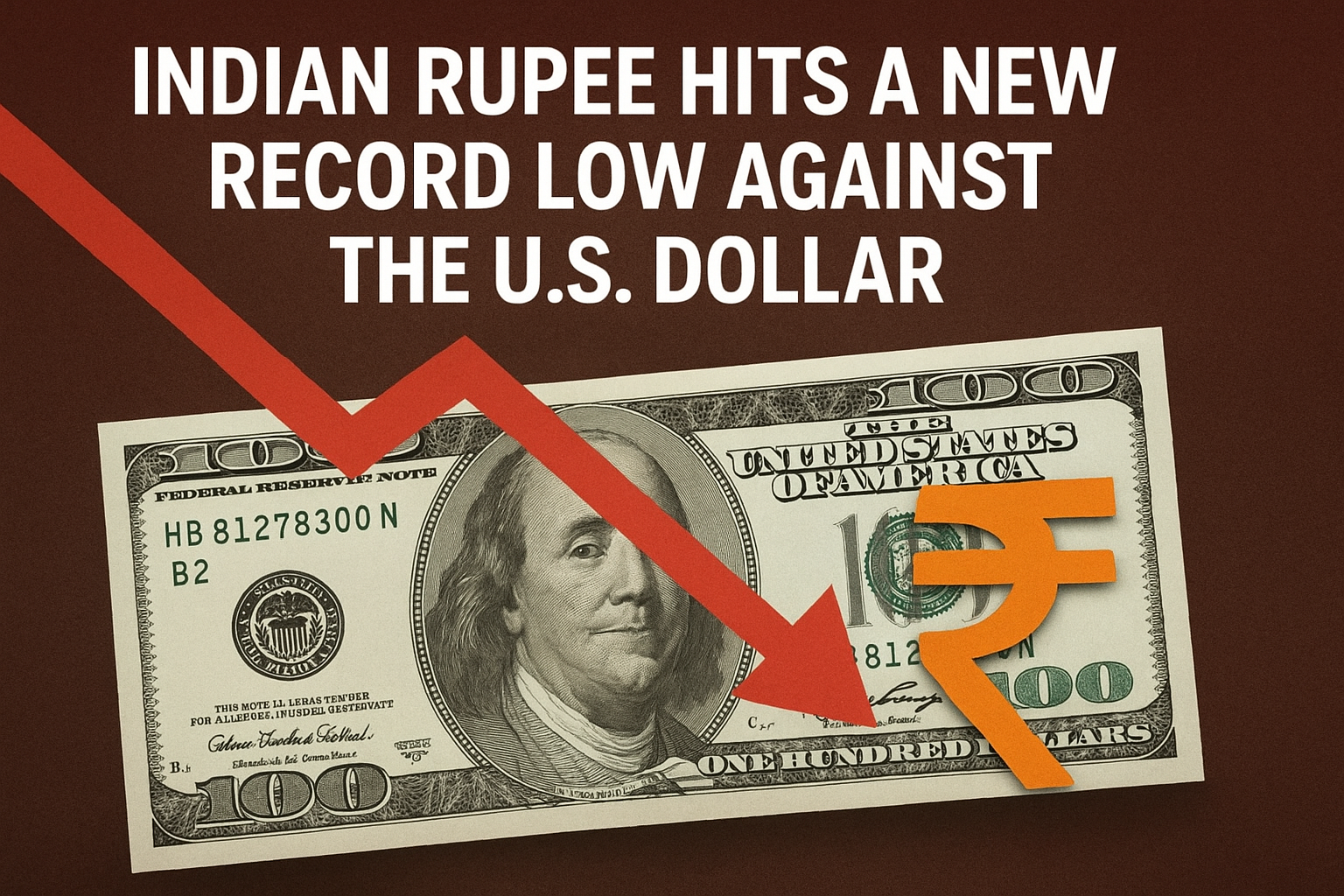
The Indian rupee slipped to a new all-time low against the U.S. dollar, reflecting intensified pressure from global trade uncertainties and sustained foreign investor outflows. The currency’s latest decline comes at a time when financial markets are grappling with rising geopolitical tensions, weakening global demand, and cautious investor sentiment.
According to market analysts, the rupee’s depreciation is driven largely by a stronger U.S. dollar, which has surged as investors seek safer assets amid global volatility. Additionally, outflows from the Indian equity and bond markets have added to the downward momentum, as foreign institutional investors continue to reassess their exposure to emerging markets.
Domestic factors have also contributed to the currency’s struggle. Concerns over India’s widening trade deficit, elevated crude-oil prices, and persistent inflationary pressures have weighed on market confidence. The Reserve Bank of India (RBI) is closely monitoring the situation, with expectations that it may intervene in the foreign-exchange market to curb excessive volatility.
Despite the current weakness, experts believe that India’s strong macroeconomic fundamentals—such as robust GDP growth projections and healthy forex reserves—may help stabilise the rupee in the medium term. However, much will depend on the global economic environment, particularly U.S. interest-rate policies and geopolitical developments.
For now, the rupee’s record low highlights the growing challenges facing emerging economies in an increasingly uncertain global financial landscape, and policymakers will need to remain alert to avoid further destabilisation.