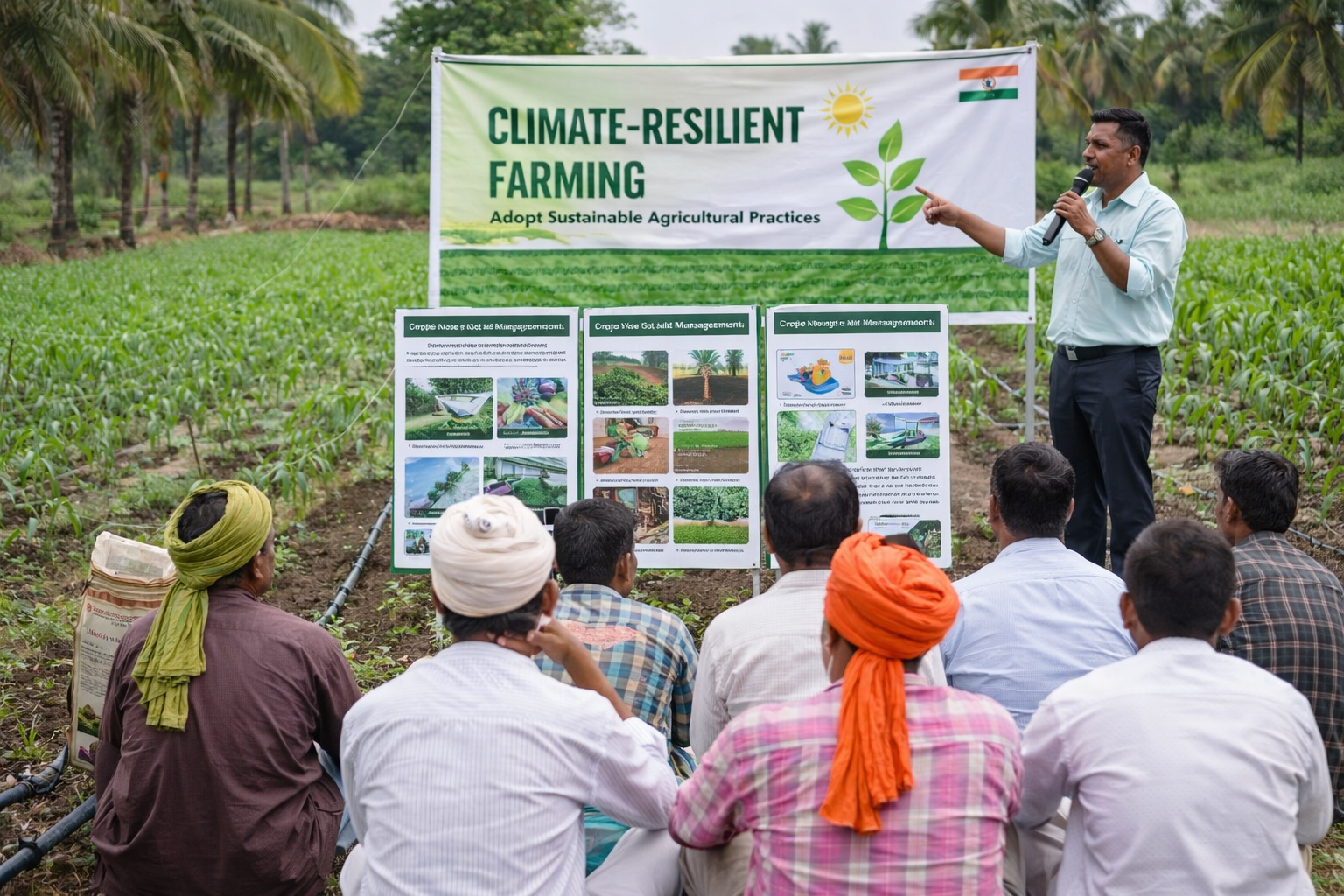
The Government of India has encouraged farmers across the country to adopt climate-resilient agricultural practices ahead of the upcoming planting season. With changing weather patterns, irregular rainfall, and rising temperatures impacting crop productivity, authorities are emphasizing the need for sustainable and adaptive farming methods to safeguard yields and incomes.
Agricultural experts are promoting the use of drought-resistant and flood-tolerant crop varieties, improved irrigation techniques such as drip and sprinkler systems, and soil health management practices. Farmers are also being advised to diversify crops and integrate agroforestry models to reduce risks associated with climate variability.
State agricultural departments, in collaboration with research institutions, are conducting awareness campaigns, training sessions, and field demonstrations to guide farmers on best practices. Digital platforms and weather advisory services are being strengthened to provide timely forecasts and crop management tips.
Officials highlight that climate-resilient agriculture not only protects farm output but also contributes to long-term environmental sustainability. Efficient water usage, reduced chemical inputs, and improved soil conservation are key pillars of the strategy.
The initiative reflects India’s broader commitment to enhancing food security, supporting rural livelihoods, and building a more resilient agricultural sector capable of withstanding climate-related challenges in the years ahead news as reported.