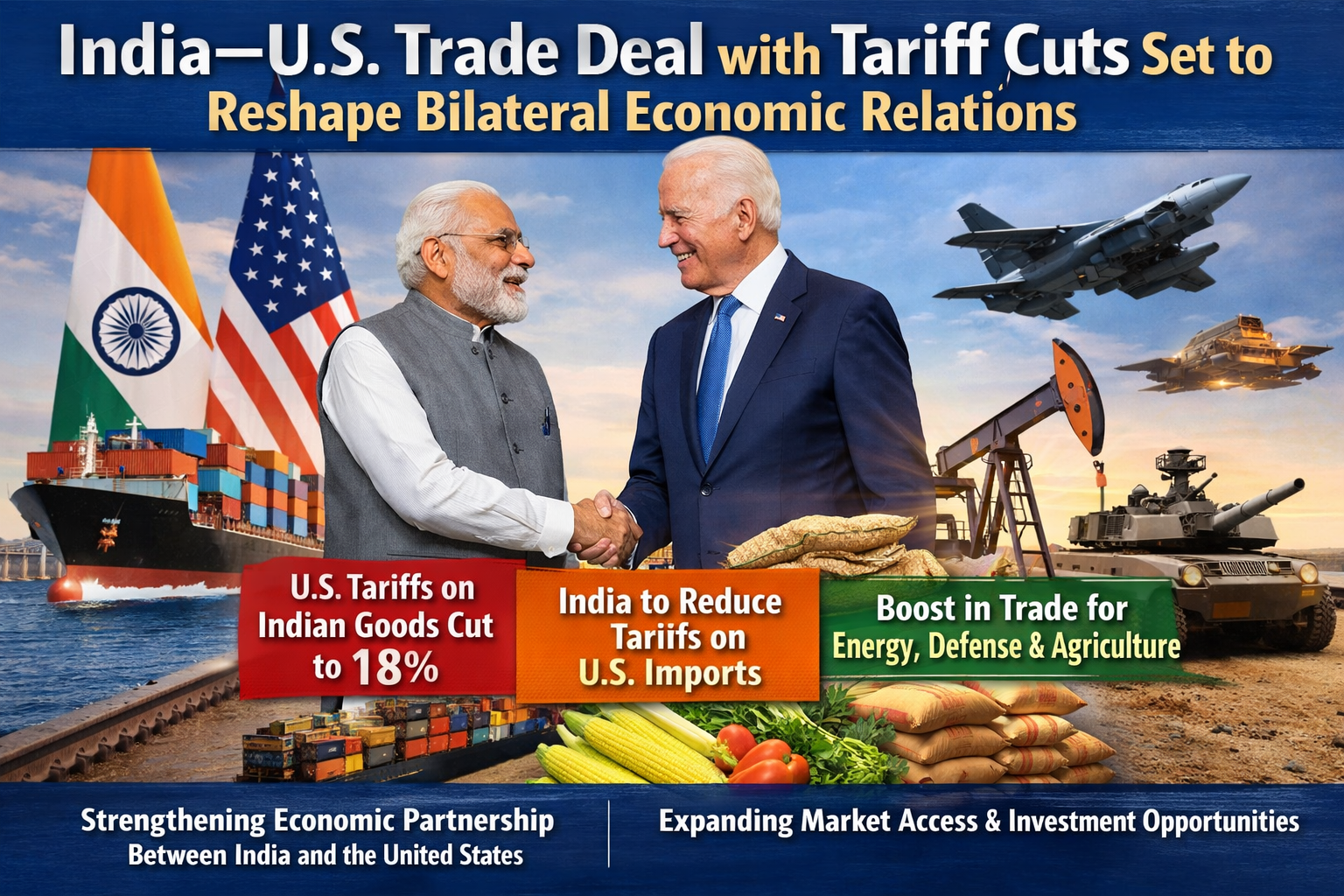
The India–United States trade deal announced in early February 2026 marks a major reset in economic relations between the two democracies, as both nations agree to ease long-standing tariff tensions and deepen cooperation across key sectors. Under the agreement, the United States will reduce reciprocal tariffs on Indian goods from previously high rates to around 18 percent, while India has agreed to cut tariffs on American imports and expand purchases of U.S. products including energy, defence equipment, and agricultural goods — a move that New Delhi expects will foster stronger market access for U.S. exporters.
The tariff reduction follows months of tense negotiations that saw reciprocal duties and punitive levies strain trade ties, but the new deal is being widely welcomed by political leaders and business groups. Indian ministers described it as a “historic turning point” that will boost growth opportunities for farmers, MSMEs, and exporters and give a clear impetus to bilateral commerce.
Industry experts also highlight potential macroeconomic benefits, citing expectations of improved market confidence, stronger investment flows, and reduced uncertainty for businesses engaged in cross-border trade. The agreement is expected to help diversify supply chains, position both countries for broader economic cooperation, and accelerate efforts to reach ambitious future trade targets. While details remain subject to further negotiation, the tariff cuts are widely seen as a significant step toward a more robust and mutually beneficial economic partnership between India and the Us news as reported.