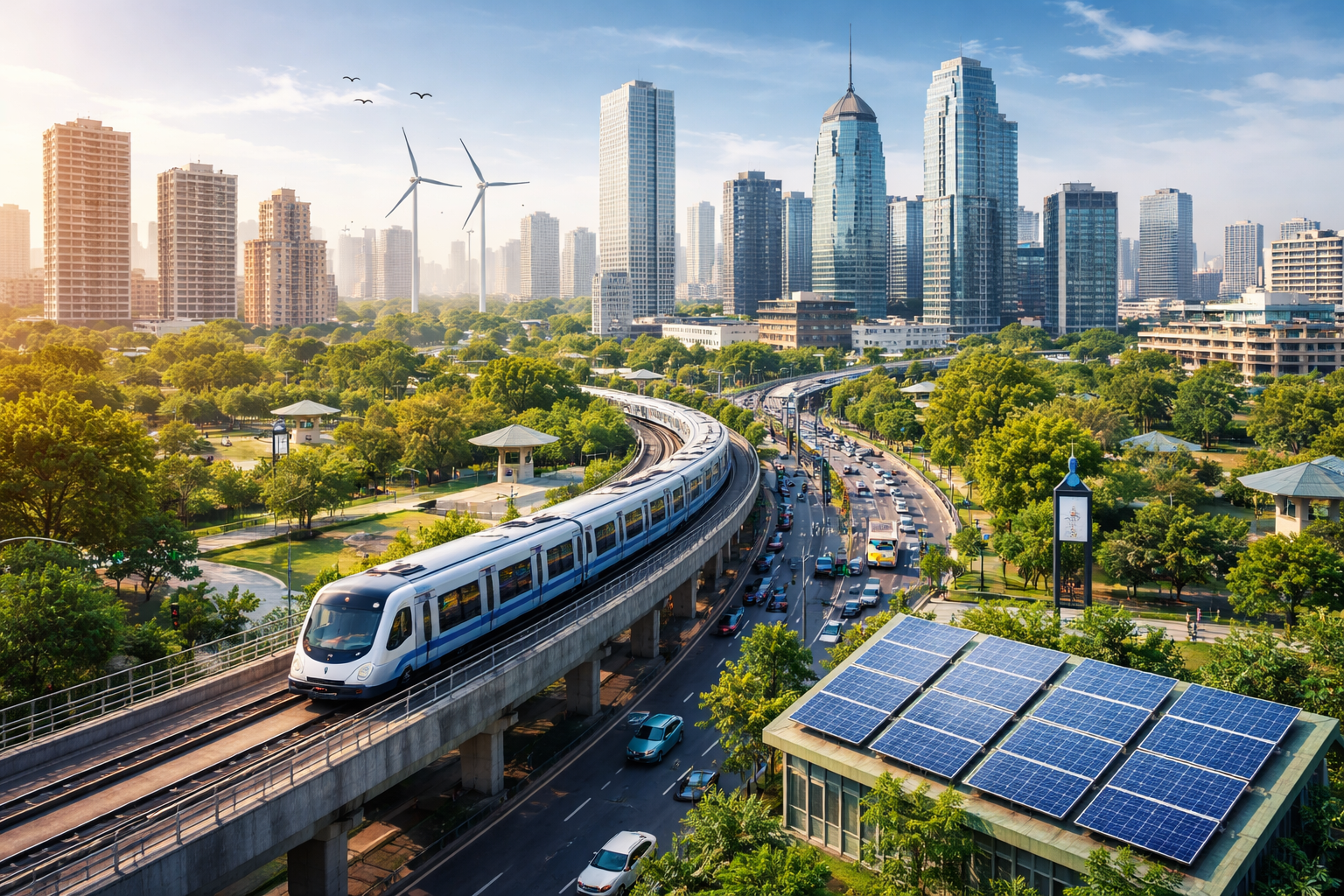
The Government of India has begun reviewing urban development strategies across the country with a strong focus on smart infrastructure, climate-resilient planning, and sustainable urban growth. The move aims to address challenges created by rapid urbanisation, including traffic congestion, housing demand, pollution, and pressure on public utilities.
Officials say the review will help ensure that future city development projects integrate modern technologies, improved infrastructure, and environmentally friendly planning practices. These measures are expected to strengthen urban governance while improving the quality of life for millions of residents in rapidly growing cities.
Across India, several cities are already prioritising infrastructure upgrades and sustainable development initiatives. In Bengaluru, newly formed city corporations have allocated a large share of their budgets to capital expenditure for projects such as elevated corridors, road improvements, and climate-resilient drainage systems to tackle flooding and traffic congestion.
Urban sustainability efforts are also expanding in other regions. For instance, Amravati in Maharashtra has introduced mandatory “cool roof” regulations for new buildings, requiring materials that reflect sunlight and reduce heat absorption. The policy is aimed at lowering urban temperatures and reducing energy consumption during extreme heat conditions.
Meanwhile, policymakers are exploring new urban infrastructure models to manage growing populations. In Nagpur, officials are reviewing plans to develop organised market complexes and designated vendor zones in densely populated areas. The proposal aims to reduce congestion, improve sanitation, and support small businesses through better facilities and infrastructure.
Experts note that national initiatives such as the Smart Cities Mission have already helped modernise urban infrastructure across dozens of cities by introducing digital governance systems, intelligent traffic management, and improved public services. The programme seeks to develop 100 cities with efficient services, robust infrastructure, and sustainable environments.
Urban planners believe that the current review process will further accelerate investments in smart mobility, green energy, digital city management systems, and climate-resilient infrastructure. As India’s urban population continues to expand, officials say long-term planning will be essential to ensure cities remain livable, technologically advanced, and environmentally sustainable in the coming decades.News as Reported.