

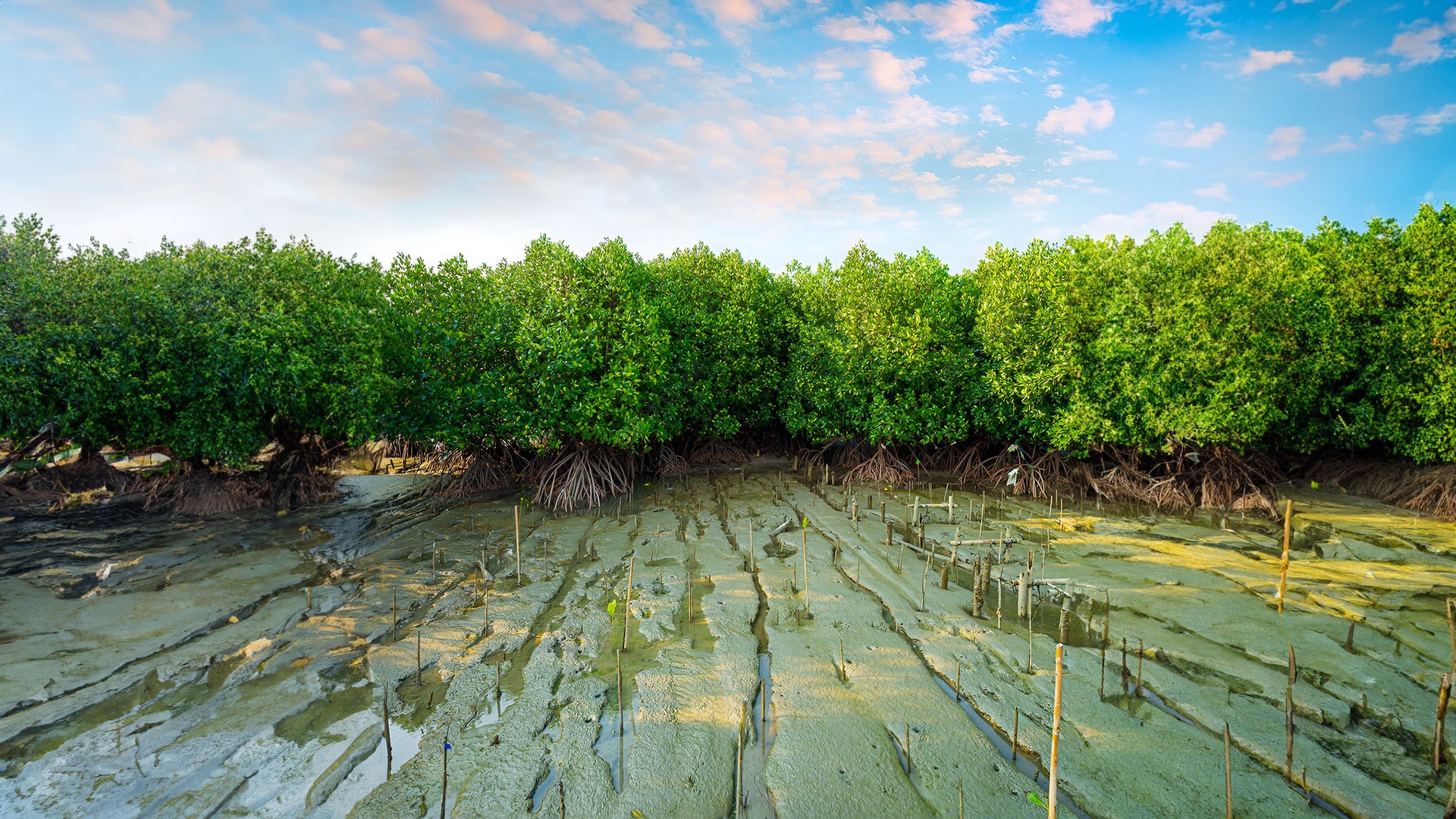
India has significantly expanded its mangrove restoration efforts in a bid to enhance coastal protection and climate resilience. Under the Mangrove Initiative for Shoreline Habitats and Tangible Incomes (MISHTI), the government plans to restore nearly 540 square kilometres of mangroves across coastal states and union territories.
The initiative aims to revive degraded coastal ecosystems while providing a natural defense against cyclones, storm surges, and coastal erosion. Mangroves, with their dense root systems, act as effective bio-shields by reducing wave energy and stabilizing shorelines, making them vital for protecting vulnerable coastal communities.
In addition to national-level programmes, several states have launched localized restoration projects. In Tamil Nadu, for instance, thousands of mangrove saplings have been planted along waterways such as the Buckingham Canal and Adyar estuary to strengthen coastal ecosystems and improve resilience against extreme weather events.
Experts emphasize that successful restoration requires careful planning and site-specific approaches, as mangrove ecosystems vary widely along India’s coastline. Monitoring, community participation, and scientific management are crucial to ensuring long-term sustainability.
India’s extensive coastline—spanning over 10,000 kilometres—makes such initiatives critical for balancing environmental conservation with the livelihoods of millions who depend on coastal resources.
With climate change intensifying coastal risks, the expansion of mangrove restoration projects marks a key step toward safeguarding ecosystems, enhancing biodiversity, and securing the future of coastal populations.
News as reported
