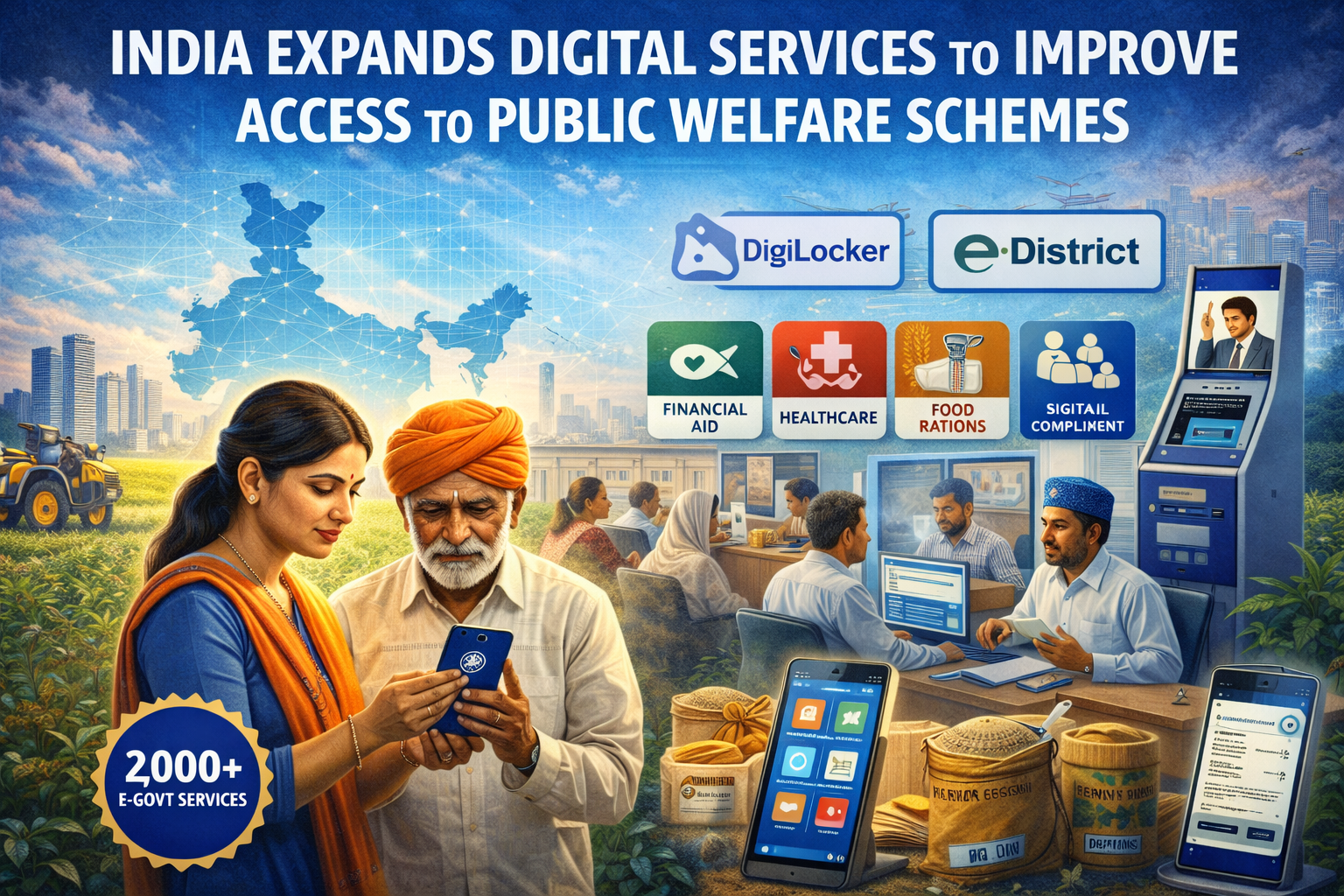
India has taken a major step toward strengthening citizen-centric governance by expanding digital services to improve access to public welfare schemes. The move aims to ensure that benefits reach eligible citizens quickly, transparently, and without unnecessary procedural hurdles, especially for people in rural and remote areas.
Under this expanded digital framework, multiple government services related to welfare delivery have been integrated into unified online platforms. Citizens can now apply for certificates, pensions, food security benefits, healthcare support, and financial assistance through simplified digital portals. These services reduce dependency on physical visits to government offices, saving time and costs while minimizing paperwork.
The initiative also focuses on inclusivity by strengthening digital infrastructure at the grassroots level. Common Service Centres (CSCs), mobile service vans, and assisted digital kiosks are helping individuals who lack smartphones or internet access. Multilingual interfaces and simplified application processes ensure that people from diverse backgrounds can use the platforms easily.
To enhance transparency and accountability, digital tracking systems allow beneficiaries to monitor application status in real time. Direct benefit transfer mechanisms ensure funds are credited directly to beneficiaries’ accounts, reducing delays and leakages. Cybersecurity measures and data protection protocols have also been reinforced to safeguard personal information.
Officials stated that expanding digital access to welfare schemes supports the broader goal of good governance and social equity. By leveraging technology, the government aims to bridge gaps in service delivery, empower citizens, and ensure that welfare benefits reach the right people at the right time, strengthening trust in public institutions nation wid the news reported