

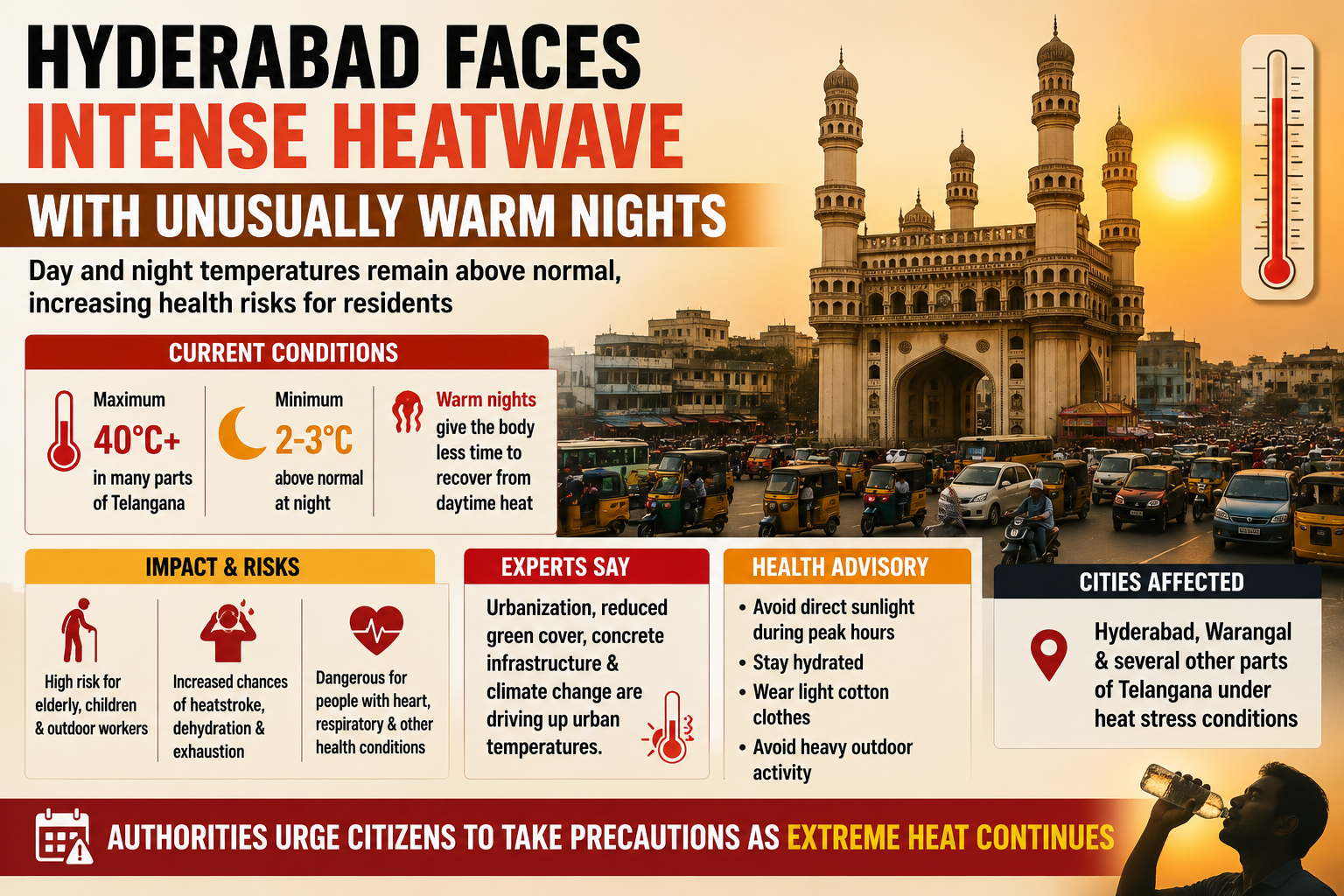
Hyderabad is currently experiencing severe heatwave conditions, with temperatures remaining high even after sunset. According to weather officials and the India Meteorological Department (IMD), both daytime and nighttime temperatures in Hyderabad have stayed above normal for several consecutive days, increasing health risks for residents across the city.
Normally, nighttime temperatures provide some relief after extreme daytime heat. However, recent reports show Hyderabad’s minimum temperatures are staying nearly 2 to 3 degrees Celsius above seasonal averages. Experts say this “warmer nights” phenomenon is becoming a serious concern because the human body gets less time to recover from daytime heat stress. Elderly people, children, outdoor workers, and people with existing health conditions are considered especially vulnerable.
Several parts of Telangana, including Hyderabad and Warangal, are witnessing continuous heat stress conditions. Maximum daytime temperatures in many districts have crossed 40°C, while nighttime temperatures remain unusually high. Weather experts believe rapid urbanization, reduced green cover, concrete infrastructure, and climate change are contributing to rising urban heat levels.
Doctors and public health officials have advised residents to avoid direct sunlight during peak afternoon hours, stay hydrated, and reduce outdoor physical activity whenever possible. Authorities are also expected to increase public awareness campaigns regarding heatstroke prevention and emergency medical response.
The situation has once again highlighted Hyderabad’s growing environmental challenges as the city expands rapidly. Urban planners have repeatedly stressed the need for more green spaces, better urban design, water conservation, and climate-resilient infrastructure to reduce long-term heat impacts.
Citizens on social media have also discussed how summers in Hyderabad feel significantly harsher compared to previous years. Many residents are now demanding stronger climate adaptation policies and better heat management planning from authorities as extreme weather events continue becoming more frequent across Indian cities.
