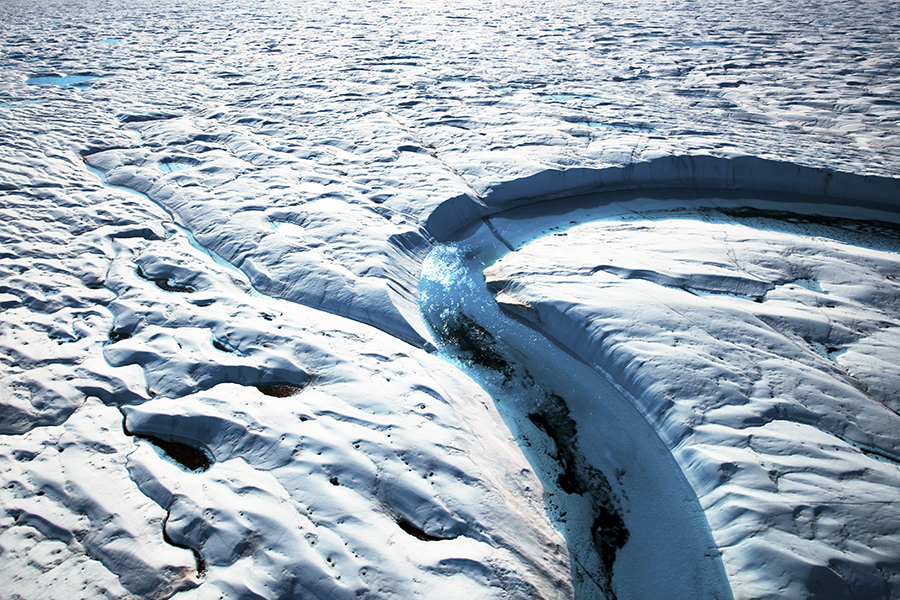
A new scientific study shows that Greenland’s most extreme ice melt events are becoming significantly worse as the climate warms. Researchers analysed surface melting across the Greenland Ice Sheet between 1950 and 2023 and found that both the area affected by severe melting and the volume of resulting meltwater have surged in recent decades. Since 1990 the footprint of extreme melt has expanded by roughly 2.8 million km² per decade, and meltwater production has climbed more than six-fold — from about 12.7 gigatons to over 80 gigatons per decade.
The study also highlights that seven of the ten most intense melt events on record have occurred since 2000, including particularly large episodes in 2012, 2019 and 2021. Even when similar weather patterns are compared, modern heat amplifies melting far beyond past levels, underscoring the role of long-term warming rather than just unusual circulation systems.
Scientists warn that if global greenhouse gas emissions remain high, Greenland could see even more frequent and intense melt events by the end of this century, with serious implications for sea-level rise and global climate systems. News as reported