

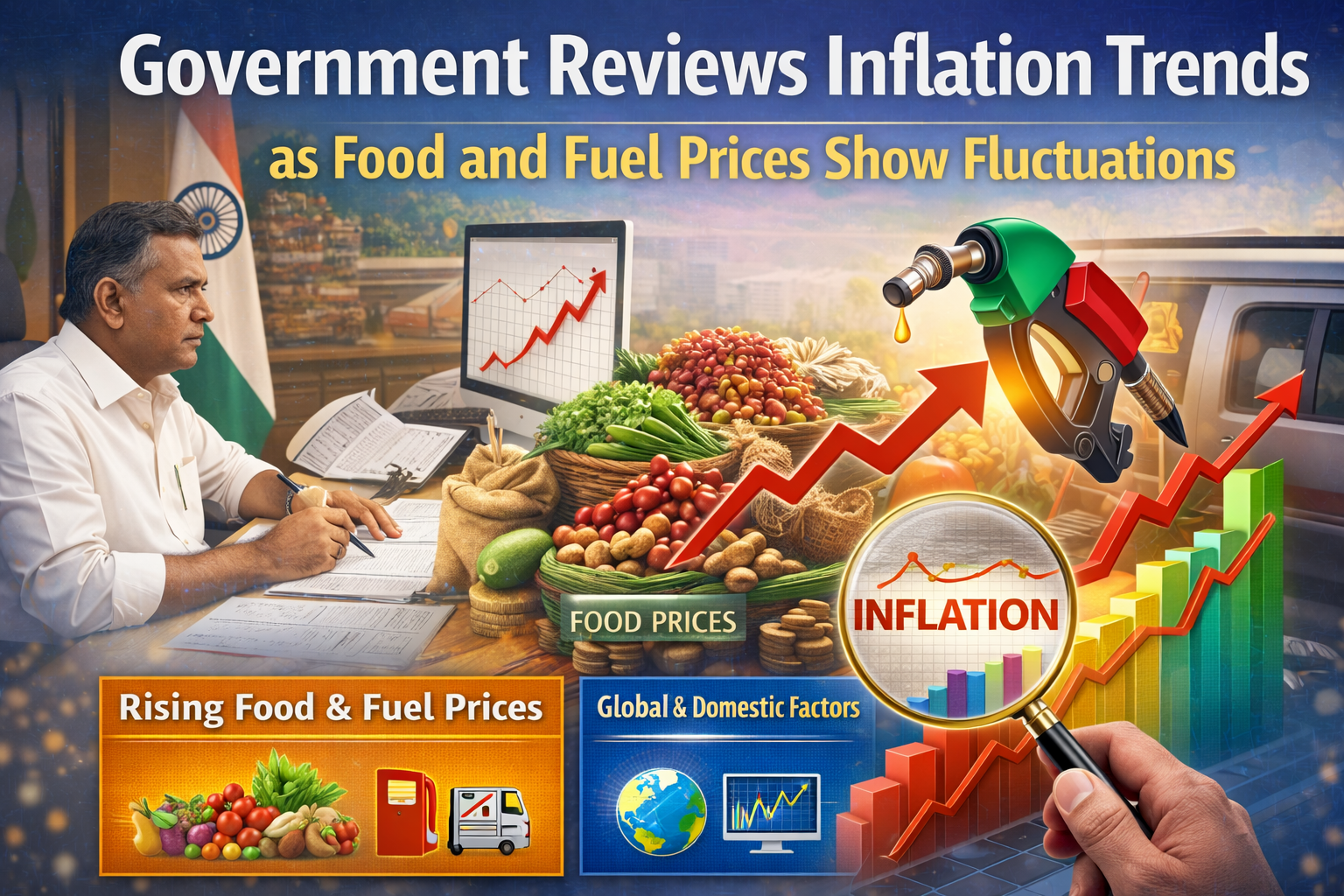
The government has undertaken a comprehensive review of inflation trends amid ongoing fluctuations in food and fuel prices, which continue to impact household budgets and overall economic stability. This review comes at a time when both global and domestic factors are influencing price movements across essential commodities.
Food prices, particularly for vegetables, grains, and edible oils, have shown periodic volatility due to seasonal changes, supply chain disruptions, and varying production levels. Weather conditions and logistical challenges have also played a role in affecting availability and pricing in different regions. Meanwhile, fuel prices remain sensitive to global crude oil trends, currency fluctuations, and international market dynamics, contributing to broader inflationary pressures.
Government officials are closely monitoring these developments and assessing policy measures to stabilize prices. Efforts include improving supply chain efficiency, maintaining buffer stocks of essential commodities, and coordinating with state governments to ensure timely distribution. In addition, fiscal and monetary tools are being evaluated to manage inflation without slowing economic growth.
The review also focuses on protecting vulnerable sections of society from rising costs. Subsidy programs, targeted welfare schemes, and price control mechanisms are being considered or strengthened to ease the burden on low- and middle-income households.
Economists suggest that while short-term fluctuations are expected, proactive policy interventions and strong domestic demand management can help maintain inflation within manageable limits. The government’s continued focus on monitoring and responding to price trends is seen as crucial in supporting economic stability and consumer confidence news as reported


- upgraderz.aws@gmail.com
- upgraderz.aws@gmail.com
- upgraderz.aws@gmail.com
- upgraderz.aws@gmail.com