

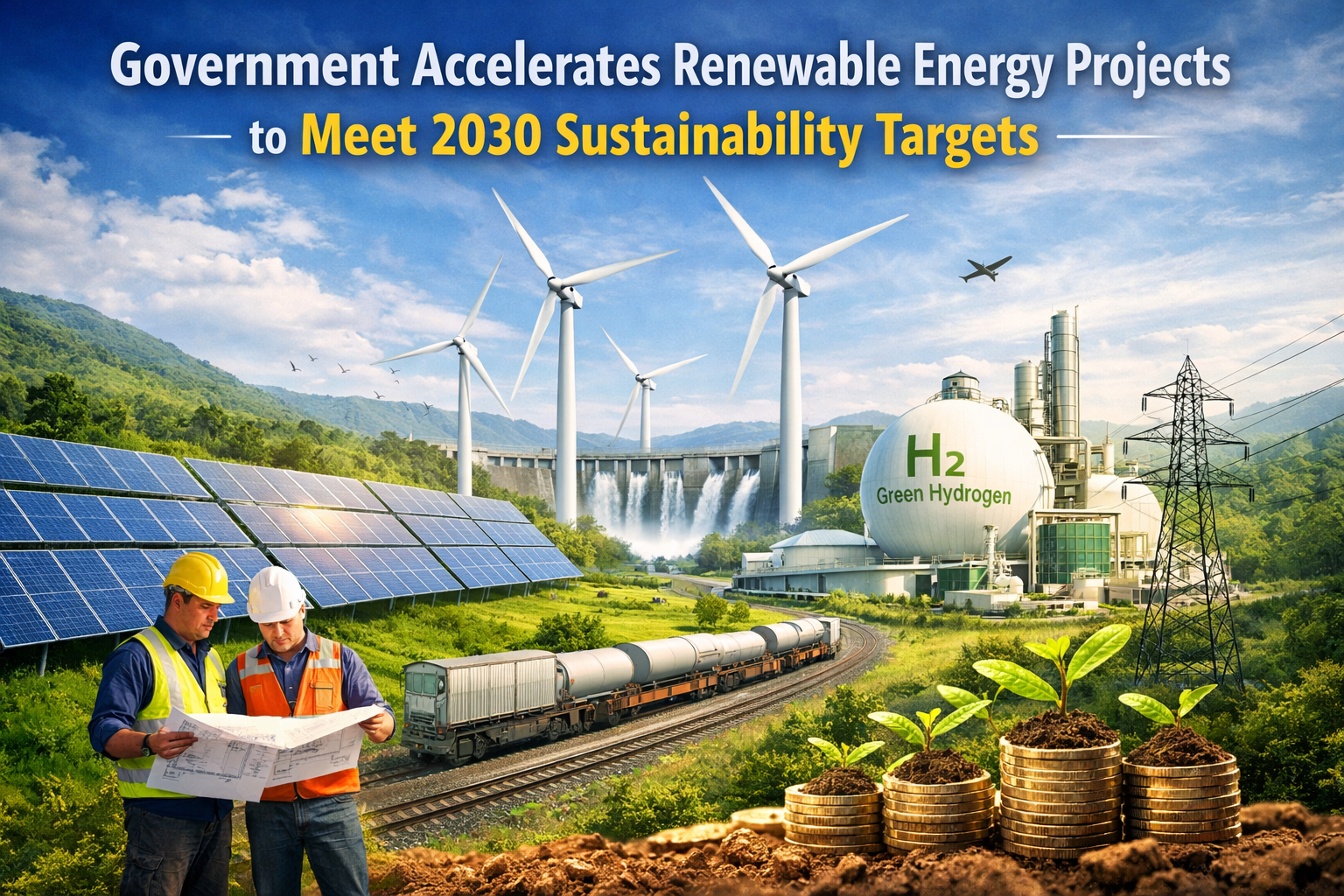
Governments around the world are stepping up efforts to accelerate renewable energy projects in a bid to meet ambitious 2030 sustainability targets. With growing concerns over climate change, rising energy demand, and dependence on fossil fuels, policymakers are prioritizing clean energy initiatives such as solar, wind, hydro, and green hydrogen. These efforts aim to significantly reduce carbon emissions while ensuring long-term energy security and economic growth.
In recent developments, authorities have announced fast-track approvals for large-scale renewable projects, improved policy frameworks, and increased investments in infrastructure. Incentives such as tax benefits, subsidies, and public-private partnerships are being introduced to attract both domestic and international investors. Governments are also focusing on upgrading power grids and storage technologies to efficiently integrate renewable energy into existing systems.
The push for sustainability is not only environmental but also economic. Renewable energy projects are generating employment opportunities, encouraging technological innovation, and supporting local industries. Rural and remote areas are benefiting from decentralized energy solutions, improving access to electricity and boosting livelihoods.
However, challenges such as land acquisition, regulatory delays, and financing constraints remain. To address these issues, governments are working closely with stakeholders to streamline processes and ensure timely project execution.
As nations race toward their 2030 goals, the acceleration of renewable energy projects marks a critical step in building a cleaner, greener, and more resilient future for generations to come news as reported.


- upgraderz.aws@gmail.com
- upgraderz.aws@gmail.com
- upgraderz.aws@gmail.com