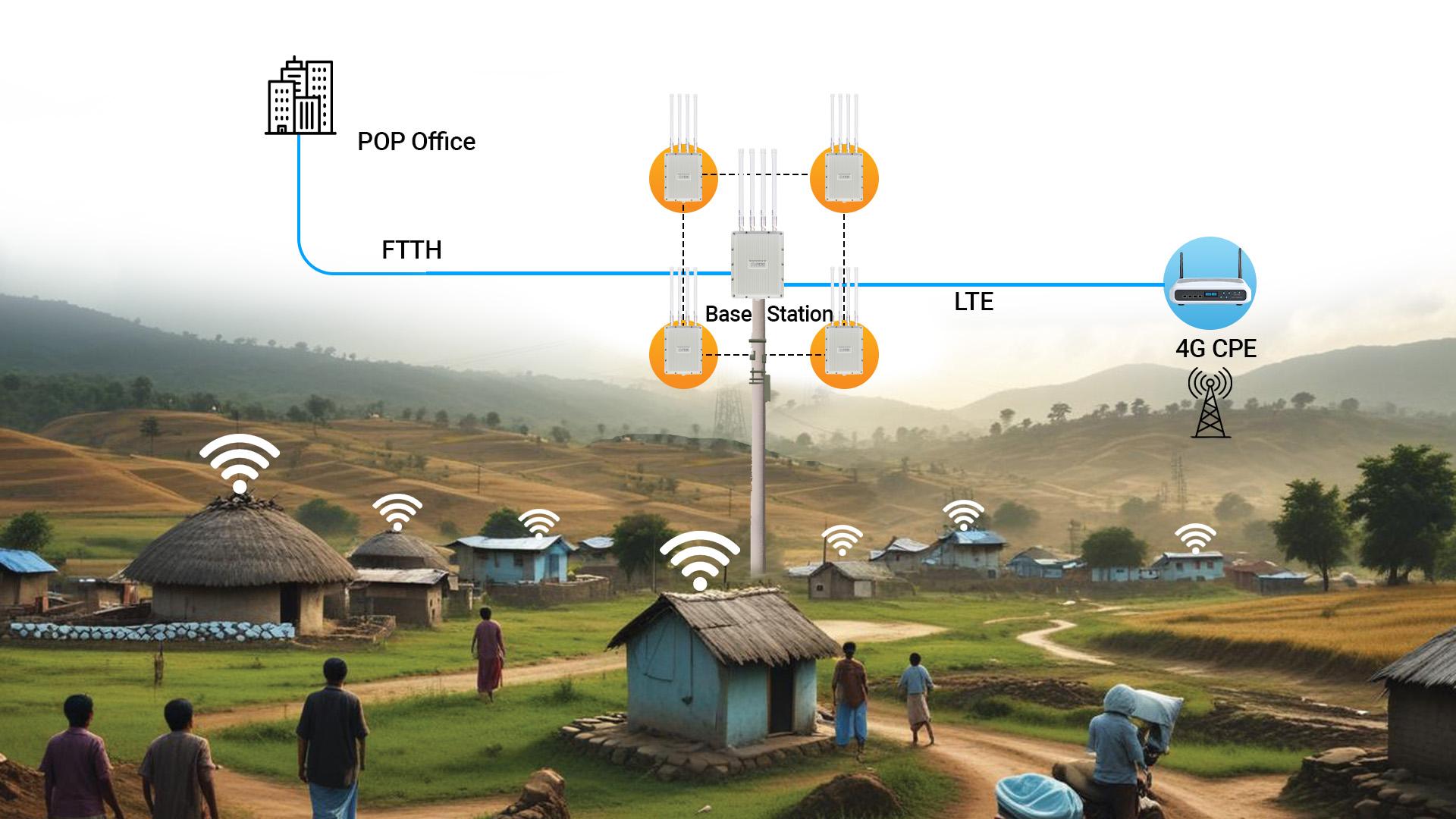
The government has intensified efforts to expand digital infrastructure across rural and semi-urban areas, aiming to bridge the connectivity gap and promote inclusive growth. With digital access becoming essential for education, healthcare, business, and governance, the initiative focuses on ensuring reliable and affordable internet services in underserved regions.
Key projects are being accelerated to extend broadband connectivity through fiber-optic networks and wireless technologies. Villages and remote locations are being connected under national digital programs, enabling residents to access online services and opportunities previously limited to urban centers. Public Wi-Fi hotspots are also being set up in strategic locations to improve accessibility for local communities.
The expansion of digital infrastructure is expected to enhance e-governance by allowing citizens to access government services, documentation, and welfare schemes online. It also supports the growth of digital payments, online education platforms, and telemedicine services, improving overall quality of life.
Special attention is being given to strengthening mobile network coverage in areas with weak or no signal. Collaboration with telecom providers is helping to fast-track tower installations and network upgrades, ensuring wider and more stable connectivity.
Additionally, the initiative aims to empower small businesses and entrepreneurs in rural areas by enabling participation in the digital economy. Farmers, artisans, and local enterprises can leverage online platforms to reach broader markets and improve income opportunities.
Through these comprehensive measures, the government seeks to build a robust digital ecosystem that drives economic development, reduces regional disparities, and supports India’s vision of a digitally connected nation news as reported.