

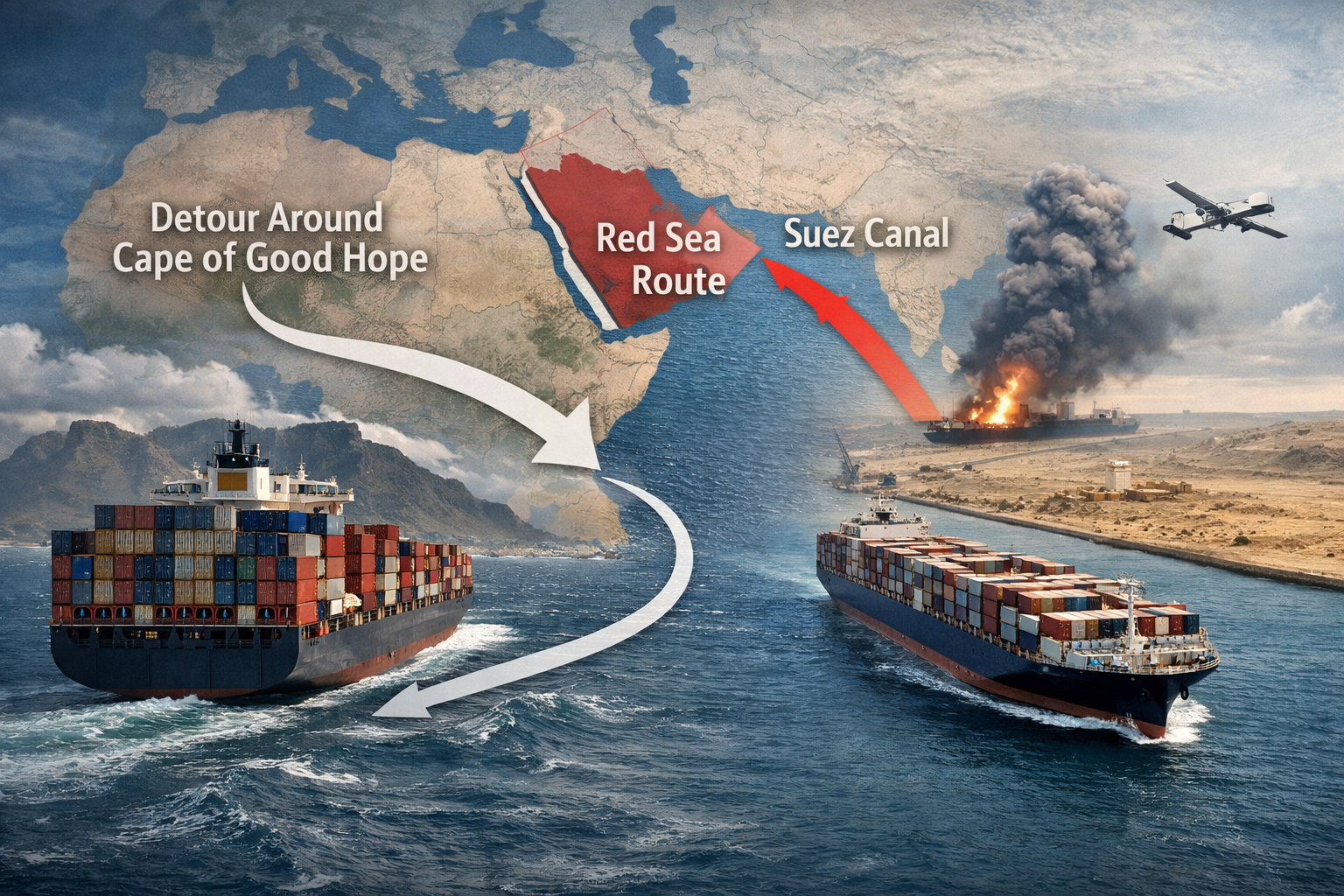
Global shipping lines have continued to adjust routes in response to heightened security risks in the Red Sea, a critical maritime corridor linking Asia and Europe. Major carriers such as A.P. Moller-Maersk, Hapag-Lloyd and others have been cautious about resuming transits through the region following years of disruptions caused by Houthi militant attacks, which began in late 2023 and prompted widespread avoidance of the Suez Canal and Red Sea.
Shipping traffic through the Red Sea dropped sharply as companies opted to reroute vessels around Africa’s Cape of Good Hope to protect crew and cargo, adding significant time and cost to voyages. The extended detours have impacted global supply chains, increasing freight costs and complicating logistics for exporters and importers alike.
Recently, there have been tentative signs of change: Maersk reported completing a Red Sea transit for the first time in nearly two years, and other lines like CMA CGM have also navigated the Suez Canal, reflecting cautious optimism about improving security conditions.
Despite these developments, many shippers remain wary of fully restoring pre-crisis routes until stability and safety can be reliably ensured. The ongoing situation continues to influence global trade patterns and highlights the geostrategic sensitivity of key maritime passages.