

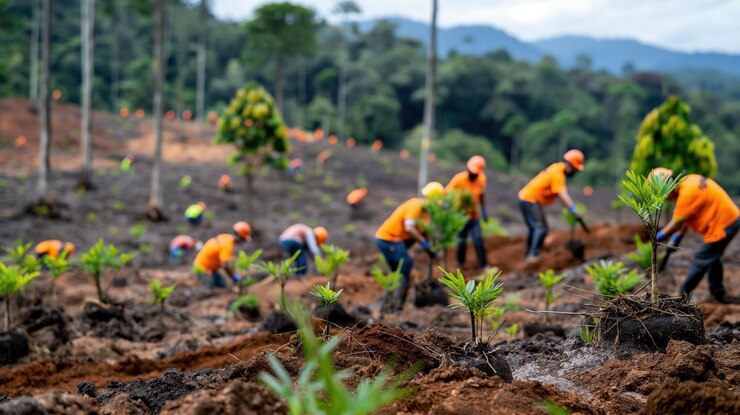
New large-scale reforestation projects are being launched across the globe, aiming to restore degraded land and strengthen biodiversity. Governments, environmental organizations, and private partners are working together to plant millions of trees and rehabilitate ecosystems damaged by deforestation, agriculture, and urban expansion.
Initiatives led by groups such as the Food and Agriculture Organization and the World Resources Institute are supporting restoration efforts in regions ranging from tropical rainforests to drylands. These projects focus not only on increasing tree cover but also on restoring native vegetation, improving soil health, and creating habitats for wildlife.
Experts say reforestation plays a crucial role in combating climate change by absorbing carbon dioxide from the atmosphere. It also helps prevent soil erosion, improves water cycles, and supports local communities by providing sustainable livelihoods.
However, scientists emphasize that reforestation must be carefully planned to ensure long-term success. Planting the right mix of native species and protecting restored areas from future degradation are key to maintaining ecological balance.
While challenges remain, these global efforts signal growing recognition of nature-based solutions as an essential part of addressing environmental crises and preserving the planet’s biodiversity for future generations. News as reported
