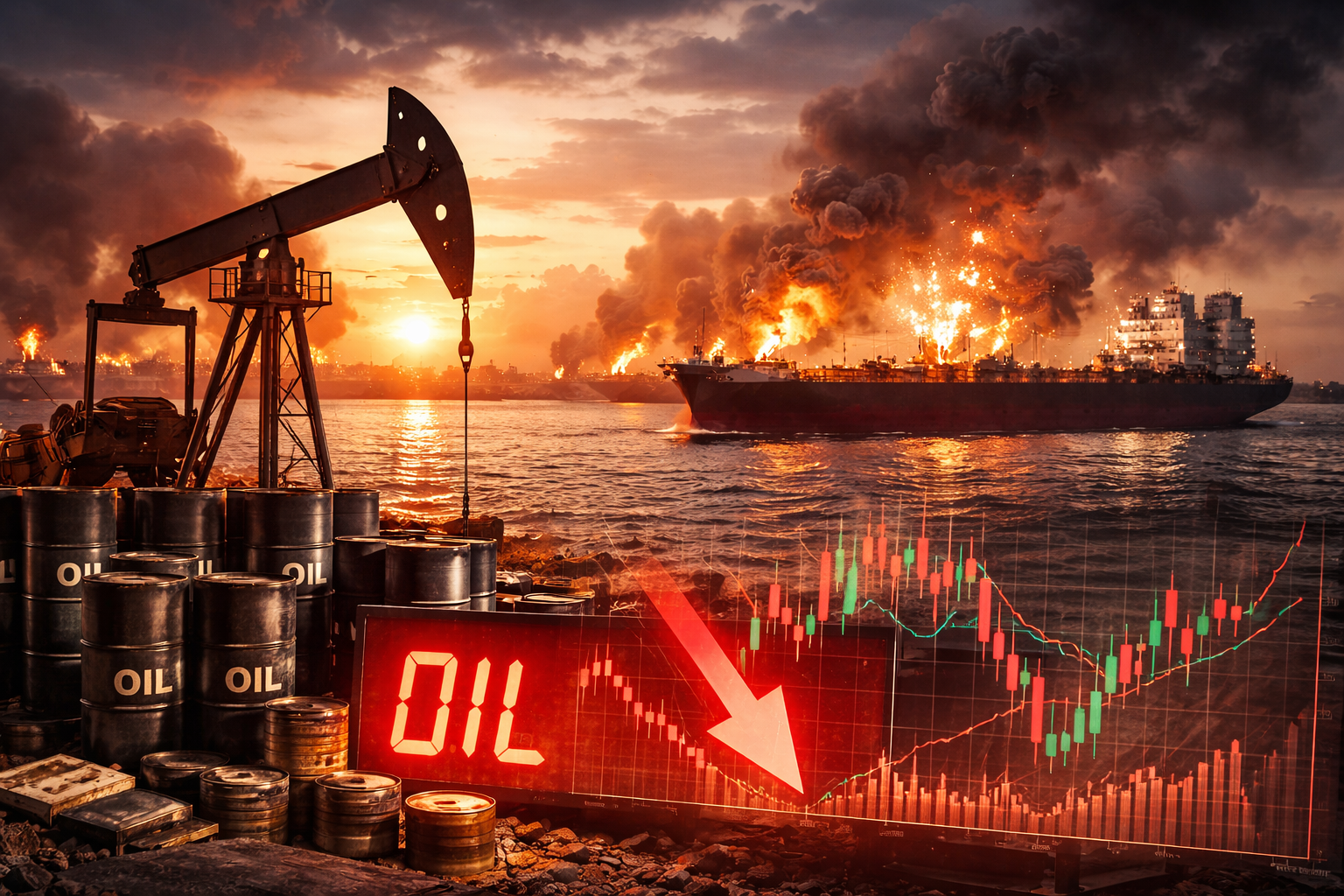
Global oil prices have become increasingly volatile as rising tensions near key Middle Eastern shipping routes threaten the stability of international energy supply chains. Markets are reacting sharply to the uncertainty, with traders closely monitoring developments that could impact the flow of crude oil through some of the world’s most important maritime corridors.
One of the primary concerns centers around the strategic Strait of Hormuz, a narrow waterway through which a significant portion of the world’s oil exports pass each day. Any disruption in this region could severely affect global energy supplies, prompting fears of shortages and rising fuel costs.
Escalating tensions involving Iran and Israel, along with attacks targeting vessels in nearby waters, have increased security risks for commercial shipping. Shipping companies are reportedly reconsidering routes and strengthening security measures to protect tankers transporting crude oil and liquefied natural gas.
Energy analysts warn that even minor disruptions in the region could send prices sharply higher. The Middle East remains one of the most critical hubs for global oil production, with major exporters including Saudi Arabia, United Arab Emirates, and Kuwait relying heavily on secure maritime routes to deliver oil to global markets.
International organizations such as the International Energy Agency have urged governments and energy producers to remain prepared for potential supply disruptions. Strategic petroleum reserves in several countries may be used if the situation escalates further.
Financial markets worldwide are already responding to the uncertainty, with oil futures fluctuating rapidly and investors shifting attention to geopolitical developments in the region. Experts warn that prolonged instability could affect transportation costs, electricity prices, and inflation levels across many economies.
As diplomatic efforts continue to ease tensions, the global energy sector remains on alert, aware that developments in the Middle East could quickly reshape the balance of energy supply and demand.News as Reported.