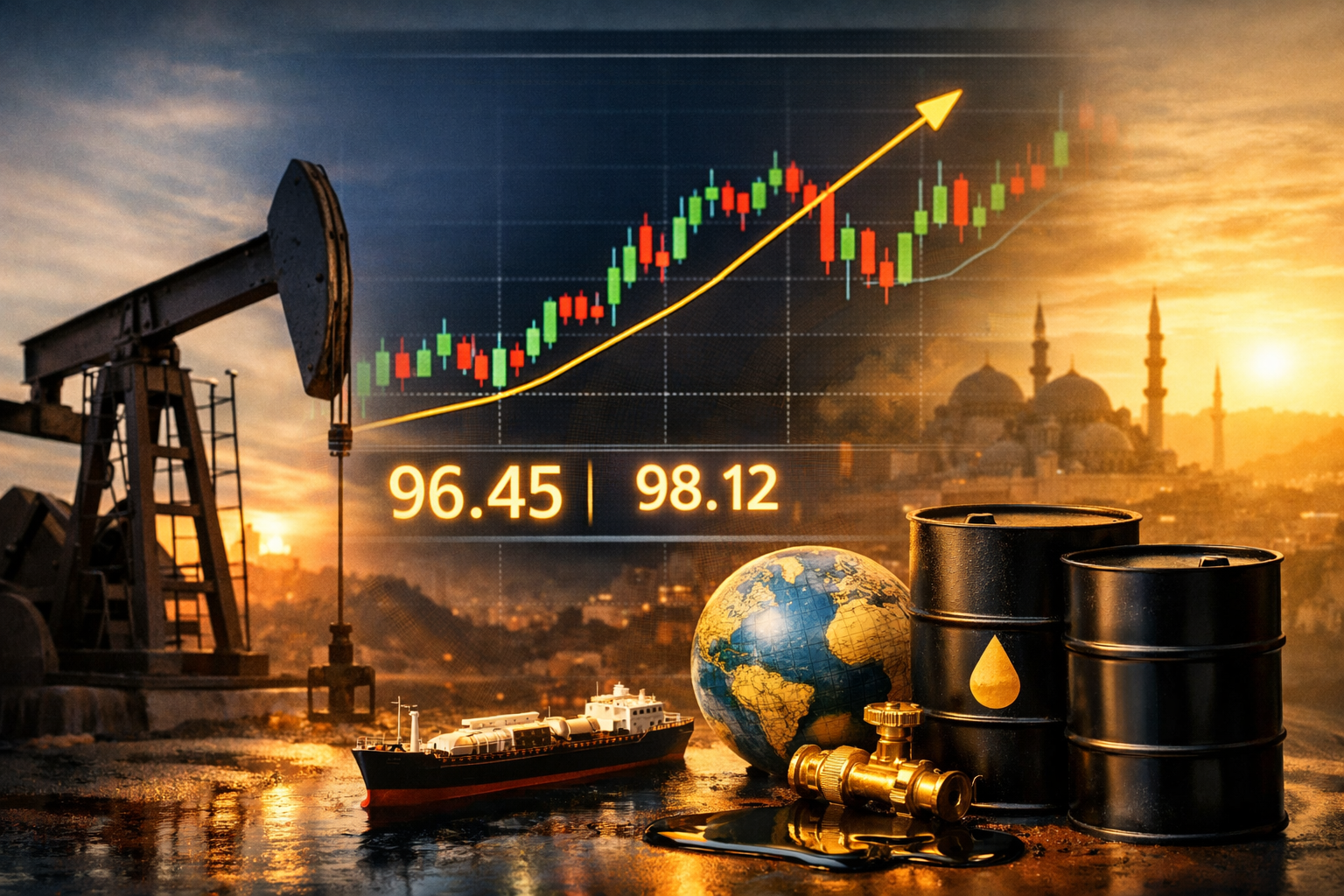
Global oil prices showed signs of stabilization this week as diplomatic efforts continued to secure a ceasefire in the Middle East, easing immediate fears of major supply disruptions in global energy markets. Analysts say the fragile truce and ongoing negotiations between the United States, Iran, and regional actors have temporarily reduced the “war premium” that had driven oil prices sharply higher in recent weeks.
International benchmark Brent crude recently traded around $96 per barrel, while U.S. West Texas Intermediate (WTI) hovered close to $98 per barrel, reflecting a noticeable drop from earlier levels above $100 during the peak of tensions. The decline followed diplomatic developments suggesting a potential ceasefire and partial reopening of key energy routes in the Gulf region.
Markets reacted quickly after reports emerged that negotiators were working toward a temporary ceasefire agreement aimed at easing hostilities and ensuring safe passage through the Strait of Hormuz, a critical route that handles roughly 20% of global oil shipments. The announcement helped calm traders who had feared severe supply disruptions if the conflict escalated further.
Despite the relative stability, experts caution that the situation remains uncertain. Tanker traffic through the Strait of Hormuz has not fully returned to normal levels, and sporadic military actions in parts of the Middle East continue to keep markets on edge. Energy analysts note that even minor disruptions in the region could quickly push prices higher again.
Global financial institutions also warn that prolonged geopolitical tensions could impact economic growth worldwide, particularly for energy-importing countries that rely heavily on stable oil supplies. As negotiations continue, traders and governments are closely monitoring developments, hoping that a lasting ceasefire could bring sustained stability to energy markets and help ease inflation pressures globally.News as Reported.