

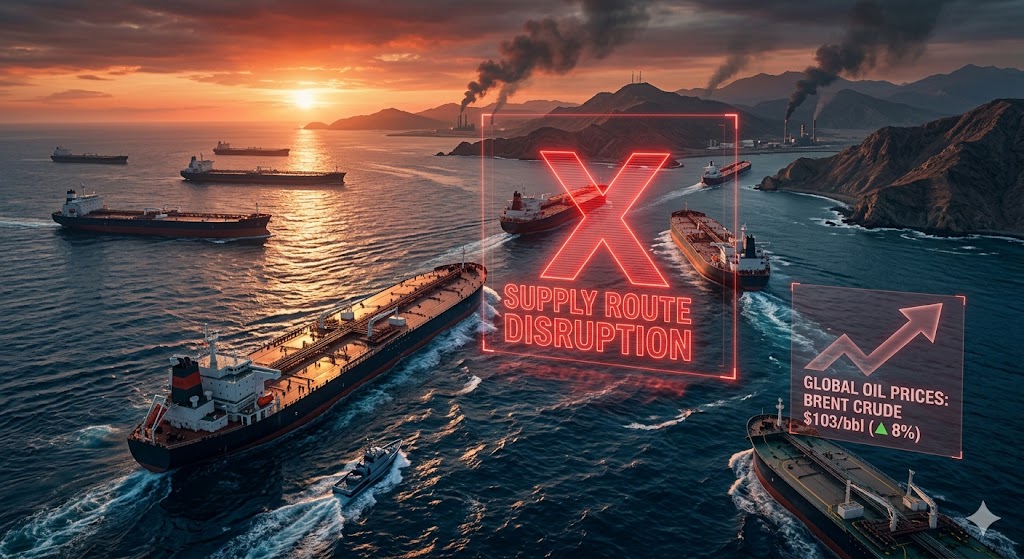
Global oil prices have surged once again as escalating tensions in the Middle East continue to disrupt key supply routes. The region, which plays a crucial role in global energy production, has witnessed increased geopolitical instability, raising concerns among investors and governments worldwide. Major shipping lanes, including the strategically vital Strait of Hormuz, are facing heightened risks, causing delays and uncertainties in oil transportation.
As a result, benchmark crude prices such as Brent and WTI have recorded noticeable gains in recent days. Analysts warn that any prolonged disruption could further tighten global supply, especially at a time when demand remains steady across major economies. Countries heavily dependent on oil imports are likely to feel the immediate impact, with rising fuel costs potentially contributing to inflationary pressures.
Energy markets are also reacting to fears of supply shortages, prompting traders to adopt cautious strategies. Governments in several nations are reportedly reviewing their strategic petroleum reserves to manage potential shocks. Meanwhile, global organizations and industry leaders are urging diplomatic efforts to stabilize the region and ensure uninterrupted energy flows.
Experts suggest that if tensions persist, oil prices could remain volatile in the coming weeks, affecting transportation, manufacturing, and overall economic growth. The situation highlights the ongoing vulnerability of global energy markets to geopolitical conflicts, emphasizing the need for diversification into renewable energy sources and more resilient supply chains to reduce dependency on unstable regions news as reported.


- upgraderz.aws@gmail.com
- upgraderz.aws@gmail.com
- upgraderz.aws@gmail.com