

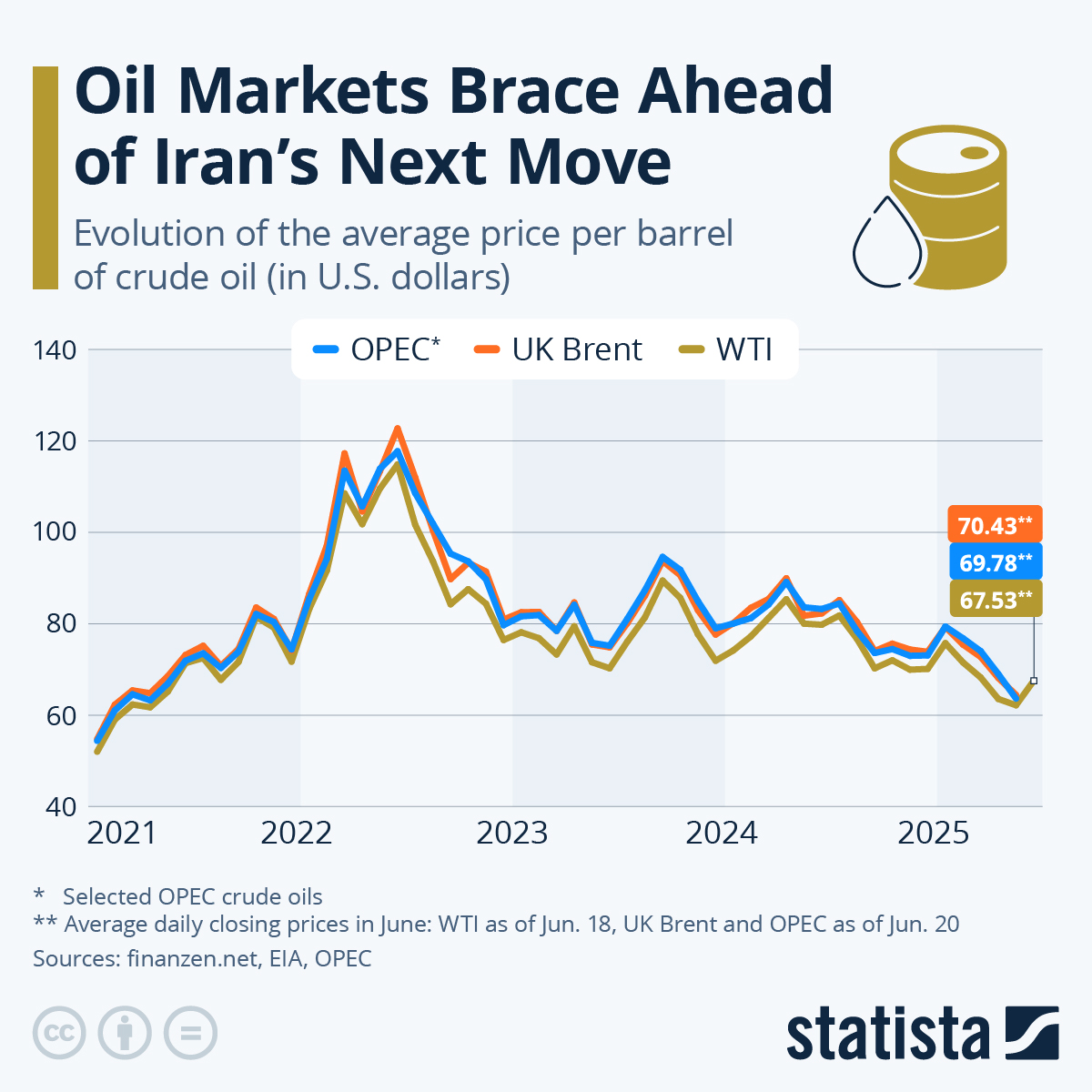
Global oil prices continue to fluctuate sharply as geopolitical tensions and supply concerns disrupt energy markets worldwide. Recent developments in the Middle East and uncertainty surrounding major oil supply routes have created significant instability in crude oil trading, impacting both global economies and financial markets.
In recent days, crude oil prices surged dramatically, with some benchmarks briefly crossing $100 per barrel, the highest level seen in several years. The spike was largely driven by escalating conflict involving Iran, the United States, and Israel, which raised fears of disruptions to oil supply across the Middle East.
One of the key concerns for global energy markets is the Strait of Hormuz, a vital maritime corridor through which nearly 20–30% of the world’s oil supply passes. Any threat to shipping routes in this region immediately affects oil availability and prices in international markets.
Energy analysts say that the ongoing conflict has increased what traders call a “war risk premium” on crude oil, pushing prices higher as markets anticipate potential supply disruptions. At one point, West Texas Intermediate (WTI) crude futures surged close to $119 per barrel, reflecting intense market uncertainty.
However, oil prices have also shown sharp downward swings as diplomatic signals and political statements influence investor sentiment. After comments suggesting that the conflict could ease in the near future, Brent crude prices dropped significantly to around $91 per barrel, illustrating the highly volatile nature of the current energy market.
The volatility in oil markets is already affecting global economies. Rising crude prices increase fuel costs, contribute to inflation, and place pressure on countries that rely heavily on oil imports. Asian economies in particular may face higher energy costs due to their dependence on Middle Eastern oil supplies.
Financial analysts warn that continued geopolitical tensions could keep oil markets unstable in the coming weeks. Governments and international energy agencies are closely monitoring the situation, while some countries are considering emergency measures such as fuel price caps and energy conservation policies to protect consumers.
As global tensions evolve, energy markets are expected to remain sensitive to political developments, military activity, and decisions by major oil-producing nations—making crude oil prices one of the most closely watched indicators in the world economy.News as Reported.


- upgraderz.aws@gmail.com
- upgraderz.aws@gmail.com
- upgraderz.aws@gmail.com
- upgraderz.aws@gmail.com