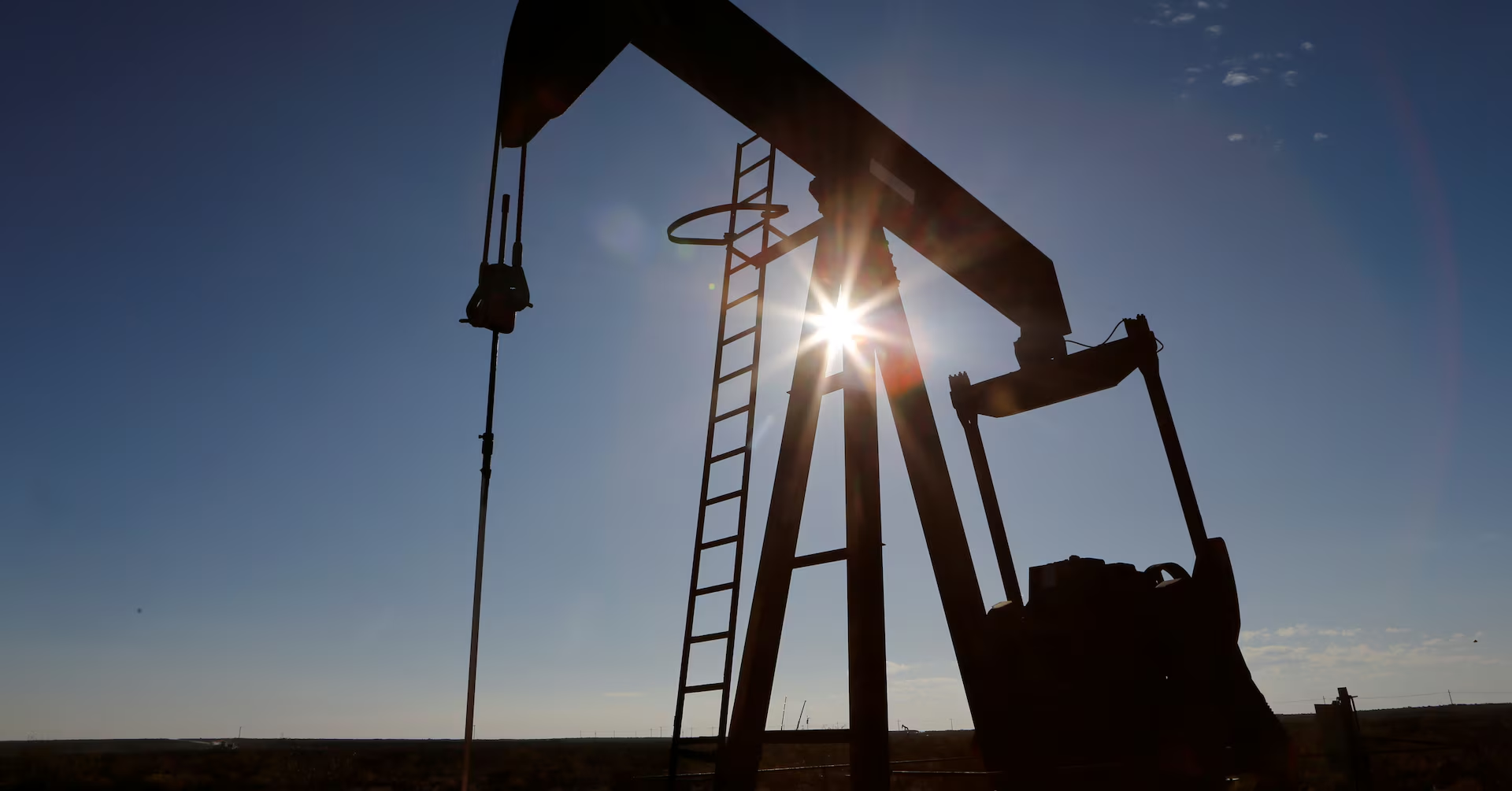
Global financial markets experienced significant turbulence this week as crude oil prices surged sharply on escalating geopolitical tensions, prompting widespread declines in major stock indices around the world. Benchmark crude futures climbed as much as 10–13%, approaching multi-month highs as fears grew over potential disruptions to Middle Eastern oil supplies — particularly through the Strait of Hormuz, a key artery for roughly one-fifth of the world’s oil trade.
In response to the regional instability, Asian and European stock markets fell, with indices such as Hong Kong’s Hang Seng and Japan’s Nikkei down more than 1%, and futures pointing to declines in London and Wall Street. U.S. stock futures showed notable weakness, with major benchmarks like the S&P 500 and Nasdaq 100 trading lower in early sessions. Investors retreated from risk assets, rotating into traditional safe havens such as gold and government bonds amid rising uncertainty.
Energy and defense stocks were among the few gainers, buoyed by higher oil prices and increased demand for security-related equities, while travel, banking, and tech sectors bore the brunt of the downturn. Analysts have warned that sustained geopolitical instability could prolong volatility in both commodity and equity markets, potentially heightening inflationary pressures and complicating monetary policy decisions globally.
Traders and policymakers alike are watching developments closely, hoping for de-escalation to stem further market stress as reported news as reported.