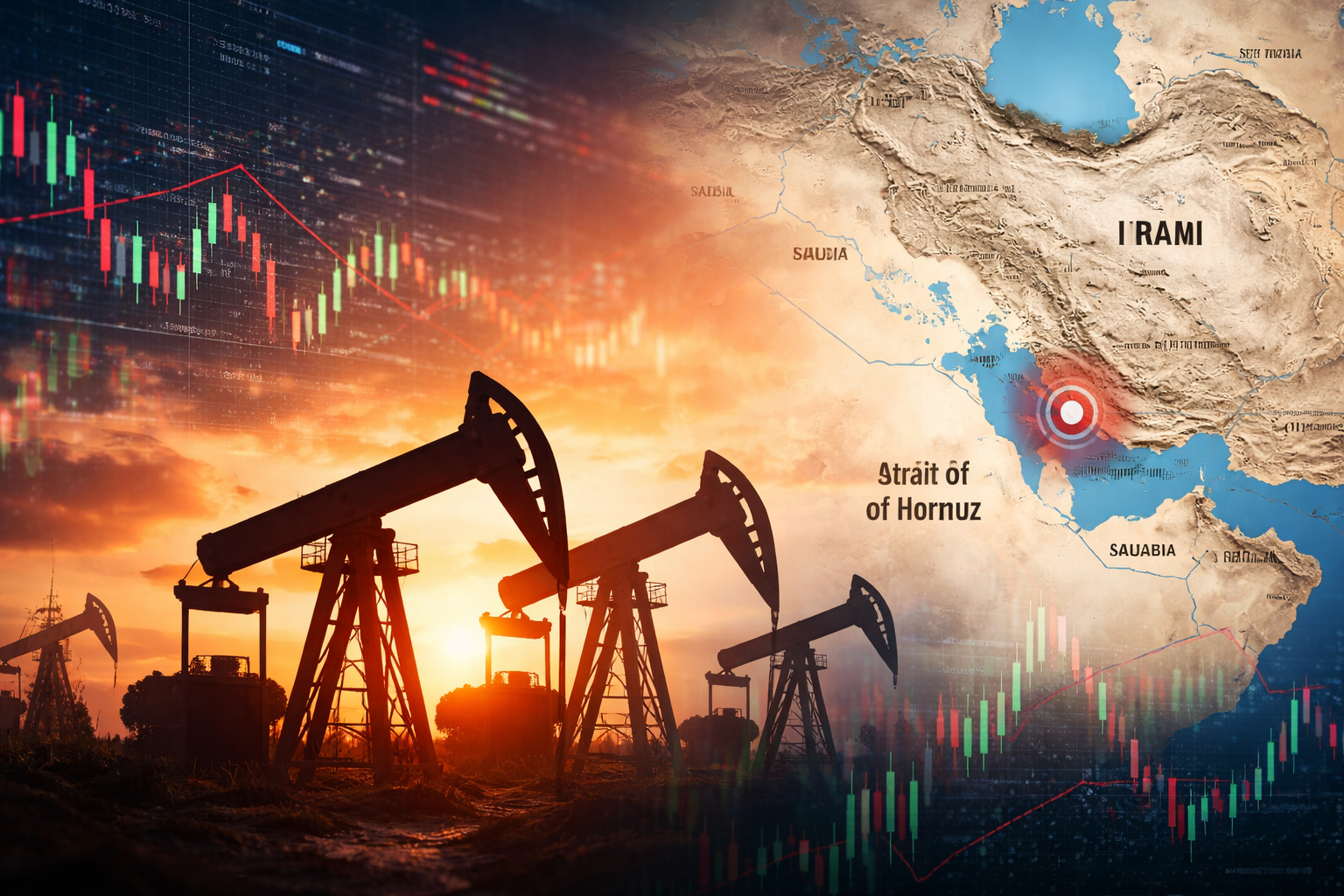
Global financial markets are experiencing increased volatility as geopolitical tensions in the Middle East continue to raise concerns about disruptions to global oil supplies. Investors around the world are closely monitoring developments in the region, particularly those affecting major energy routes and production facilities.
Oil prices have fluctuated sharply in recent trading sessions as uncertainty persists over the stability of the energy supply chain. Brent crude has hovered close to the $95–$100 per barrel range, reflecting market anxiety about potential supply shortages if tensions escalate further.
A key factor behind the market instability is the disruption of shipping through the Strait of Hormuz, one of the world’s most critical oil transit routes. The strait normally handles roughly one-fifth of global oil shipments, but ongoing conflict and security concerns have significantly reduced tanker traffic in the region.
Stock markets across the United States, Europe, and Asia have reacted cautiously, with energy stocks and commodities showing sharp price swings. Analysts warn that prolonged tensions could increase inflationary pressures, slow economic growth, and keep financial markets on edge in the coming weeks.
Although temporary diplomatic efforts and ceasefire discussions have offered short-term relief to investors, energy supply conditions remain tight and uncertain. Market experts say that until the security situation in the Middle East stabilizes, volatility in oil prices and global financial markets is likely to continue. News as Reported.