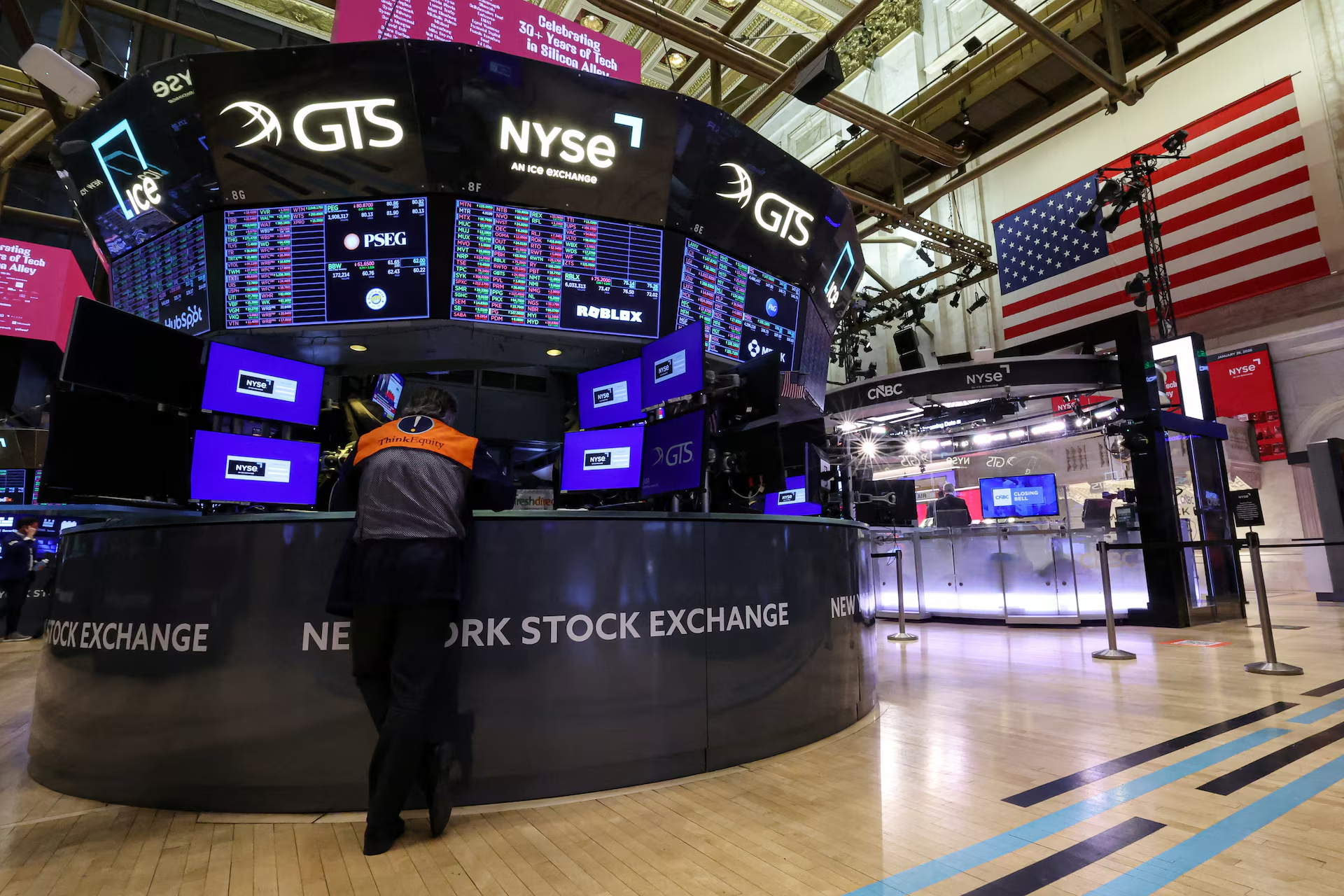
Global financial markets are increasingly reflecting the persistent drag from geopolitical tensions as investors reassess risk and adjust portfolios amid ongoing conflicts and strategic uncertainties. Recent market movements point to a cautious investor stance, with expectations of heightened volatility and a notable shift toward traditional safe-haven assets, such as gold, amid fears over renewed U.S.–Iran tensions and broader trade policy risks.
Analysts say that conflicts like the prolonged Russia–Ukraine war and escalating friction in the Middle East are embedding a “geopolitical risk premium” into asset prices, affecting everything from equities to commodities and currencies. This risk sentiment has bolstered demand for gold, which recently hit record highs above $5,100 an ounce, indicating investors’ flight to safety as uncertainty persists.
Meanwhile, stock markets have shown mixed performance: some benchmarks rebounded slightly, while others remain under pressure as traders weigh conflicting signals from central bank policy expectations and geopolitical developments.
Investors are also navigating uncertainty around trade and tariff policies, with recent rulings on global tariffs contributing to volatility and prompting cautious capital flows. These prolonged geopolitical headwinds suggest markets are entering a phase where conflicts and strategic competition will continue to shape investment decisions, compelling asset managers and institutions to balance growth opportunities against risk mitigation — News as reported.