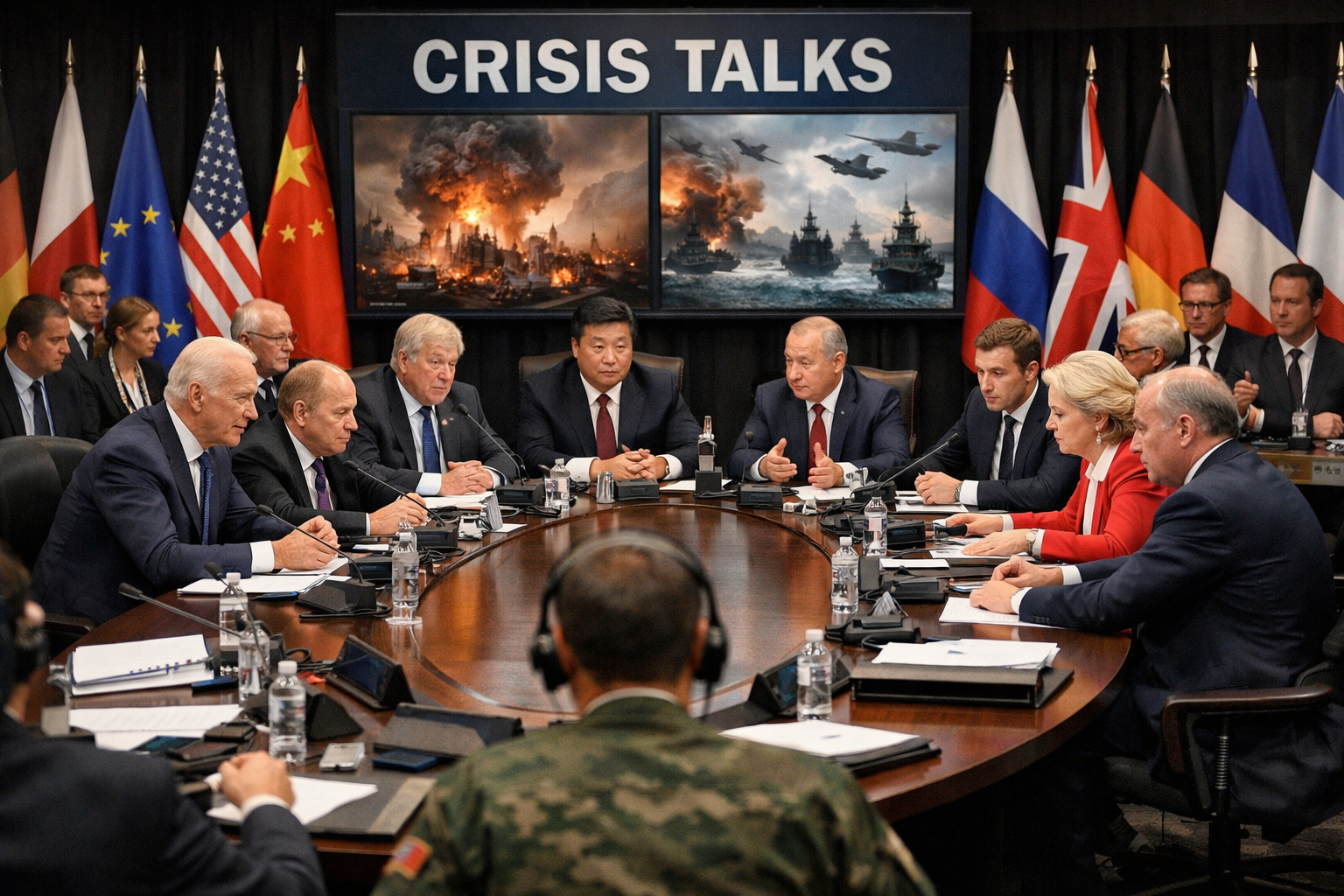
Global leaders have convened urgent high-level talks amid rapidly escalating geopolitical tensions, raising concerns that ongoing conflicts could expand into wider regional crises.
The emergency discussions come as tensions intensify in the Middle East, particularly involving Iran, Israel, and the United States. Recent military actions, including airstrikes and retaliatory missile attacks, have heightened fears of a broader confrontation. Diplomatic sources indicate that the situation remains volatile, with several countries on high alert.
Senior officials from major global powers, along with representatives from the United Nations and NATO, are participating in emergency meetings aimed at easing tensions. Discussions are focused on ceasefire proposals, protection of civilians, and securing vital global trade routes such as the Strait of Hormuz.
The crisis has triggered widespread global concern, with rising security risks, increasing humanitarian challenges, and pressure on international markets. Oil prices have shown volatility due to fears of disruption in key shipping lanes, while governments across Europe and Asia have urged restraint and renewed diplomatic engagement.
As talks continue, analysts warn that the coming days will be crucial in determining whether diplomatic efforts can prevent further escalation or if the situation could develop into a larger regional conflict. News as Reported.