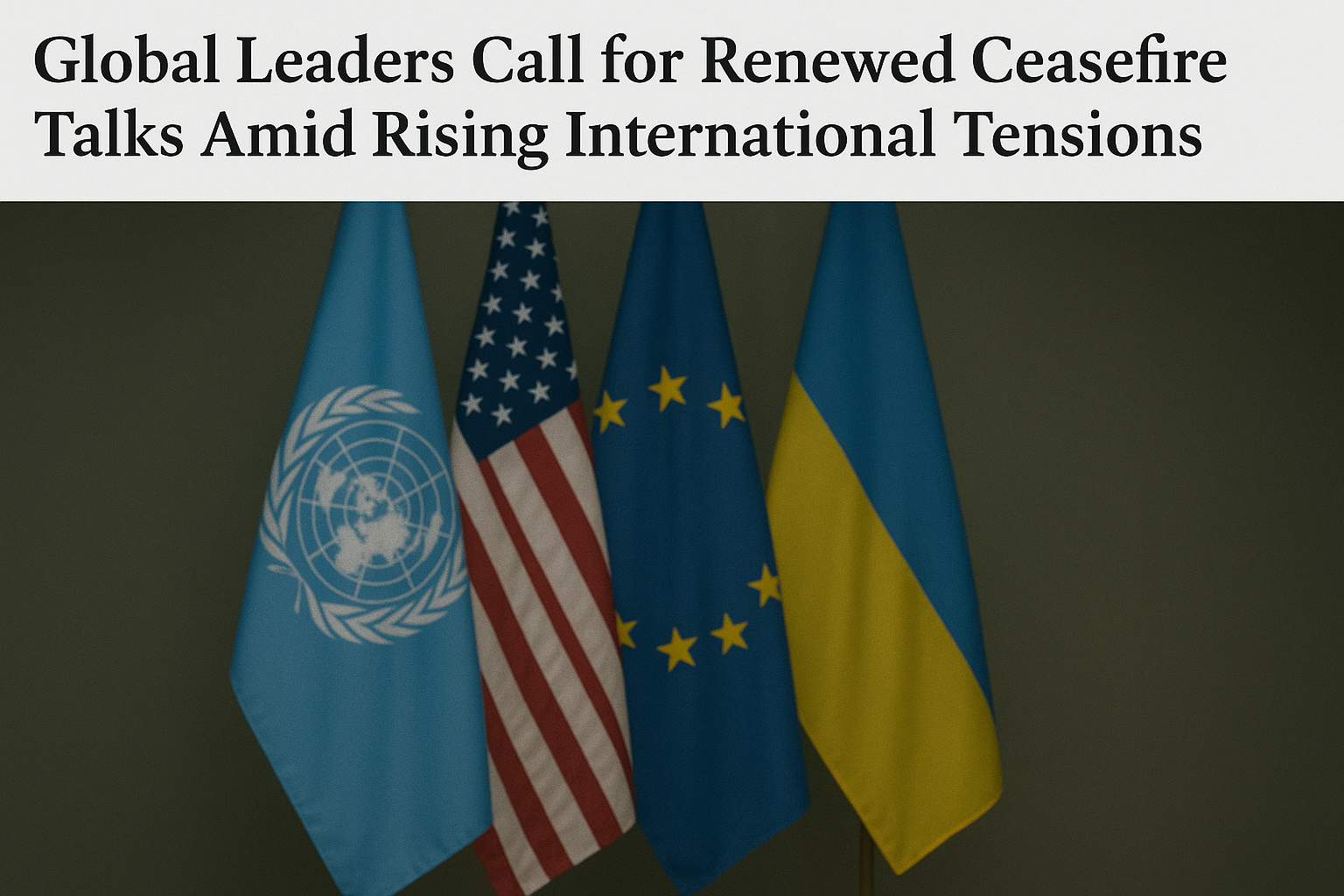
Global leaders are intensifying diplomatic efforts to revive ceasefire negotiations as tensions escalate across multiple conflict regions, raising concerns about regional stability and civilian safety. In recent high-level meetings, officials from major powers and international organizations emphasized the urgent need for dialogue to prevent further violence and humanitarian deterioration.
The renewed push comes as fighting intensifies in several hotspots, with reports of increased military activity, displacement of civilians, and strained humanitarian access. United Nations representatives and regional mediators have urged all parties to exercise restraint, warning that continued escalation could have far-reaching economic and security consequences beyond the immediate conflict zones.
Diplomats highlighted the importance of confidence-building measures, including humanitarian pauses, prisoner exchanges, and the protection of critical infrastructure. Several leaders also stressed the role of neutral mediators in rebuilding trust and creating conditions conducive to meaningful negotiations. While past ceasefire attempts have faltered due to mutual accusations of violations, officials argue that sustained international pressure and incentives could help bridge gaps.
Humanitarian agencies welcomed the renewed diplomatic momentum, noting that even temporary ceasefires can allow life-saving aid to reach vulnerable populations. However, analysts caution that deep-rooted political disputes and shifting alliances may complicate progress. As talks are explored in the coming weeks, the international community faces a critical test in translating diplomatic resolve into lasting reductions in violence.