

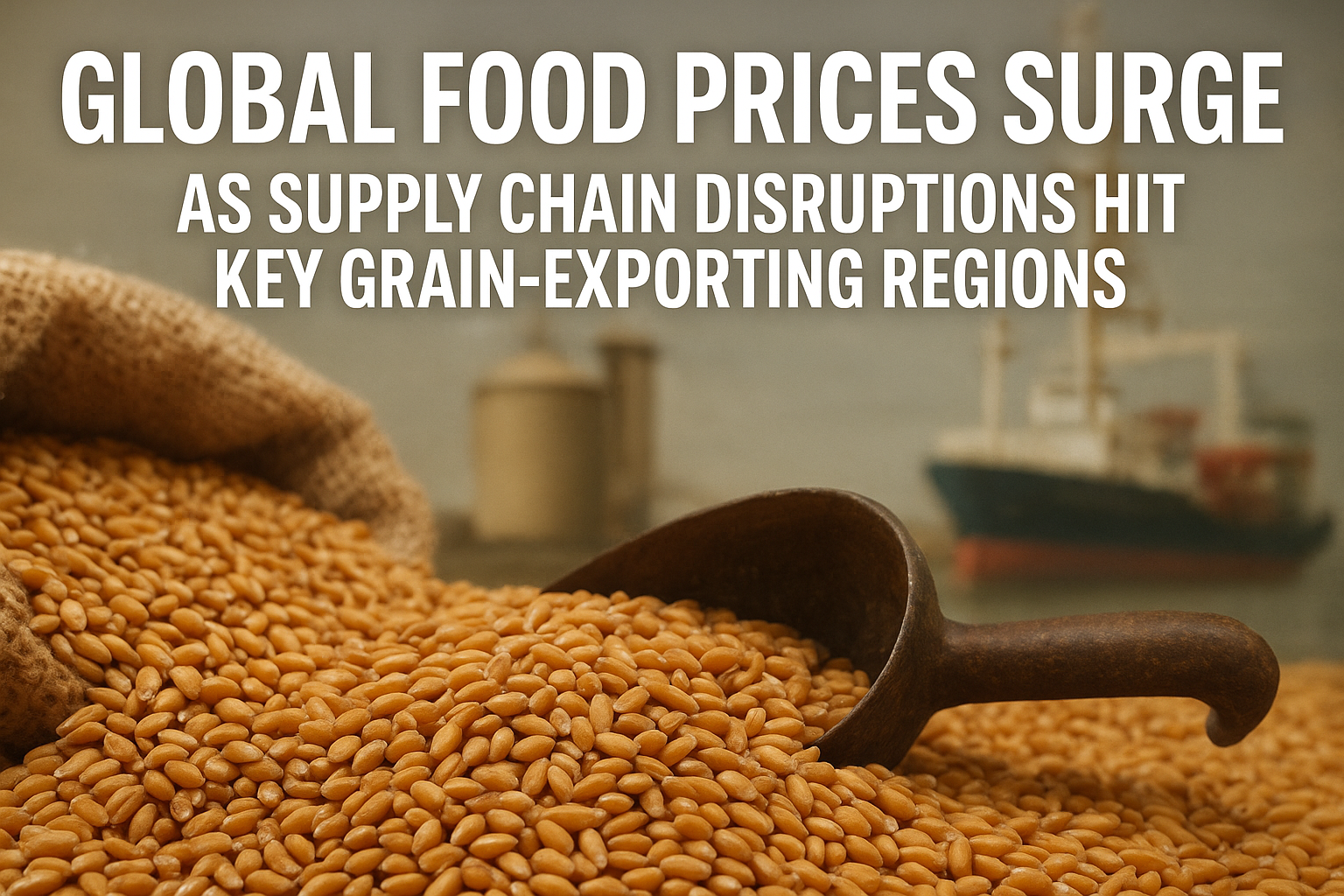
Global food prices have spiked sharply in recent weeks, as disruptions to grain supply chains from major exporting regions reverberate across global markets. A combination of blocked export routes from the Black Sea region — long a hub for wheat and corn shipments — and adverse weather conditions in top agricultural exporters have squeezed supply and triggered a surge in commodity prices.
The ripple effects are being felt worldwide. Wheat futures have surged, reflecting growing uncertainty about global grain availability. Meanwhile, in import-dependent countries, consumers and governments are confronting a sharp rise in the cost of staple foods — from bread to tortillas to animal feed — potentially squeezing household budgets and fueling food-security concerns.
Analysts warn that this wave of inflation comes amid multiple stressors: lingering geopolitical tensions, climate-driven crop failures, logistical bottlenecks, and export restrictions by key producers. Unless supply routes stabilize or alternative sources ramp up, food prices may remain volatile — putting pressure on vulnerable economies and households already reeling from inflation elsewhere.


- upgraderz.aws@gmail.com
- upgraderz.aws@gmail.com
- upgraderz.aws@gmail.com
- upgraderz.aws@gmail.com