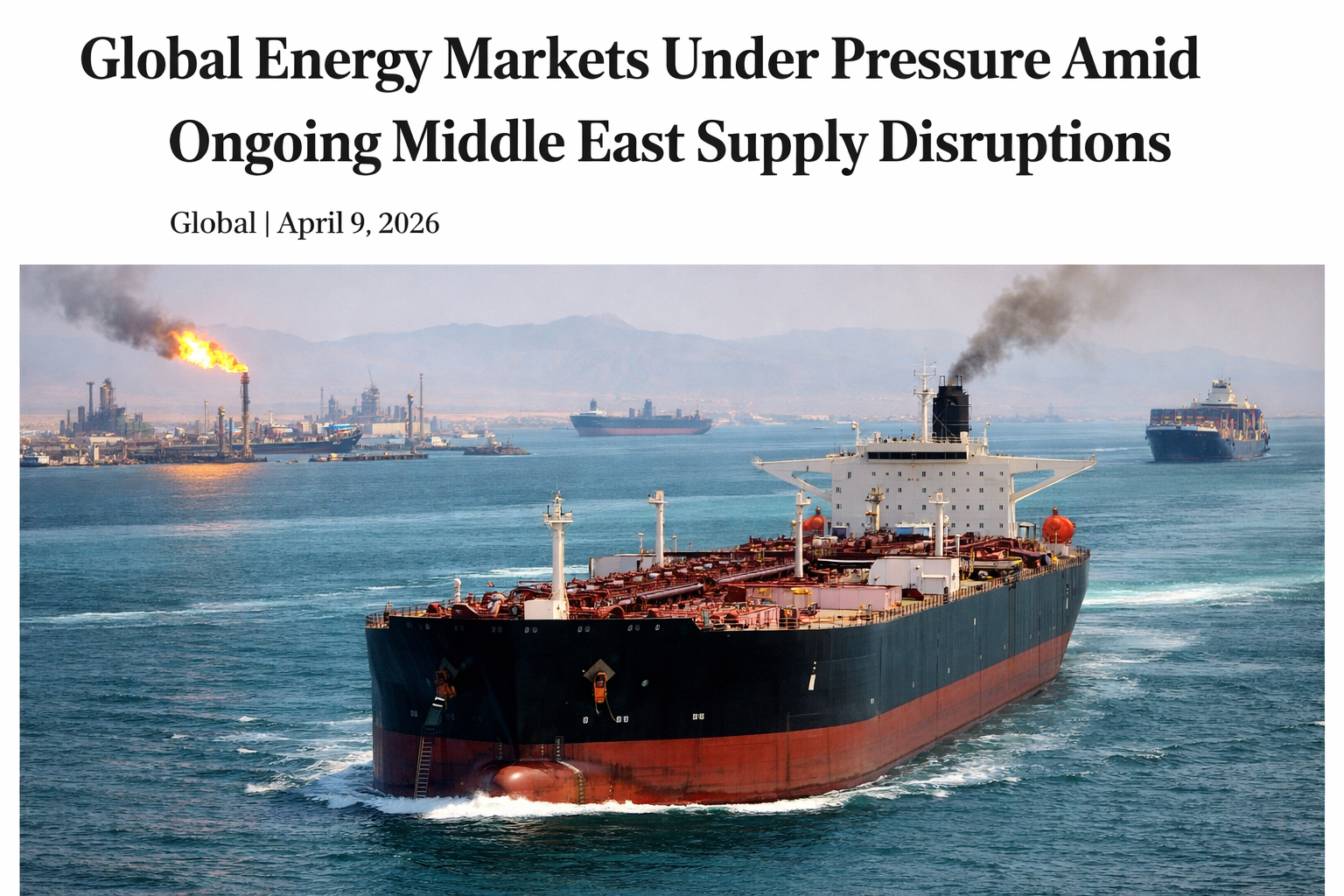
Global energy markets remain under significant pressure as ongoing supply disruptions in the Middle East continue to create volatility in oil prices and uncertainty across international markets. The crisis has been largely driven by geopolitical tensions and disruptions to shipping routes in the Strait of Hormuz, one of the world’s most critical energy corridors through which a major share of global oil and liquefied natural gas shipments pass.
Energy analysts report that uncertainty surrounding transport through the strait has pushed oil prices higher and caused sharp fluctuations in global markets. On April 9, Brent crude prices climbed back toward $97 per barrel, reflecting ongoing concerns about supply stability and the potential for further disruptions in the region.
The supply shock has been intensified by regional conflict that disrupted production and damaged energy infrastructure across several Middle Eastern producers. According to energy experts, the disruptions represent one of the largest shocks to the global oil market in decades, with millions of barrels of daily supply temporarily affected.
Although a temporary ceasefire in the conflict has allowed some tanker traffic to resume through the Gulf, uncertainty remains high. Shipping companies and oil traders are continuing to proceed cautiously due to security risks and rising insurance costs for vessels operating in the region. Recent reports indicate that energy companies have begun chartering tankers again to move crude oil from the Middle East to Asian markets, though at significantly higher freight rates.
The ripple effects are being felt far beyond the Middle East. Governments across Asia and Europe are closely monitoring fuel reserves and energy supplies as the situation evolves. Some countries are considering expanding strategic reserves and implementing measures to protect consumers from rising energy costs.
Economists warn that prolonged disruptions to Middle Eastern energy supplies could slow global economic growth and increase inflation, particularly in regions heavily dependent on imported fuel. Recent assessments suggest that ongoing instability in global energy markets could weaken economic activity in several developing regions during 2026 if supply conditions fail to stabilize.
Despite efforts by energy producers and international organizations to stabilize supply chains, market analysts say the situation remains highly uncertain. Much will depend on the security of shipping routes in the Gulf and the broader geopolitical developments in the Middle East in the coming weeks. News as Reported.