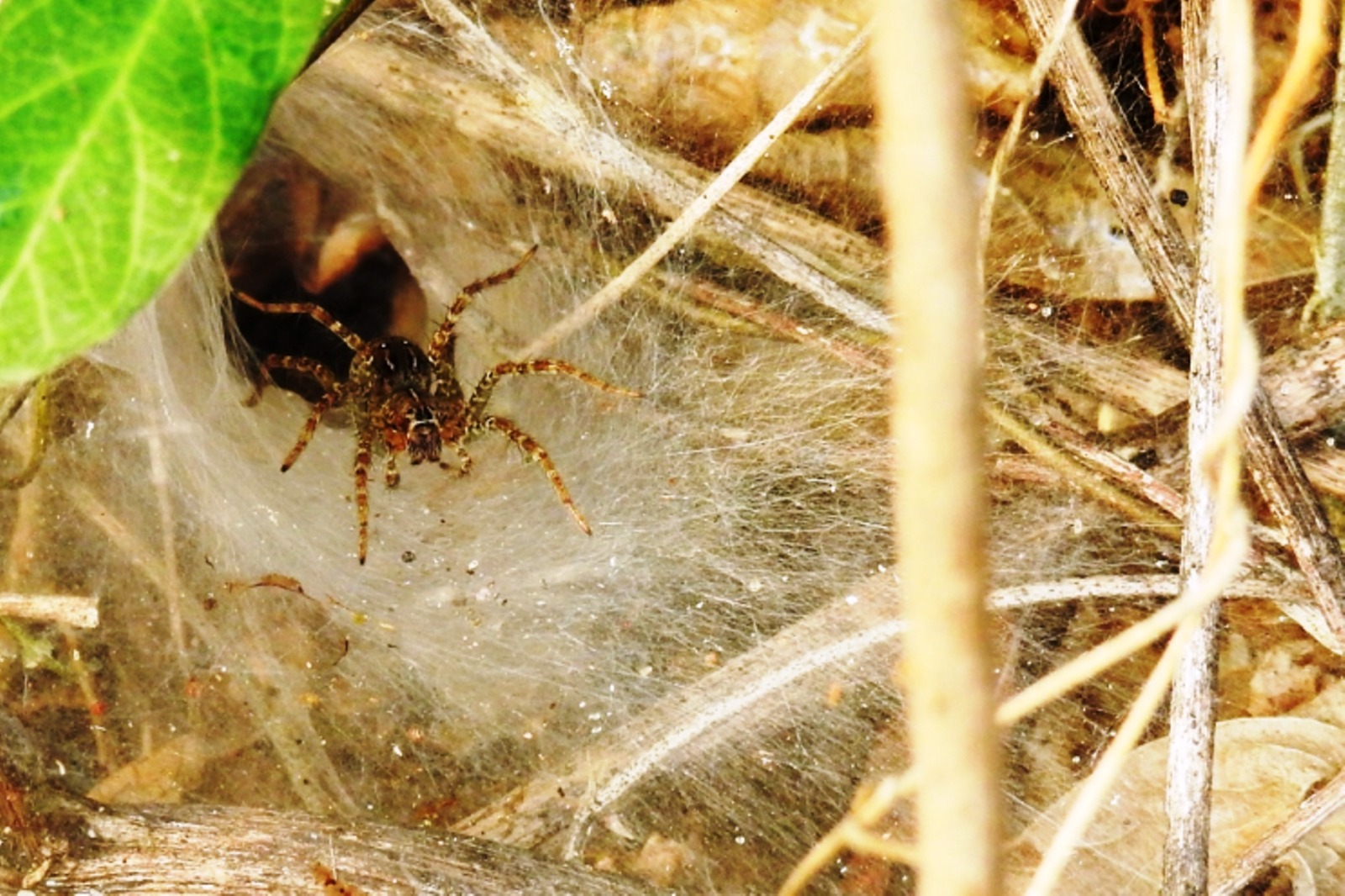
The Funnel-Web Spider (Hippasa agelenoides), a common yet often overlooked species in Kerala, is facing growing habitat threats due to changing landscapes. Known for constructing distinctive funnel-shaped webs close to the ground, this spider typically inhabits areas with leaf litter, grassy patches, garden edges, and fences. It remains hidden in its nest during the day and emerges at night to hunt for prey.
Despite its intimidating name, this species is harmless to humans. Unlike the highly venomous funnel-web spiders of Australia, Hippasa agelenoides found in Kerala is considered non-venomous, with no recorded cases requiring medical treatment from its bites.
The species was first described by French arachnologist Eugène Louis Simon in 1884 as Pirata agelenoides, before being correctly reclassified as Hippasa agelenoides in 1885.
However, experts warn that rapid urbanization is posing a serious threat to its natural habitat. Traditional fences and open green spaces, once ideal for these spiders, are increasingly being replaced by compound walls and paved surroundings. This shift is reducing the availability of safe environments for the species to thrive.
Conservationists stress the importance of preserving small green habitats to protect such beneficial and harmless creatures.
CONTRIBUTION BY VINCENT MASH —FORMER
EDITOR OF PHOTOWIDE MAGAZINE AND ASSOCIATE EDITOR OF PHOTO TRACK MAGAZINE