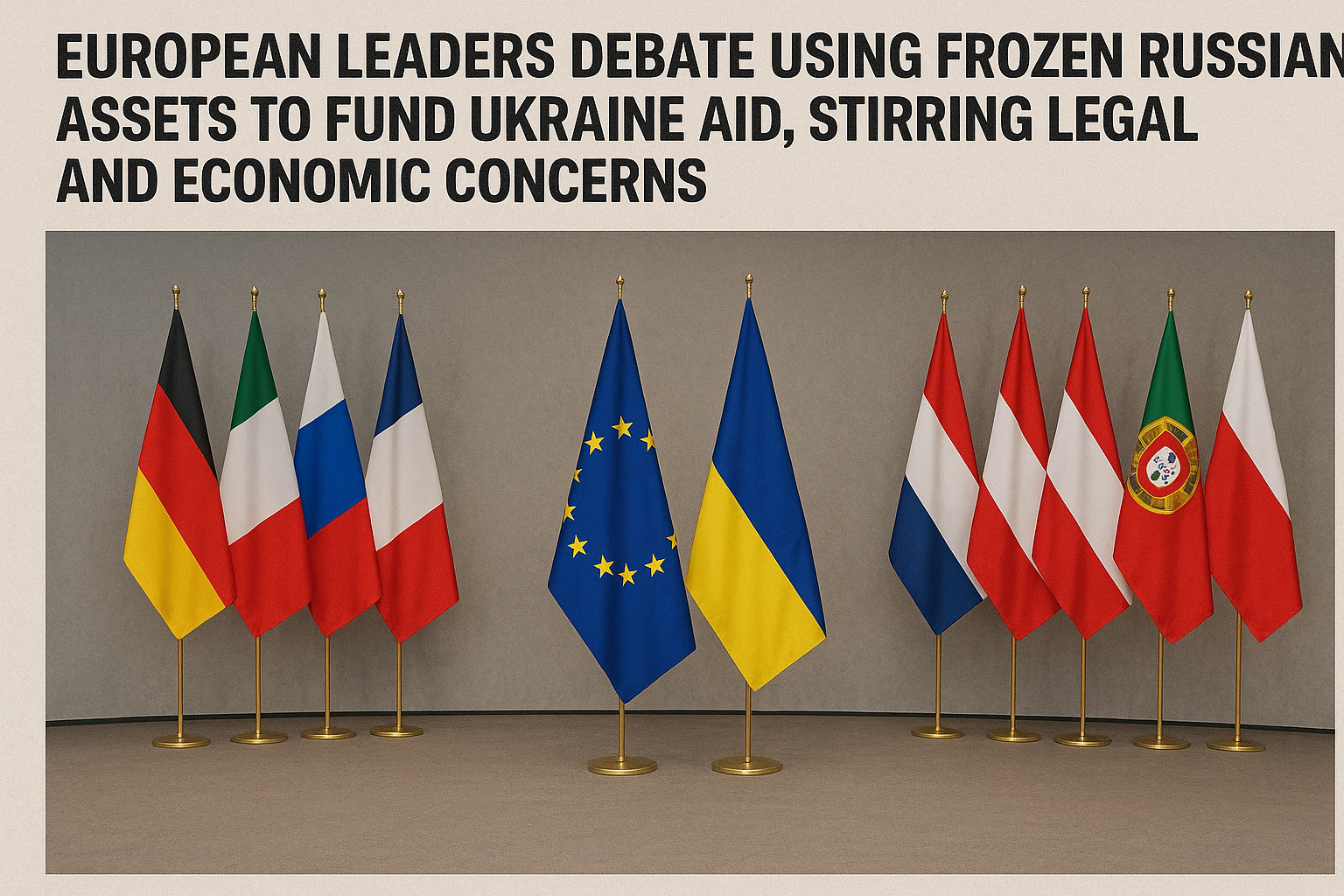
European leaders are intensifying discussions over whether billions of euros in frozen Russian state assets should be used to support Ukraine, as the war with Russia continues to strain Europe’s security and finances. The debate has gained urgency as Ukraine seeks sustained military, humanitarian, and reconstruction assistance, while Western governments face growing pressure to ensure long-term funding.
An estimated €200–300 billion in Russian central bank assets remain immobilised across the European Union and G7 countries following sanctions imposed after Russia’s invasion of Ukraine. Some EU members argue that redirecting these funds toward Ukraine would be both morally justified and strategically necessary, forcing Moscow to bear part of the financial burden of the conflict.
However, the proposal has sparked significant controversy. Several European governments and central banks have warned that outright seizure of the assets could violate international law, undermine investor confidence, and weaken the euro’s credibility as a global reserve currency. Others fear the move could set a precedent that might discourage foreign nations from holding assets in Europe.
As a compromise, policymakers are increasingly focused on using the interest or windfall profits generated by the frozen assets rather than the principal itself. While this approach faces fewer legal hurdles, debates continue over its scale, implementation, and potential retaliation from Russia.