

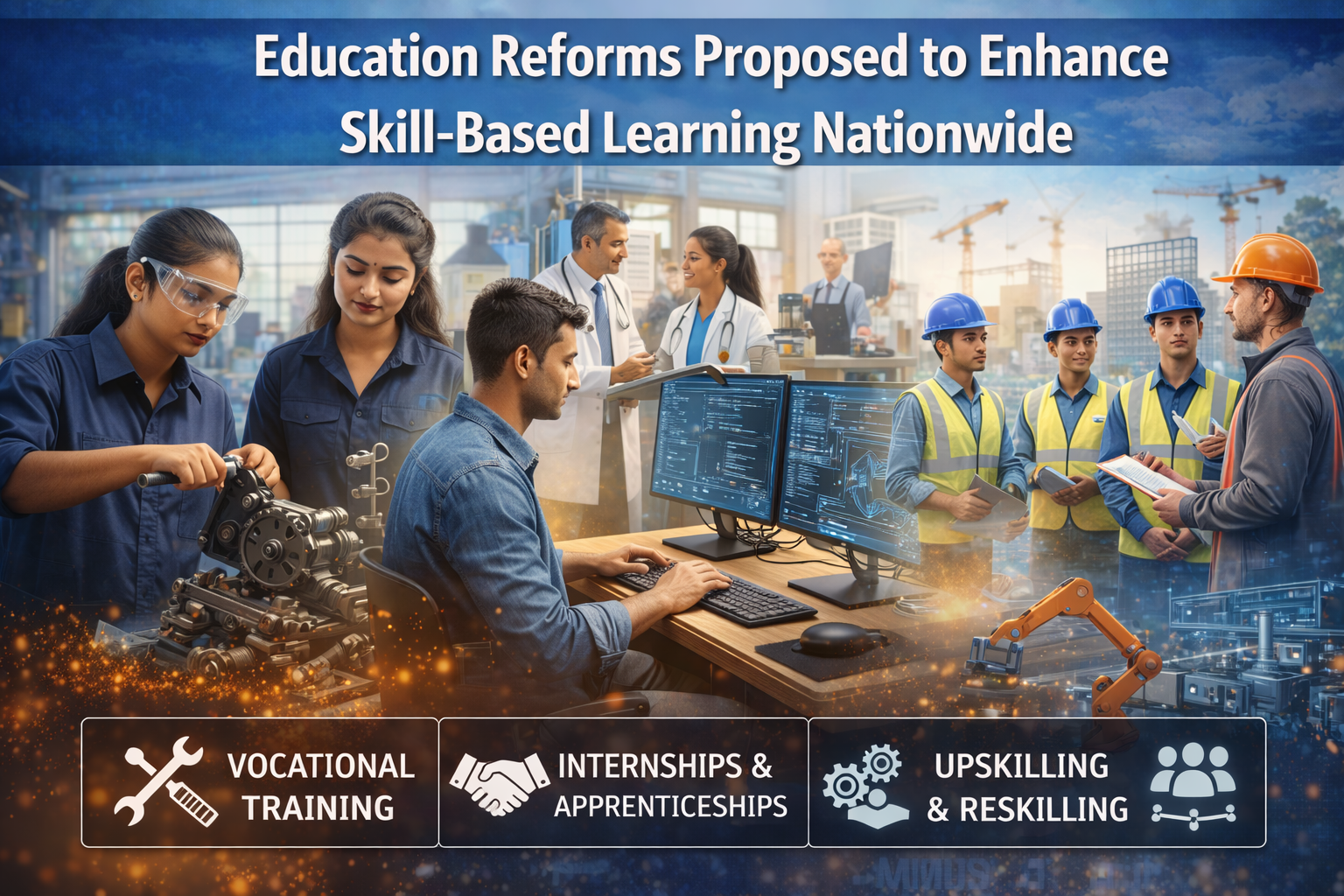
The government has proposed a new set of education reforms aimed at transforming the learning landscape by emphasizing skill-based education across the country. These reforms are designed to bridge the gap between academic knowledge and practical application, ensuring that students are better prepared for real-world challenges and evolving job market demands. By integrating vocational training and hands-on learning into the curriculum, the initiative seeks to make education more relevant and outcome-oriented.
A key feature of the proposed reforms is the introduction of skill development programs at an early stage of schooling. Students will have the opportunity to explore various fields such as technology, healthcare, agriculture, and entrepreneurship, allowing them to identify their interests and strengths. The reforms also focus on upgrading teacher training programs to equip educators with modern teaching methods and digital tools.
Additionally, partnerships with industries and institutions are being encouraged to provide students with internships, apprenticeships, and on-the-job training experiences. This collaborative approach is expected to enhance employability and create a workforce that is aligned with industry needs.
The use of digital platforms and e-learning tools is another major component, ensuring wider access to quality education, especially in rural and remote areas. Continuous assessment methods will replace traditional exam-focused systems, promoting holistic development.
Overall, these education reforms aim to create a more dynamic, inclusive, and future-ready education system, empowering students with the skills and knowledge required to succeed in a rapidly changing world news as reported.


- upgraderz.aws@gmail.com
- upgraderz.aws@gmail.com
- upgraderz.aws@gmail.com
- upgraderz.aws@gmail.com